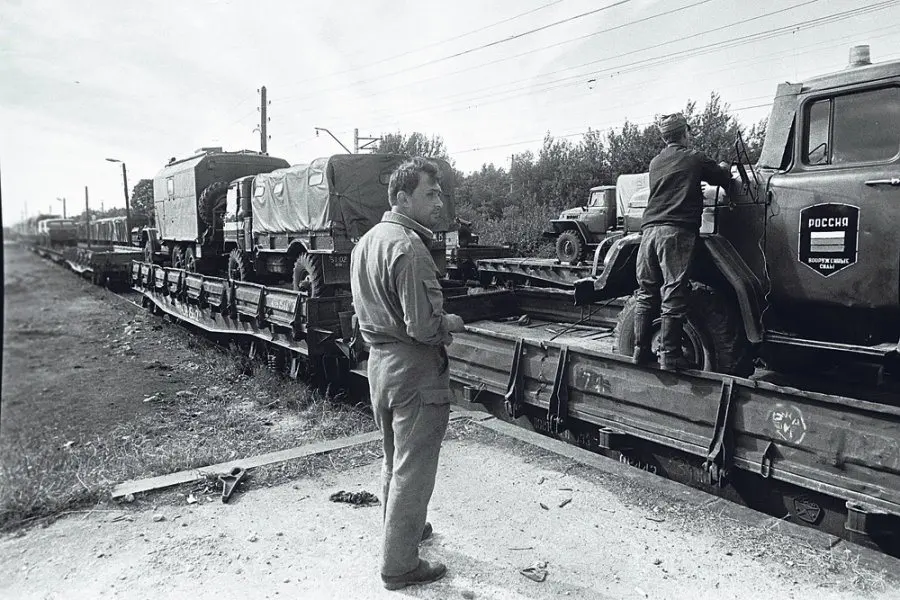
On 31 August 1994, the final Russian soldiers crossed out of Estonia, closing the book on five decades of Soviet military presence. It was a milestone made possible by stubborn diplomacy, heavy Western pressure and, if the stories are true, a bottle of Absolut and a houseplant.
Soviet forces had been stationed in Estonia since the 1940 occupation, interrupted only by three years of Nazi German rule before the Red Army returned in 1944. When Estonia restored its independence in August 1991, the departing Soviet Union still had more than 570 installations in the country, staffed by roughly 35,000 personnel — a force that dwarfed Estonia's newly formed defence forces. Once the USSR dissolved that December, negotiations resumed with Moscow under a new counterpart: the Russian Federation.
The talks dragged. In 1992, Russia suggested it might withdraw by 2002; Estonia said no. A later offer of 1997 was also rejected. Tallinn's key play was to lock its timetable to other Russian withdrawals, especially from Germany, where the deadline was set for 31 August 1994. Washington and Stockholm led the diplomatic push, with the UN, the CSCE (now the OSCE) and the Council of Europe all backing Estonia's position.
The endgame came in Moscow on 26 July 1994, when President Lennart Meri sat down with Boris Yeltsin. The meeting has become the stuff of Estonian political legend: Russian officials stonewalled, but Yeltsin — reportedly nudged by Bill Clinton, who vouched for Meri — invited the Estonian president for vodka instead. Meri, no heavy drinker, reportedly chose Absolut so the relationship would be "absolute", then quietly decanted his shots into a nearby palm pot. Jokes aside, the two sides signed an agreement that day giving Russia just 36 days to get its troops out by the deadline.
Two companion deals rounded out the settlement: social guarantees for Russian military pensioners living in Estonia, and an agreement, signed on 30 July, covering the former Soviet nuclear facility at Paldiski, which was transferred in full on 30 September 1995. The treaties drew fierce criticism at home, particularly over pensioners' rights, but Estonia held to its dual course of Western integration and pragmatic engagement with Moscow.
Why does this matter to anyone thinking about the Baltics today? It explains a lot of what you encounter in Estonia — the KGB museum in Tallinn, the decommissioned nuclear submarine base you can visit at Paldiski, and the country's enduring instinct to look west. It was also the young state's first major diplomatic win alongside its Western allies, and the confidence it built shaped the Estonia that later joined the EU and NATO. For history-minded travellers, few countries pack this much recent 20th-century drama into such a compact, easy-to-explore place.
Story via Estonian World.