West Hollywood's story starts with rejection. The district — now one of LA's most confident neighbourhoods — grew up as a home for people pushed out of other communities, and its Sunset Strip became a nightlife hotspot during Prohibition precisely because nobody in authority was watching. It wasn't even incorporated as a city until 1984. According to Tom Kiely, President and CEO of Visit West Hollywood, that outsider DNA is still the single most useful thing to know about the place, and the reason visitors come home talking about how it made them feel rather than which hotel they booked.
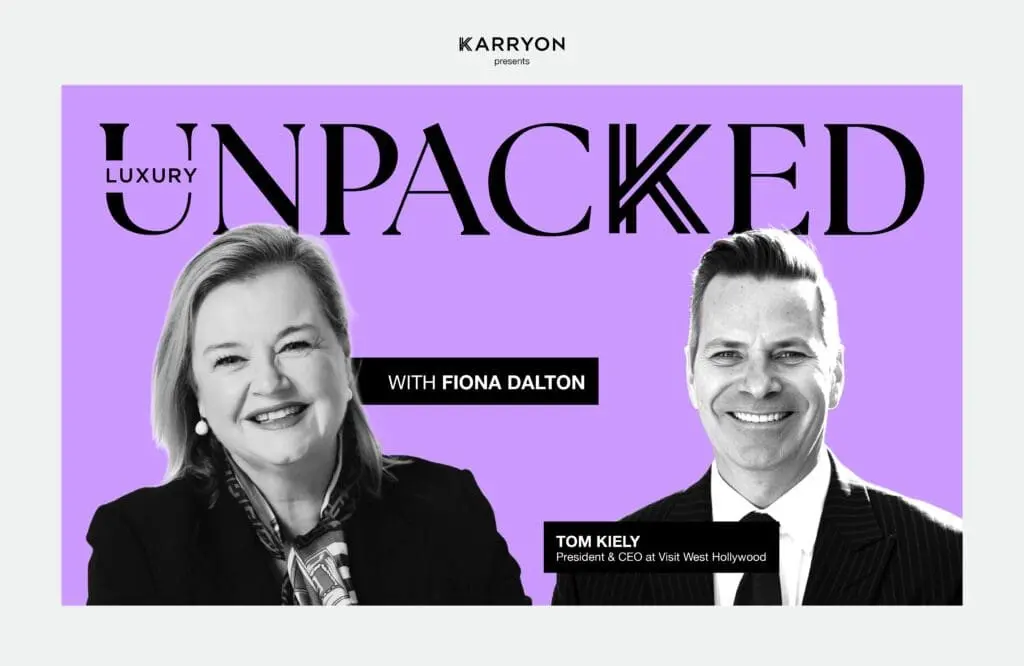
Kiely, who has led the destination's tourism body for a decade after earlier roles at Disneyland and Universal Studios, puts it simply: the city enjoys people who are different, because they're what give it its character. That ethos matters for travellers who want to feel genuinely welcome rather than just well looked after — a distinction that became the theme of a recent Luxury Unpacked podcast episode featuring Kiely.
Practically, WeHo works differently from most of Los Angeles. It's a compact four square kilometres dropped into the middle of one of the world's most sprawling metros, with around 22 hotels and more than 300 restaurants, bars and clubs packed inside. For visitors — Australians, Kiely's conversation suggests, are a key market — the pitch is that you can leave the hire car at the airport and walk everywhere. In a city defined by freeways, that alone is a novelty.
The episode also digs into details worth knowing before you book. There's an app that got one guest from aircraft to baggage claim at LAX's Tom Bradley terminal in five minutes, though most Australians have never heard of it. West Hollywood shot its own destination marketing with a production company better known for a certain TV show. And there's a currency angle: Kiely tracks the Australian dollar and points to a level where the exchange rate stops being an abstract number and becomes the trigger to actually book that Michelin three-star dinner or Sunset Boulevard hotel. Nearby, Universal Studios is building a rollercoaster that runs down the side of the mountain — an easy day trip from a West Hollywood base.
For holidaymakers weighing up a US trip, the takeaways are clear. West Hollywood rewards walkers, food lovers and anyone who wants a walkable, expressive neighbourhood rather than a drive-everywhere city. It suits travellers who care about atmosphere and community as much as thread count — and with 22 boutique and luxury hotels to choose from, plus a dining scene dense enough that you could eat out for months, it's an easy base for all of LA.
Kiely's message to travel advisors and hesitant clients alike: a city that was practising inclusivity decades before it was officially a city is unlikely to make you feel like an outsider now.