France is seeing its biggest wave of civil unrest in years, and anyone with a trip booked in the coming weeks should know what's going on. On Thursday, trade unions including the left-wing CGT, backed by student groups, staged a nationwide day of strikes and demonstrations in 260 towns and cities, keeping up pressure on President Emmanuel Macron five months before the presidential election.
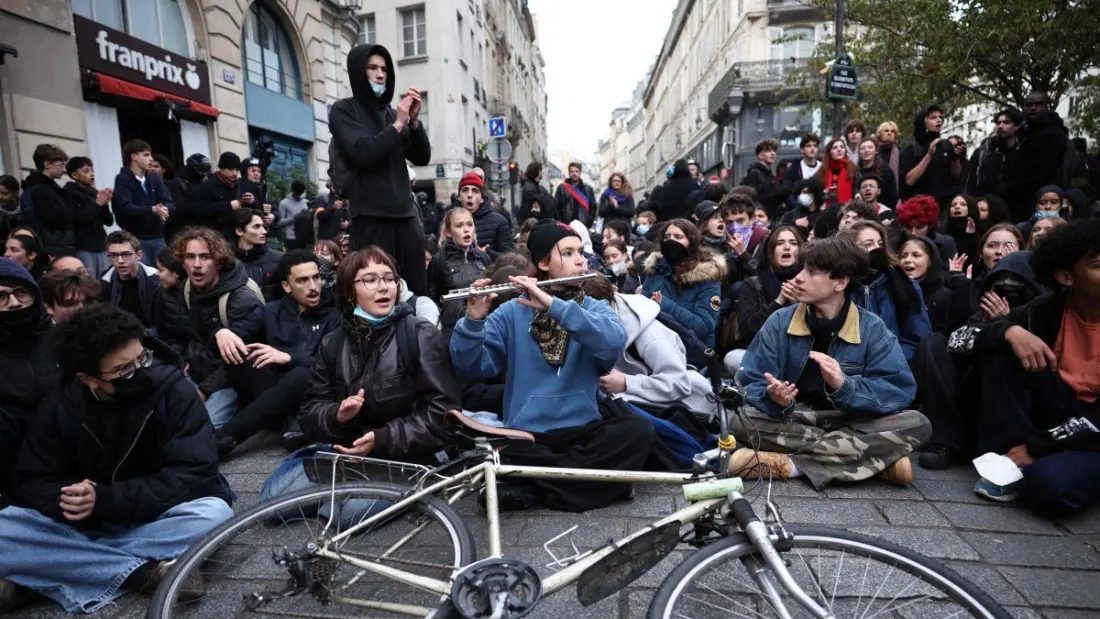
The scale is significant. Authorities mobilised around 70,000 police officers across the country, while domestic intelligence expects between 500,000 and 700,000 protesters outside Paris alone. The capital's main march set off from Place de la Republique in the afternoon, after morning demonstrations in Marseille, Lyon and Nantes. In Lyon, some protesters turned up with face masks and safety glasses in anticipation of tear gas, and in Paris high school students blocked streets with rubbish bins in confrontations with riot police.
What started as student anger over deteriorating school conditions has grown into a broader movement covering living costs, public services and uncertainty about young people's futures. It follows riots and looting on October 17 that damaged shops and public buildings nationwide and caught security forces off guard. Macron convened a defence and security meeting the day before Thursday's protests, and a government official described the goal as getting "the river that overflowed back into its bed" ahead of the election.
For travellers, the immediate practical effects have so far been limited but real. The strike cut into France's nuclear power output early on Thursday, though officials reported no major disruption to the transport network. The Education Ministry expected 17.5% of public primary school teachers to walk out, which matters if you're travelling with children in French state schools or using school-related services. Previous nationwide protests last Saturday were largely peaceful, with clashes only on the fringes, but the mood remains tense and further mobilisations are likely as the April election approaches.
If you're visiting Paris, Marseille, Lyon or Nantes in the near future, keep an eye on local news and union announcements, since demo dates are published in advance. Marches often centre on major squares like Place de la Republique, so it's easy to plan around them. Expect a heavier police presence in city centres, occasional transport hiccups on strike days, and the possibility of shops closing early near protest routes. None of this should ruin a well-planned trip, but flexibility on the day you travel is wise.