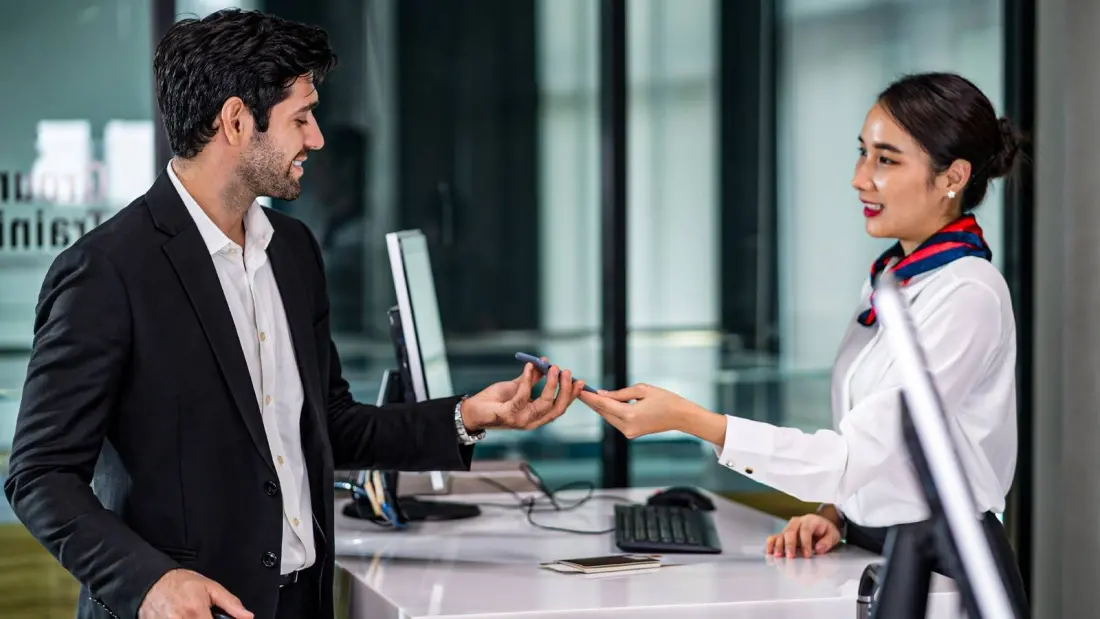
The gate scan feels like the moment your holiday officially begins, but for the staff behind the podium, the work starts well before any boarding pass is read. Gate agents spend the pre-boarding window reading the crowd: who looks prepared, who is wrestling with oversized luggage, who hasn't heard a word of the announcements. It's not judgment for its own sake — most of it is practical crowd control aimed at getting the flight away on time.
Documents come first. Agents notice whether you can actually produce your boarding pass when your group is called, and whether you have ID within reach. On international routes — think London Heathrow or New York JFK — there may be passport, visa or travel authorisation checks that a boarding pass alone doesn't satisfy. An unresolved paperwork issue discovered at the podium becomes everyone's delay, so agents try to flag these early.
Carry-on bags are the other big tell. When overhead bin space is tight, agents will spot the passenger with three bags and a duty-free box long before they reach the jet bridge. Baggage disputes at the door slow the whole line, which is why airlines on US carriers like Delta, American and United may arrange gate checking when a flight is busy. Knowing your ticket's size and piece limits — and cooperating when asked — keeps things moving.
Attention matters too. Headphones on, eyes on a screen, and you can miss a gate change, a boarding sequence adjustment or a gate-check instruction. Agents aren't asking you to hover by the counter; staying seated while keeping announcements audible and watching the departure screens is perfectly fine. What they need is for you to respond when something applies to you, especially at sprawling, connection-heavy airports like Atlanta Hartsfield-Jackson.
How you behave when things go wrong also gets noticed. Calmly explaining a problem makes you far easier to help than interrupting and demanding instant fixes. The same goes for oversold flights: under US Department of Transportation rules, airlines must seek volunteers before bumping anyone involuntarily, and no one is obligated to say yes — but understanding the options keeps the conversation short and civil.
Agents also look out for travellers who may need extra help: families with small children, passengers with mobility assistance requests, or anyone who seems unsure about a connection. Under USDOT rules, passengers with disabilities who identify themselves at the gate as needing boarding assistance must be offered the chance to board before others, so flagging your needs early genuinely pays off. Uncertainty isn't treated as a red flag — language barriers and unfamiliar airports affect even seasoned flyers.
Finally, there's the safety piece. FAA regulations bar airlines from boarding anyone who appears intoxicated, and agents may ask questions if they observe slurred speech or unsteady behaviour. The stakes are real: in 2026 the FAA proposed a $165,000 civil penalty against Alaska Airlines over alleged incidents involving intoxicated passengers on 11 flights between February 2024 and February 2025.
The takeaway for travellers is simple. Have documents ready, keep bags within limits, keep one ear on announcements, be polite when something breaks, and ask for help early if you need it. None of this guarantees an upgrade, but it all but guarantees a smoother start to your trip.
Story based on reporting by Simple Flying.