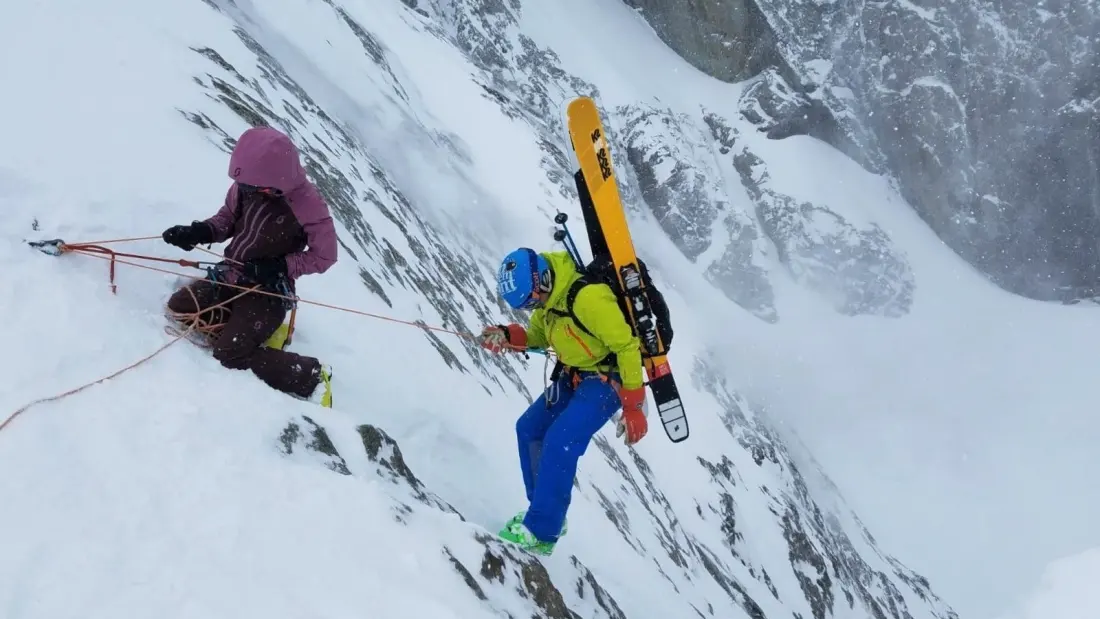
The fantasy version of the ski guide's life is easy to picture: fresh tracks, cliff drops, high-fives in the parking lot. A new report from SKI, speaking with three working and aspiring guides, paints a far starker picture — one built on years of training, hard refusals, and a quiet toll that rarely makes the highlight reels.
The wake-up call comes early. Pete Mason, one of the first Americans to hold both the UIAGM and ENSA certifications — the two toughest internationally recognised guide qualifications — tells students on his avalanche courses that almost a quarter of his own graduating class is dead. That's not a profession, that's a statistic.
The path itself is unglamorous. Take Filip Rentschler, a 27-year-old carpenter from southern Sweden — a flat region better known for canoeing than couloirs — who got hooked during his first winter in Verbier and now juggles trade work to fund training, van living, and exams with unpredictable timing. Certification in the US has historically been loosely policed, meaning the line between ski bum and 'professional guide' could once look thin. In practice, real guiding is about judgement, not bravado.
That judgement mostly means saying no. Erin Smart, a Seattle-born guide working in La Grave, France, deflects overconfident clients with a checklist of demands by simply telling them she's busy. A Chamonix touring service put it bluntly: 'We are not kamikaze.' Guides cancel trips; that's the job. The popular image of the guide as a powder concierge — a few hundred dollars for untracked snow and a safety buffer — misses the point entirely.
The maths behind the risk is sobering. Swiss avalanche expert Manuel Genswein puts ski touring in the low-risk 'green range' at roughly one death per 100,000 people. Stay active 50 days a season for 20 years, though, and that climbs to about 1 in 100. Mason calls it a game of numbers with painfully delayed feedback. Smart knows the cost first-hand: last winter she assisted at an avalanche that killed two people near where she was skiing, and in March her life partner, also a guide, died when a ski anchor failed — one rescuers later described as textbook.
Why does this matter if you're a traveller rather than an aspiring guide? Because the person leading you into avalanche terrain is making constant, invisible decisions on your behalf — and the good ones will cancel your dream powder day without hesitation. Treat that as a feature, not a frustration. Ask about qualifications, respect the turnaround, and understand that 'I accept the risk' is a phrase even veterans doubt anyone truly understands.
For anyone dreaming of the profession, the honest takeaway is that it's less about skiing prowess and more about patience, people skills and sacrifice — years of it. For the rest of us, it's a reason to look at the calm professional checking the snowpack very differently.