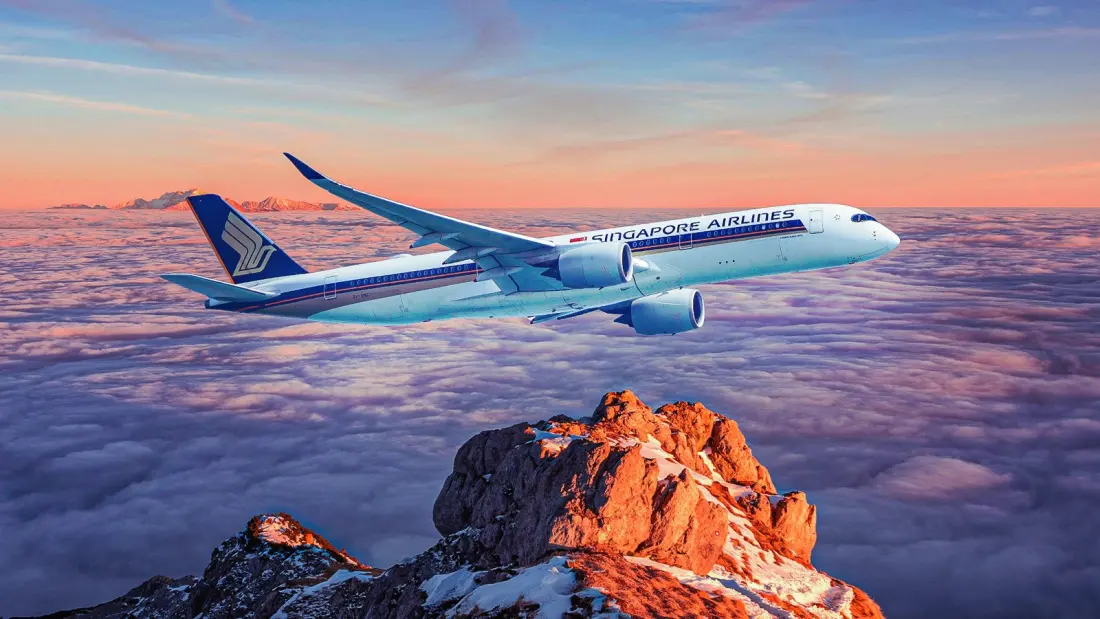
On a flight like Singapore Airlines' Singapore-New York run, the landing is planned hours in advance — starting with who sleeps, and when. US federal rules for augmented crews (flights with more pilots than the aircraft minimally requires) state that the pilot who will fly the landing must get two consecutive hours of in-flight rest available in the second half of the duty period. It's a rule written backward from touchdown.
Singapore Airlines staffs its roughly 20-hour New York service with four pilots — two captains and two first officers — who rotate in pairs. There's no single fixed formula: one option is an even 8/8 split, giving each pair about eight hours off. Another, described by The Points Guy, is a 6/8/2 rotation that trims the relief crew's rest so the landing pilots are back on the flight deck around three hours before arrival. That buffer lets them absorb weather changes and operational updates before descent. Every handover is formal too, with a briefing covering fuel, weather and traffic.
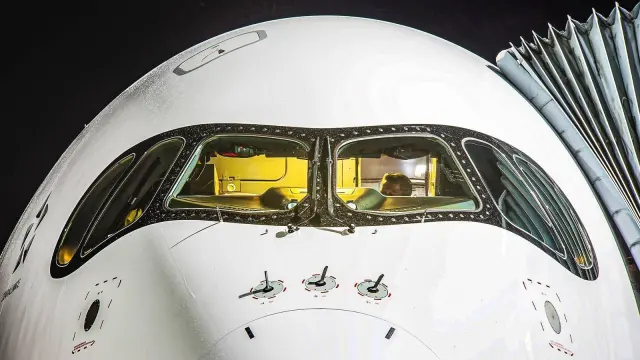
So where do pilots actually sleep? On the A350, the flight crew rest facility hides above the forward galley, reached through a ceiling hatch most passengers walk under without noticing. It holds two bunks, often a reclining seat and monitor, with its own temperature controls. It qualifies as a Class 1 rest facility under FAA rules — a flat bunk, separate from cockpit and cabin, with sleeping surfaces of 78 by 30 inches. That classification matters legally: the better the rest facility, the longer the duty period an airline can plan. Class 3, by contrast, is just a seat reclining 40 degrees.
Bunk sleep is one thing; in-seat napping is another. 'Controlled rest' lets a pilot doze at the controls while the other flies, capped at 40 minutes so they don't slip into deep sleep, followed by a mandatory 20-minute recovery with no duties. Notably, the FAA doesn't allow cockpit naps for US Part 121 operators at all, while EASA and many other authorities do — so a pilot on a European carrier can nap in-seat, and a US one can't.
Both systems exist because of sleep inertia: the measurable drop in alertness right after waking, which worsens the deeper the sleep. That's why neither the regulation nor Singapore's rotation puts rest right before the approach — there's always a gap between waking and the most demanding phase of the flight.
For passengers, this is quietly reassuring. Those ultra-long non-stops you book — Singapore to New York, or similar A350 routes — are crewed under rules that treat the landing as the priority and build the entire roster around it.