Atlanta gets the headlines for passenger numbers, but when it comes to raw aircraft movements — every takeoff and landing — Chicago O'Hare is the busiest airport on the planet. It logged more than 857,000 movements in 2025, comfortably over 2,000 a day, and no other airfield handles more planes.
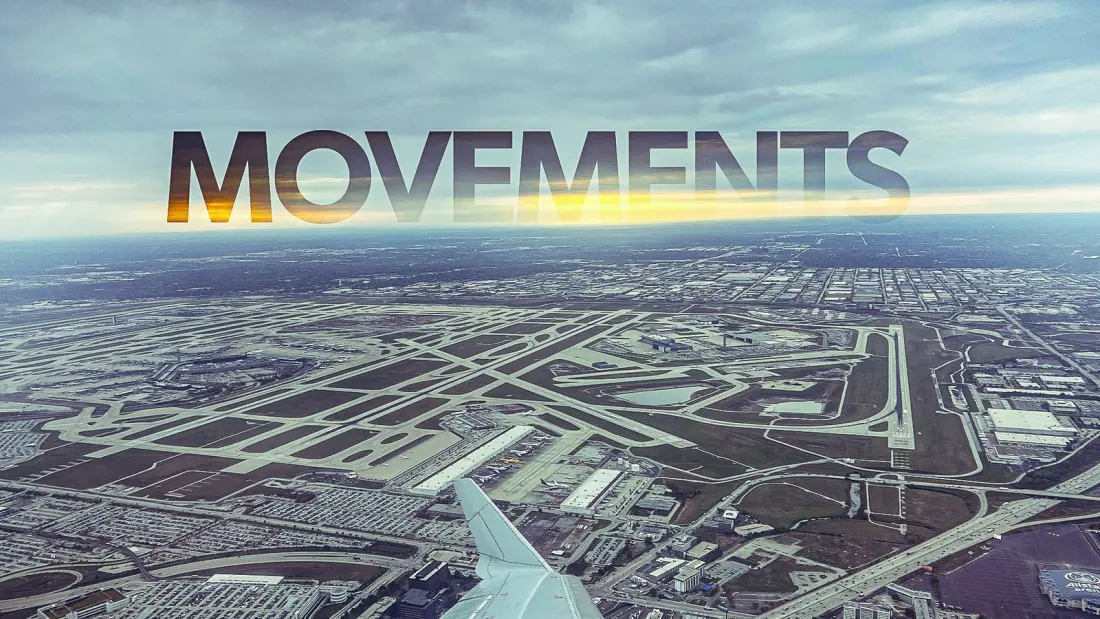
The reason O'Hare can absorb that volume is its runway layout: eight runways in total, more than anywhere else in the world. Six of them run east-west as parallels (9L/27R through 10R/28L), split three north and three south of the terminals. The remaining two (4L/22R and 4R/22L) sit diagonally for strong crosswind days and see relatively little use. Because the six parallels don't intersect, controllers can run several arrival streams and two departure streams simultaneously — a setup only finished in 2021, after nearly two decades of construction that replaced O'Hare's old, tangled 'pinwheel' arrangement of crossing runways.
The push to expand comes from fierce competition on the ground. United has its largest hub here (around 90 gates, mainly Terminal 1, with peak summer schedules approaching 650-750 daily departures), while American runs the number-two operation (60-plus gates in Terminal 3, over 500 daily departures). For summer 2026 the two planned more than 3,000 daily movements combined — so many that the FAA stepped in with a flight cap of just over 2,700 per day, trimming schedules to prevent congestion. The cap landed harder on United, which had planned the bigger growth spurt.
Here's the twist for travellers: the runways aren't actually the bottleneck anymore. Departures are the constraint, and ongoing taxiway construction plus gate shortages cause the infamous delays — planes waiting with the parking brake on, extended taxi routes, long pushback queues. A massive modernisation is underway, headlined by a new Global Terminal (Terminal 2) that will finally let international arrivals be processed beyond the current Terminal 5, plus concourse expansions and taxiway redesigns.
For anyone flying through Chicago, this explains a lot: why your connection buffers should be generous at ORD, why evening departures back up, and why the airport feels like a construction site. It also means choice — United and American both offer deep domestic networks and transatlantic routes, and United flies nonstop to Tokyo. If you're booking a hub connection in the US, know that O'Hare moves more aircraft than anywhere else, but give yourself room for taxi and gate delays until the new terminal opens.