Jordan is having a strange year in tourism. The country's tourism income climbed 4.9% to $6.35 billion in the first nine months of 2026, according to the Central Bank of Jordan. But the growth is wildly uneven: spending from Arab visitors surged 18.8% and Asian visitor income rose 12.3%, while European income collapsed by 23.7% and American income fell 16.3%.
The reason is geopolitical. Jordan sits uncomfortably close to the fallout from the U.S.-Iran war, and it has been hit both directly and indirectly. Iran has struck at bases hosting American forces inside Jordan in retaliation for U.S. attacks — the Jordanian army said in April that 281 Iranian missiles and drones had targeted the country since the conflict began in late February. Western travellers, naturally, have been put off. Regional travellers, who understand the practical reality on the ground better, have kept coming.
The hotel numbers tell the story. Across Jordan, average hotel occupancy sat at just 38% in September, according to the Jordan Hotels Association. But Amman, the capital, led the country at 59% — filled largely by Arab visitors drawn to the city's restaurants, cafés, shopping and business scene. The classic Western-dependent circuit, with Petra at its heart, remains quiet by comparison.
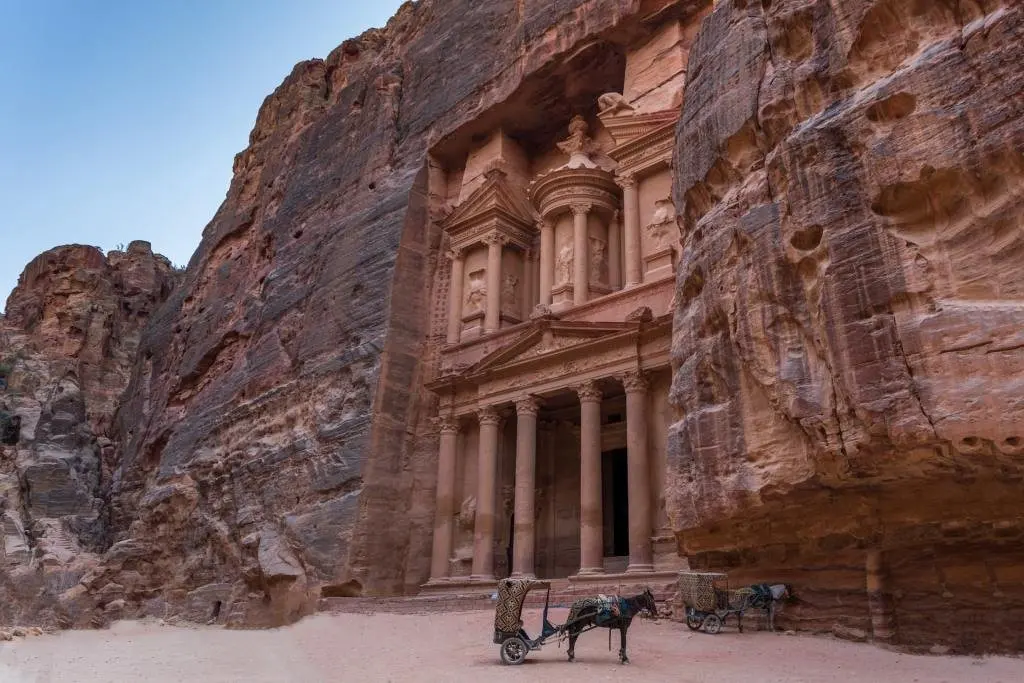
For travellers, this creates an unusual window. Petra — one of the most famous ancient sites on earth — is seeing a fraction of its usual crowds, and the hotels and guides along the tourist trail are hungry for business. If you've always wanted to walk the Siq to the Treasury without jostling tour groups, conditions right now are about as favourable as they get. Prices and availability tend to favour visitors when occupancy is this soft.
It's worth weighing the practical picture honestly. Jordan remains open and functioning, and the areas most visitors travel to — Amman, the Dead Sea, Petra, Wadi Rum, Aqaba — are far from the border zones affected by the conflict. But check your own government's travel advice before booking, and consider travel insurance that covers regional disruption. Direct flights from Europe and North America are thinner than usual, so some travellers are routing through Gulf hubs like Dubai or Doha on Emirates, Qatar Airways or Royal Jordanian.
Who is this for? Independent-minded travellers comfortable doing a bit of homework, culture lovers who want Petra's highlights without the queues, and anyone who'd rather see a destination at its calmest than at its busiest. If the current situation makes you uneasy, it may also simply be one to bookmark for later — Jordan's fundamentals, from Petra to the desert camps of Wadi Rum, aren't going anywhere.