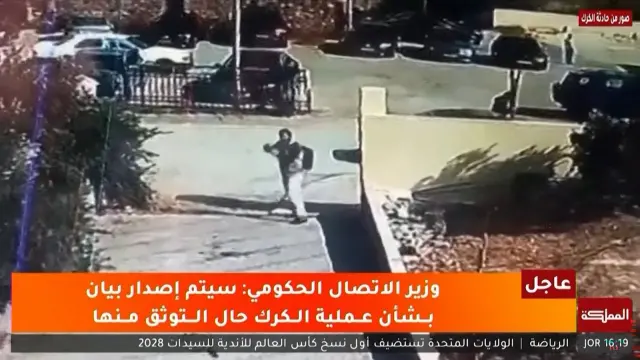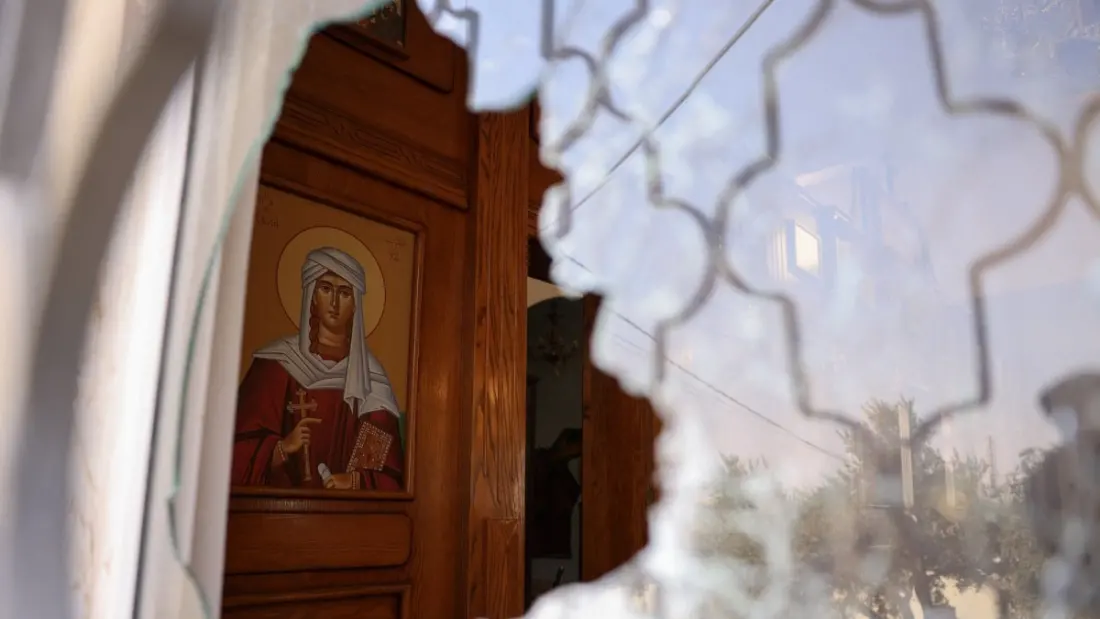
A funeral service at a Greek Orthodox church in Jordan's southern Karak governorate turned into the country's deadliest attack in years on Friday, when gunmen opened fire on mourners in broad daylight. Eight people were killed and around 40 wounded. Officials have called it extremist terrorism; no group has claimed responsibility so far.
King Abdullah II travelled to Karak within hours, ordered security forces to hunt the attackers down with an "iron fist", and chaired a National Security Council meeting on the response. Prime Minister Jafar Hassan blamed terrorist ideology and religious extremism, while the mayor of nearby Shihan village insisted the country would remain secure. Local survivors described the scene as a massacre; one man, Tarek Ammarin, who had a relative among the wounded, used exactly that word.
Police have stepped up patrols around the church, which sits roughly 120 kilometres southwest of Amman, and security has been tightened at shopping malls and foreign embassies across the kingdom, according to the US Embassy in Amman. Investigators say it is too early to link the gunmen to any known militant group inside or outside Jordan, though several plots have been thwarted in recent years.
The attack is a shock in a country that has long been one of the region's most stable. Gun violence on this scale is rare in Jordan, a key Western security partner that has also faced heightened regional tension this year, having been targeted in Iranian strikes after US and Israeli attacks on Iran in February.
For travellers, the implications are immediate. Karak is a staple stop on any southern Jordan itinerary — its Crusader castle is one of the finest in the Middle East, on the old King's Highway between Amman and Petra. The governorate is also home to a long-established Christian community, and Jordan as a whole draws pilgrims to biblical sites such as Bethany Beyond the Jordan and Mount Nebo. An attack on a church service inevitably raises questions about religious coexistence, a pillar of the country's appeal, and about safety for visitors in the south.
At this stage there is no travel ban or advisory against Jordan, and the manhunt is concentrated on a single governorate. But anyone with trips booked to Karak, or passing through on the King's Highway route, should monitor their foreign office guidance and local reporting over the coming days, expect a heavier security presence around churches, malls and government buildings nationwide, and allow extra time for checks. Tour operators and hotels in Amman and Petra are operating normally.
The bigger question is what the attack means for Jordan's carefully guarded image as the calm corner of a turbulent region — something the monarchy is clearly aware of, given the speed and force of its response. Authorities have promised accountability, and the coming weeks will show whether this was an isolated cell or part of a wider threat. Either way, it is a reminder to keep plans flexible and stay informed rather than cancel outright.