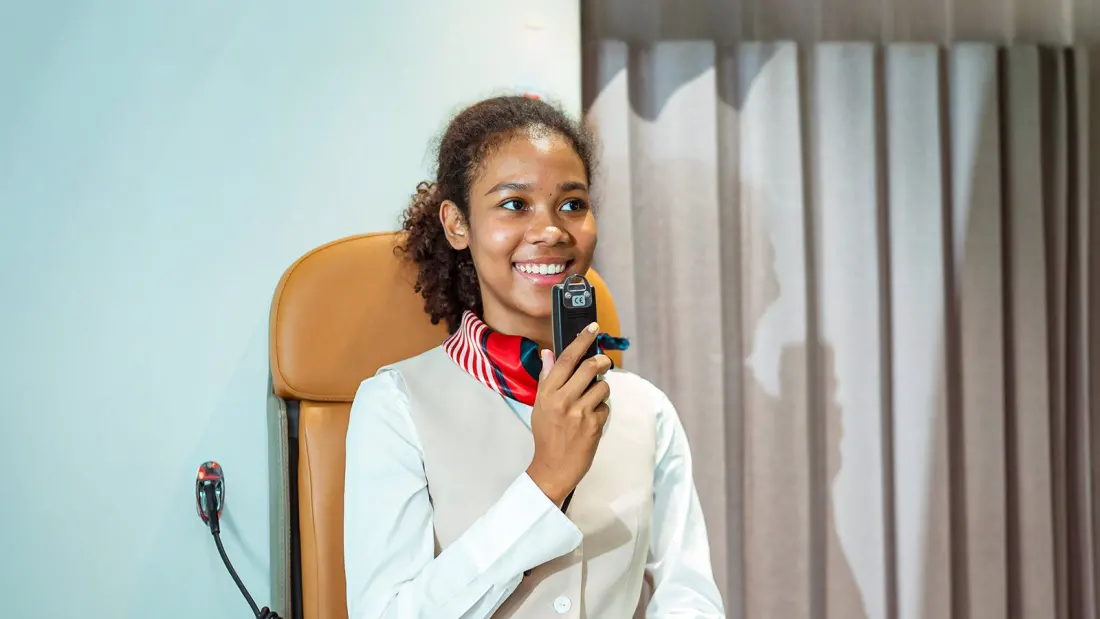
Next time you board, glance at the crew as you pass: during taxi, takeoff and landing, most of them are strapped into seats that face the back of the aircraft. It looks odd next to your forward-facing seat, but it's one of the most deliberately engineered pieces of safety kit on the plane.
The logic is the same as the reason babies ride in rear-facing car seats. In a sudden stop, your body keeps moving forward. A rear-facing seatback spreads the impact across the back, shoulders and head, rather than concentrating it on a lap belt across the chest. That means less strain on the spine and neck — and, crucially, a crew member who stays conscious and mobile enough to open exits and run an evacuation.
The jumpseats themselves are more than folding chairs. They're padded around the back and head, fitted with a four-point harness with a single release, and positioned at or near floor-level emergency exits (US rule 14 CFR 25.785(h) requires this). Underneath each one sits a container with a life vest, torch and manual oxygen release tool; nearby you'll find smoke hoods, fire gloves and an extinguisher, plus an interphone to the flight deck. The seat base flips up when the crew stand, so nothing blocks an exit.
Most jumpseats face backwards, though some aircraft differ — the Airbus A320 has a rear seat stored flat and swivelled to face forward, and some exits have single forward- or side-facing seats that still meet certification rules. Facing the cabin also lets the crew watch passengers during the riskiest phases of flight: spotting someone unwell, an unruly passenger, or running their mental "silent review" of evacuation procedures while strapped in.
So why don't passengers get the same protection? Preference, mostly. People dislike facing strangers, rear-facing seats can trigger motion sickness, they're heavier (burning more fuel), and in an evacuation passengers tend to head toward the door they came in through. Still, a handful of airlines — American Airlines, United, Qatar Airways and British Airways among them — offer rear-facing business-class seats if you're curious to try one. Note that the brace position is different when you're facing backwards: back and head firm against the seatback, knees together, hands under the thighs or on the knees.
For travellers, the takeaway is simple: those backward-facing seats are why the cabin crew can do their job in the worst few seconds of an accident. It's a small piece of aviation design that quietly raises everyone's odds.