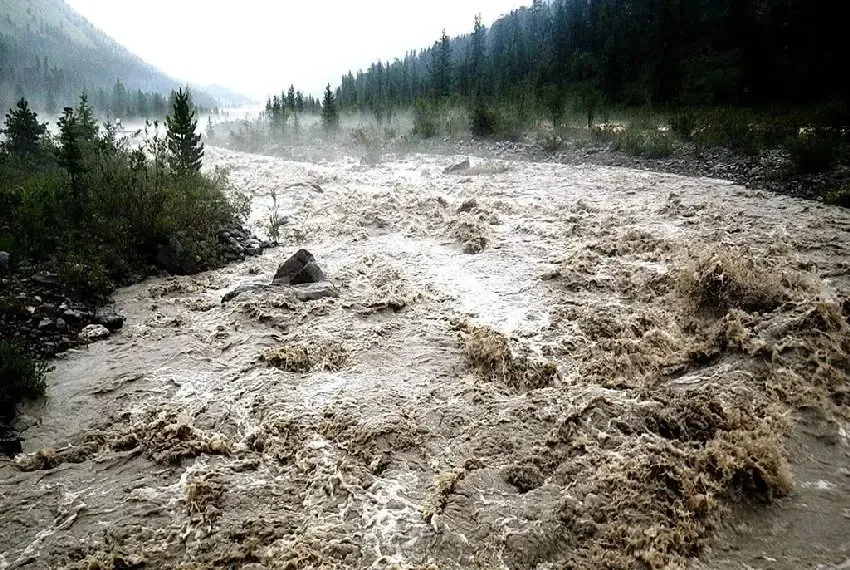
Kyrgyzstan's dramatic high-mountry scenery — the reason many trekkers and horse-riding holidaymakers head there — comes with a hidden hazard that scientists are only beginning to fully map. An international research team, publishing on the EGUsphere platform on November 25, estimates that more than 15 percent of the country's population, roughly one million people, live in areas that could be exposed to glacial lake outburst floods.
These floods happen when the natural dams holding back meltwater lakes at high altitude give way, sending a sudden surge of water, debris and boulders down mountain valleys. Kyrgyzstan has form here: more than 70 catastrophic outbursts have been recorded since the 1950s. The deadliest came on July 8, 1998, when a lake in the Shakhimardan River basin burst, killing more than 100 people — most of them across the border in Uzbekistan.
The study carries a sobering long-term message. The researchers explore the idea that today's warming and future outbursts may be separated by a lag of 45 to 200 years. In other words, the melting happening now could keep producing dangerous lakes for generations, long after the glaciers themselves have visibly shrunk. That said, the authors stress these events are hard to predict, and the million-person figure describes potential exposure, not an immediate threat to everyone living in those zones.
For visitors, the takeaway isn't panic — it's awareness. Kyrgyzstan remains one of Central Asia's most accessible adventure destinations, with trekking around alpine lakes like Ala-Kul, Kel-Suu and Song-Kul drawing growing numbers each summer. But some of those postcard-perfect turquoise lakes are exactly the kind of meltwater bodies the science is talking about. Sensible precautions matter: check local weather and any regional advisories before heading into remote valleys, avoid camping directly on valley floors or right at the outflow of a high lake after unusually hot weather or heavy rain, and travel with guides or agencies who know the terrain and its history. Campsites at popular lakes are generally well established and considered safe, but routes through narrower gorges downstream of glaciers deserve a bit more caution in a warming climate.
None of this should put anyone off. Kyrgyzstan's mountains are its main draw — horse trekking, yurt stays, world-class hiking — and the risk remains low on any given day for the average visitor. But as glacial retreat accelerates across Central Asia, both residents and travellers will be living alongside a hazard that unfolds on a generational timescale. Knowing what an outburst flood is, and where the danger zones tend to be, is just good trip planning for anyone heading into the Tian Shan or Alay ranges.
Story via 24.kg.