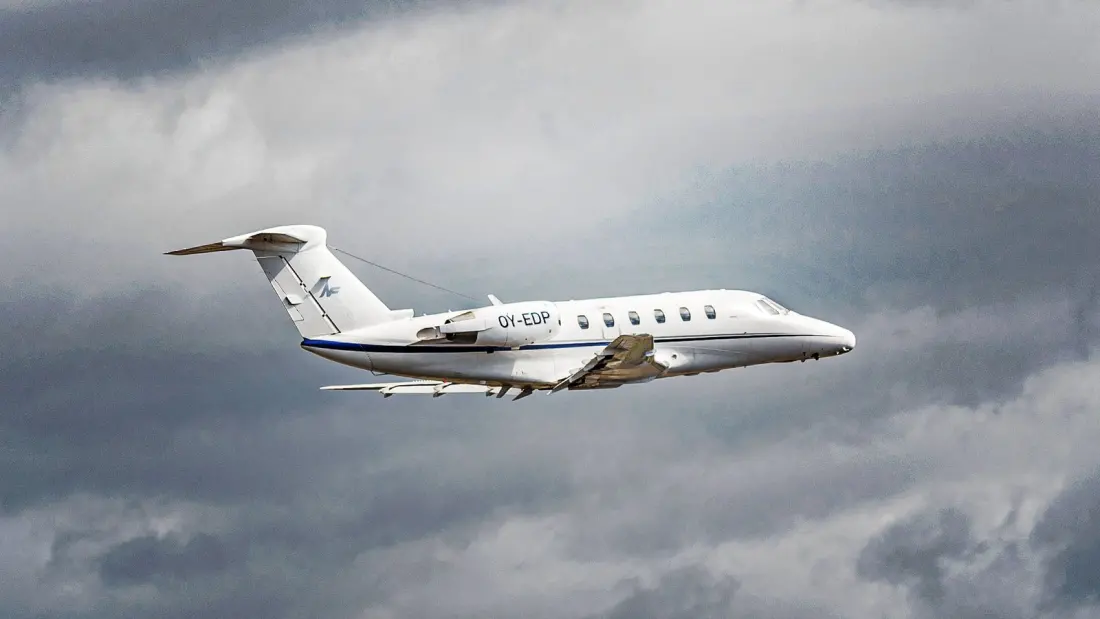
Spot a Gulfstream G650 gliding thousands of feet above a line of passenger jets and you might assume business aviation simply gets its own layer of sky. The truth is more interesting: private jets fly high because they are engineered for a completely different mission, and that design pays off in speed, efficiency and comfort.
The numbers show the gap clearly. A Gulfstream G650 can initially cruise at 41,000 feet and is certified up to 51,000 feet, matching the Bombardier Global 7500. A Boeing 787-8, by contrast, tops out around 43,100 feet. Weight is the biggest factor. The G650 has a maximum takeoff weight of about 99,600 lb and typically carries a handful of passengers rather than hundreds, so its two Rolls-Royce BR725 engines have far less mass to push into thin air. A long-haul airliner loaded with fuel, cargo and passengers usually gains more from cruising lower with a full load.
The airframes and engines are built for it, too. Thinner air means less drag, which helps cruise efficiency, but also less lift and oxygen, so high-altitude business jets like the Global 7500 — with its GE Passport turbofans and 114,850 lb maximum takeoff weight — are purpose-built to stay fast and controllable up there. That said, the certified ceiling is a limit, not a habit: actual weight, temperature, winds and air traffic control clearances decide each flight's altitude.
Airspace structure adds another advantage. The FAA's Reduced Vertical Separation Minimum system covers 29,000 to 41,000 feet, where most scheduled airline traffic sits. Above that band, vertical separation widens to 2,000 feet in US airspace, so a jet at FL450 or FL470 often shares the sky with fewer aircraft. It is flexibility rather than a free pass — controllers still decide who flies where.
Weather matters as well. Much ordinary cloud, precipitation and turbulence sits below the levels long-range business jets can reach, so climbing higher can mean a smoother ride when thunderstorms aren't a factor. Convective storms are a different story: no crew treats altitude as licence to fly through one.
Finally, passengers never feel the outside altitude directly — what they feel is cabin pressure. Gulfstream's pressurization keeps the G650's cabin at roughly 3,290 feet equivalent while the aircraft cruises at 41,000 feet, with 100% fresh air replacing the cabin volume about every two minutes. Lower cabin altitude on long flights reduces fatigue, a design point now echoed on the 787 and A350.
For travellers, the takeaway is that private aviation's high-altitude edge is less about privilege and more about purpose-built engineering — light payloads, powerful engines and smart pressurization combining to deliver faster, quieter, smoother journeys. Anyone weighing a private charter on a long route is essentially buying those margins. Full details come from the original Simple Flying feature.