A house on Costa Rica's Pacific coast can look stunning in a listing photo and feel like an oven by mid-afternoon. That gap, between how a building photographs and how it actually lives, is the starting point for a thoughtful look at sustainable architecture in the country, published by Howler Costa Rica.
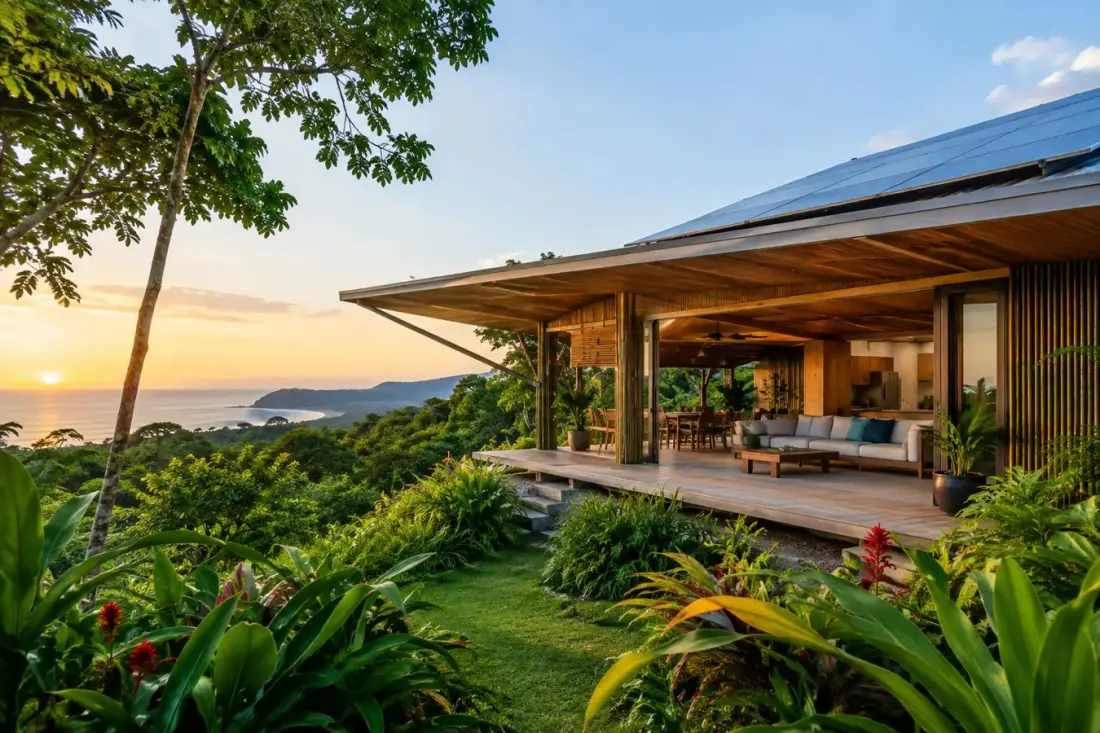
The core argument is refreshingly unglamorous: sustainability isn't about bolting solar panels onto a poorly designed villa. It starts with orientation. Before anyone picks tiles or pool finishes, a good architect studies the lot — its slope, prevailing winds, shade patterns, drainage routes and existing trees. A home positioned to catch cross-ventilation, with deep roof overhangs and bedrooms kept away from the harsh afternoon sun, may need far less air conditioning than one designed around a glossy rendering. Louvered windows, breezeways, shaded terraces and high ceilings aren't tropical nostalgia; they're working tools against heat and humidity.
That said, open-air living has limits. Humid regions demand careful moisture management to avoid mold, coastal salt air eats exposed metal, and in mosquito-heavy zones you'll want screens and some properly sealed rooms. The point of good design is comfort, not endurance.
Water gets its own chapter of the story. Rainwater harvesting, drought-adapted native planting, permeable surfaces and bioswales all help slow runoff during the rainy season. Wastewater matters just as much — the piece urges buyers to ask pointed questions about what septic or treatment system is installed, who maintains it, and whether it suits the property's actual occupancy, rather than accepting a vague "eco-friendly" label.
Materials come under scrutiny too. Concrete is common in Costa Rica for solid reasons — durability and seismic performance — but it carries a heavy carbon footprint, and a concrete-heavy home running air conditioning nonstop isn't green just because of a few rooftop panels. Locally sourced stone, responsibly harvested wood, clay and low-impact finishes often age better, suit the climate, and keep repair parts within reach — unlike imported luxury fittings that become impossible to service years later.
There's a human dimension as well. Construction can bring jobs and better roads, but it can also inflate land prices and strain a village's water supply. The advice for anyone planning to build: assemble a local team — region-experienced architect, engineer, surveyor, lawyer and contractors with a proven record — and verify permits, water availability and zoning before falling for a concept drawing.
For travellers, this matters more than it might seem. If you're booking an eco-lodge or eyeing a second home in Guanacaste, Santa Teresa or the Osa Peninsula, these are the questions that separate genuinely well-built properties from ones wearing a green costume. A building that respects its hillside, keeps its trees and manages its own water will simply be more comfortable to stay in — cooler, quieter, and more connected to the country around it. The best Costa Rican architecture, as the piece puts it, doesn't shout; it frames a view without stealing the forest from it.