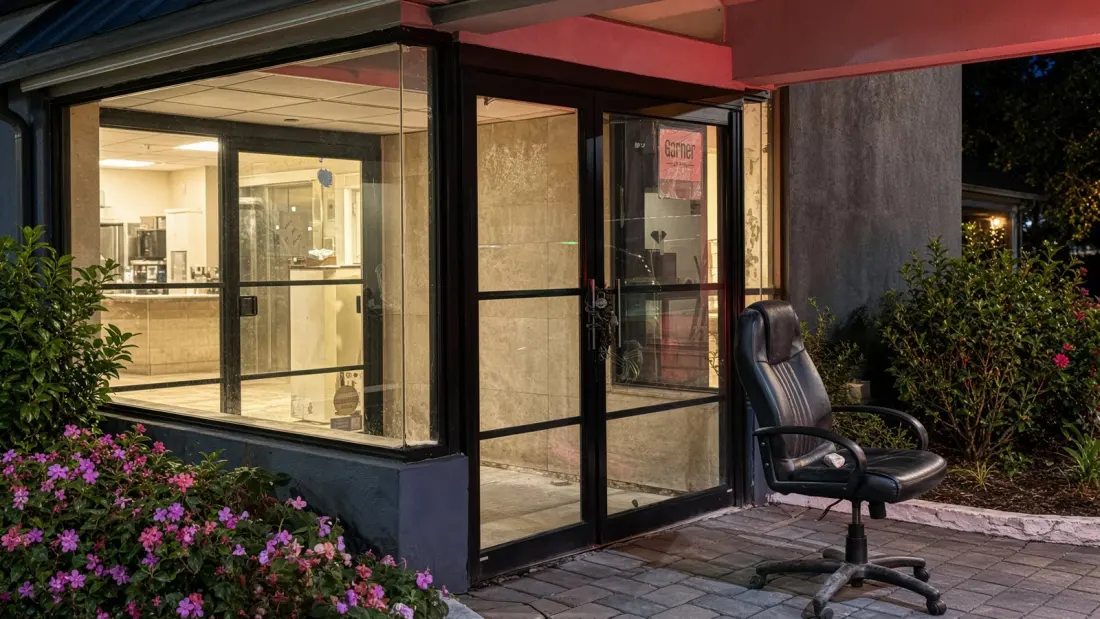
A traveller booked two nights at the Garner Hotel Fort Washington, an IHG property in the Philadelphia suburbs, and arrived on a Friday night to find the entrance padlocked with a chain, construction gear filling the lobby and other guests circling the parking lot looking for answers. Nobody had answered the phone earlier that day when they called twice about a mini fridge — now the reason was obvious. The hotel wasn't operating at all.
IHG did eventually find them a room, but only after midnight, at a pricier Holiday Inn about 20 minutes away. Things went downhill from there. The replacement room was hot and noisy, so the guest cancelled the second night, was told it was handled, then got billed for both nights anyway. They say IHG refused to refund either booking, offered an open-ended escalation process and suggested they dispute the original hotel's charge with their bank. Net result: $566 out of pocket for one night actually spent in a room — at a different hotel than the one they booked.
The strange part is that the Fort Washington property appears to have simply missed its reopening date. The building previously traded as the Fort Washington Inn and later a Best Western, with a listed closure running into late 2026. IHG's own pages label the Garner as "Opening Soon", yet travellers reported the app was still happily selling rooms for the night in question. The likeliest explanation: inventory was loaded ahead of a planned reopening and never switched off when the property wasn't ready.
That response is hard to square with IHG's published promises. Its reservation guarantee says that if a credit-card-secured booking can't be honoured, the hotel should arrange comparable accommodation and transport, cover the first night's room and tax, and refund any deposit. Another IHG page promoting direct bookings goes further, promising "a room" if a reservation can't be honoured "for any reason" — and touting the accuracy of its listings because, in its words, the company owns the place. Its own footer notes most hotels are independently operated franchises.
Nor is this a one-off. There's a recent pattern of guests arriving with valid confirmations at hotels that had quietly closed: a Holiday Inn near LaGuardia that lost its brand in foreclosure, a Courtyard in Beaumont, Texas, with a dead phone line, a Fairfield in Louisville where guests kept arriving after the owner's bankruptcy, and Marriott properties where guarantees excluded exactly this scenario. In the franchise model, the property owner often controls refunds — but a chain telling a stranded customer to fight their own bank is making a choice about whose time and money gets wasted.
Why should you care? Booking direct with a big chain is supposed to be the safe option: you skip vetting an unfamiliar owner and trust the brand to make things right. When a hotel can sit in inventory while chained shut — and the chain declines to pay up — that trust is exactly what's at stake. If you ever land at a shuttered property, document everything on the spot, push hard for the chain's guarantee in writing, and keep your card dispute as leverage rather than a first resort.
Story via View from the Wing