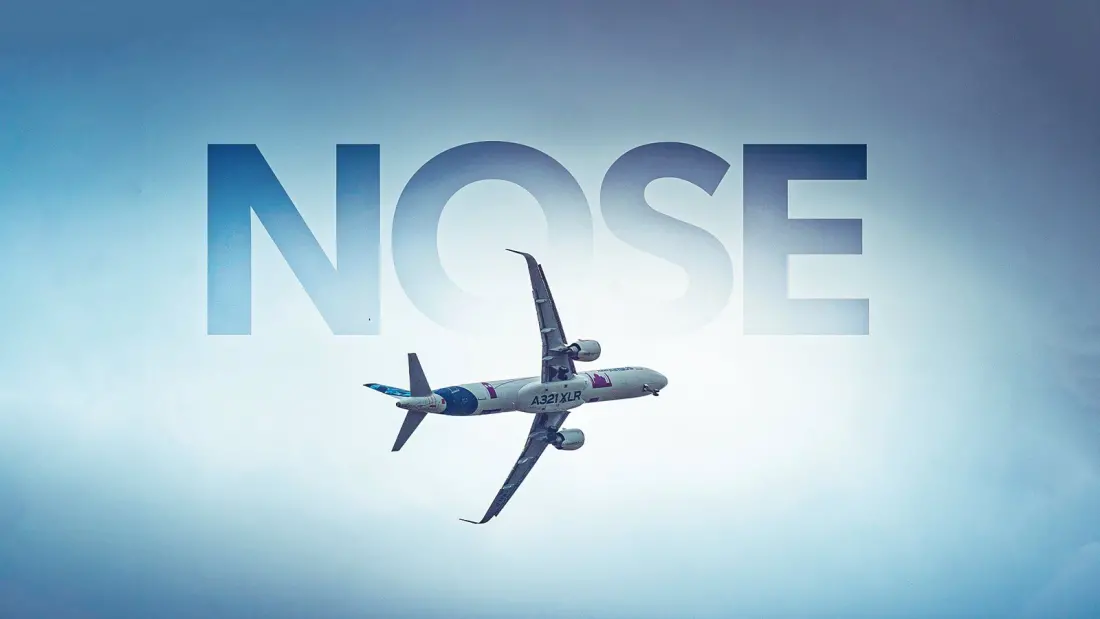
Flying across the Atlantic on Airbus's new long-range narrowbody and getting the sense the plane is tilted slightly upward? You're not imagining it. Nearly every airliner cruises with a nose-high attitude, and the A321XLR makes it more obvious than most. It's not a design flaw — it's physics working exactly as intended.
A wing only generates lift when it meets oncoming air at an angle, so a jet at cruise typically sits one to three degrees above the horizon. The XLR leans more than most because it keeps the standard A321's 117-foot wingspan while hauling far more weight: up to 223,000 pounds (101,100 kg) at takeoff, thanks to the fuel needed for routes standard narrowbodies can't fly. With limited wing area, it flies at a higher angle of attack than comparable jets, and passengers walking up the aisle in the first hours of a long flight can genuinely feel like they're on a shallow ramp.
That tilt changes as the flight goes on. Fuel burn makes the plane lighter, so it needs less lift, and Airbus's fly-by-wire system gradually lowers the nose automatically. The XLR also uses step climbs — levelling off lower where the air is denser when heavy, then climbing in stages as weight drops. Its navigation computer times these climbs with no pilot input, and hard-coded protections intervene if turbulence or gusts ever push the nose toward an unsafe angle, cutting off before any risk of stall.
There are practical knock-on effects in the cabin. Cabin floor tilt is most pronounced early in the flight, so crew service starts at the front and works backwards — letting flight attendants push heavy galley carts downhill rather than fight gravity. Meanwhile the autopilot runs constant micro-trimming to hold a steady Mach 0.78 within a comfortable buffet margin, keeping the ride smooth and vibration-free for passengers.
The XLR also carries clever hardware changes. Airbus swapped the standard A321's heavy double-slotted inboard flaps for a lighter single-slotted version that cuts drag at cruise, compensating with automated flap programming for takeoff performance. And unlike the earlier A321LR, which stuffed extra fuel into up to three bolt-in cargo-hold tanks that ate luggage space, the XLR uses a single permanent rear centre tank — keeping cargo capacity intact and shifting weight aft, which the computers continuously rebalance as fuel drains.
Why does this matter to a traveller? If you've booked an early A321XLR route — think transatlantic services from low-cost and hybrid carriers like Aer Lingus, Iberia or Norse — you can expect narrowbody comfort on genuinely long routes, with the nose-up posture simply part of the ride. It signals an aircraft working hard in the first hours, then settling flatter and more efficient as the miles tick by.