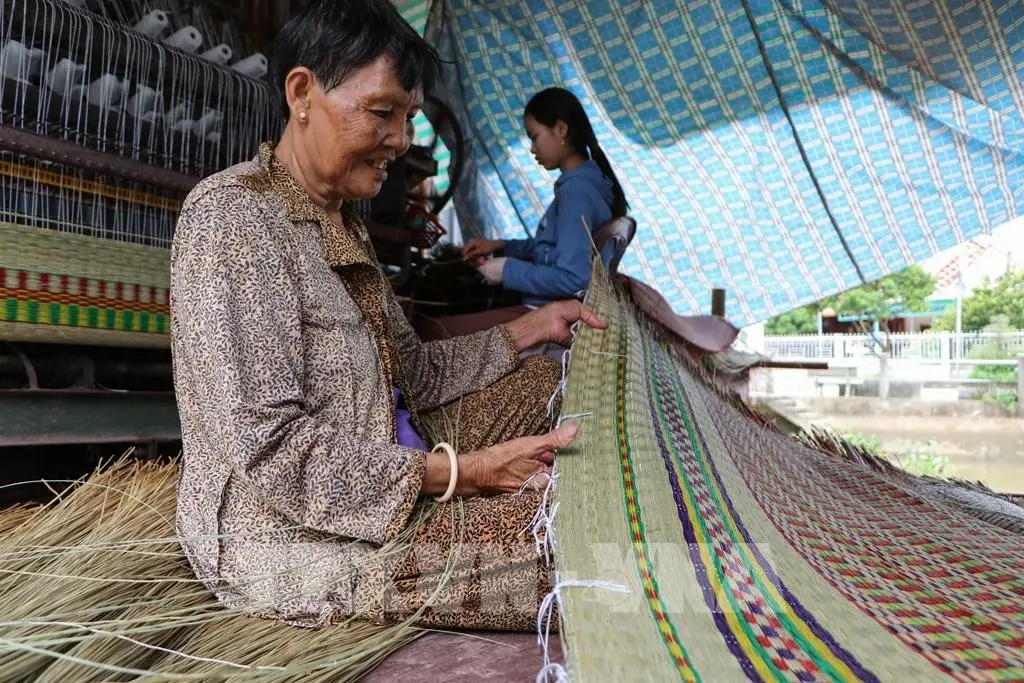
Tucked into Lai Vung Commune in Dong Thap Province, deep in Vietnam's Mekong Delta, Dinh Yen village has been making sedge mats for more than 100 years. The craft was recently recognised as National Intangible Cultural Heritage, and it's still very much a living trade — generations of local families rely on it for their income while keeping southern Vietnam's mat-weaving traditions intact.
The raw material is sedge, known locally as 'lat', a reed that grows in the delta's wet soils. Turning it into a finished mat is slow, physical work: fibres are sorted and prepared by hand, then woven on looms that require two people working in close rhythm. Artisans say it takes years to master the coordination and timing involved. The results range from simple everyday sleeping mats to brightly coloured, multi-toned designs made to suit modern tastes.
What makes Dinh Yen interesting is how it has balanced old and new. Many workshops, including one run by longtime weaver Tran Thanh Dieu, have brought in machinery to speed up fibre preparation and improve quality — yet the delicate hand-weaving techniques themselves remain unchanged, passed down within families. Couples like Huynh Van Chien and his wife have spent decades at the loom, keeping the craft alive even as cheaper factory-made products flooded the market.
There's a growing tourism angle too. University students already travel to Dinh Yen to try weaving for themselves, and the heritage designation is likely to bring more visitors. For travellers, it's a chance to see a genuine working craft village rather than a staged one — you can watch artisans at the looms, learn how sedge goes from muddy field to finished mat, and buy directly from the people who made it. Pair it with Dong Thap's other draws: lotus fields, bird sanctuaries, and the laid-back river towns of the delta.