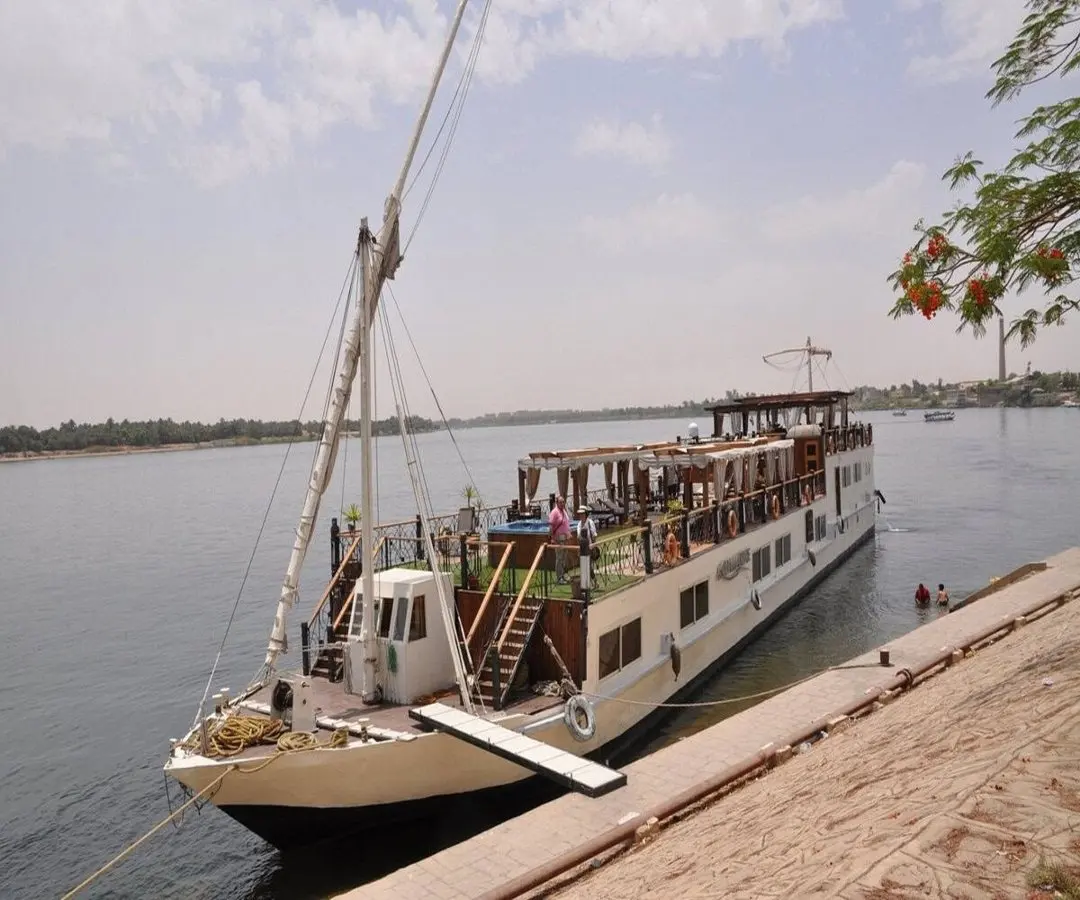
The Nile stretch of an Egypt itinerary is often the part travellers remember most — slow water, palm-lined banks, kids waving from the fields. But the boat you choose shapes that experience more than most people expect, and the core choice is between a traditional cruise ship and a dahabiya, the small sailing boat modelled on the elegant vessels that once carried travellers upriver.
A cruise ship is essentially a floating hotel: several decks, a reception, restaurant, lounge, usually a pool and sometimes evening entertainment. Days run to a fixed timetable, with sailing times and excursions slotted around them — most operate three or four nights between Luxor and Aswan. That structure suits first-timers, families and anyone fitting the Nile into a tight Egypt itinerary.
A dahabiya carries just a handful of cabins. Sailing becomes the point rather than the commute: some afternoons the boat simply ties up by a riverbank or island and stops. Because they're sailing vessels at heart, the wind dictates a lot — when it drops, some use a motor or take a tow from a tug, and how much varies by boat, so it's worth asking the operator. Dahabiyas typically run four to five nights and can sometimes work in smaller, quieter riverside stops — though mooring permissions, navigation and weather still limit where they go.
Both types hit the headline sites of Upper Egypt: Luxor and Karnak, Edfu, Kom Ombo and the Aswan area. The difference is how you tour — larger ships usually run group excursions timed to the ship's schedule, while dahabiyas can offer a more personal pace, though not automatically private guiding.
One myth worth killing: smaller doesn't mean better or cheaper. Standards vary wildly on both — some dahabiyas are gorgeous boutique boats with big suites, others are plain, and big ships range from mainstream to genuinely luxurious. Fewer cabins and a boutique operation can push some dahabiyas well above a cruise ship's price. Service quality comes down to crew and management, not boat size.
So who suits which? Dahabiyas tend to win for couples, honeymooners and repeat Egypt visitors who prize privacy and a slow pace and can live without a pool and multiple restaurants. Cruise ships fit travellers who want structure, facilities and a sociable atmosphere, or families needing space.
Before booking either, get the actual vessel's name and verify photos match it; read the itinerary slowly, noting nights onboard, which sites are included and whether guiding is private or shared (get any promised Egyptologist in writing); check cabin size, position and condition, since the gap between categories is especially noticeable on small boats; and confirm exactly what the price covers — meals, drinks, entrance fees, transfers and guiding are handled differently by every operator.
Whichever you pick, the river is the same. What changes is how close you feel to it.
Story via A Luxury Travel Blog