On Itamaraca Island in Pernambuco, northeastern Brazil, a mother-and-daughter team has built something you can actually book a night in: a seven-room house whose walls are made from roughly 8,000 discarded glass bottles. Edna Dantas and Maria Gabrielly Dantas call it Casa de Sal, and it doubles as their home and a small sustainability classroom for visitors.
The story starts as a housing problem, not a design statement. In May 2020, mid-pandemic, their landlord asked them to leave their rental and Maria Gabrielly had paused her university studies. They had land, but little else — so they looked at the island's most visible nuisance: bottles piling up on beaches, streets and mangroves after tourist seasons, in a place with no reliable waste collection, let alone recycling. Edna had three decades of recycling and environmental education behind her, and Maria Gabrielly brought a fashion design background (the pair also run Cabrochas, a sustainable fashion brand they founded in 2014). They started collecting.
The build took about two years, done in stages — the first section served as a sewing studio while they kept working. The technique is simple but clever: bottles are set vertically into mortar with the openings facing down, alternating orientation row by row. Sunlight filters through the glass and throws patterned light across the rooms, and the bottles cut down on how much extra building material they needed. The 70-square-metre (750-square-foot) house didn't stop at glass — interior partitions use reclaimed wood and pallets, and the roof tiles were made from discarded toothpaste tubes.
It wasn't all smooth. Maria Gabrielly told Brazilian media that hired workers sometimes tried to override their plans, underestimating the research and organisation the two women had put in. They persisted, and the finished home is now a base for environmental workshops, guided visits and honest conversations — including about environmental racism and how waste burdens fall hardest on marginalised communities.
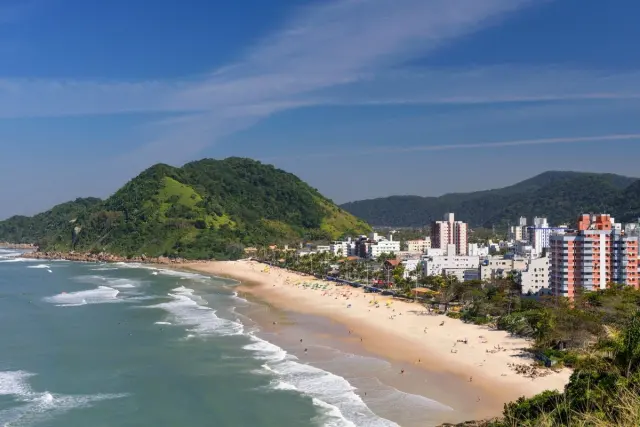
For travellers, this is a genuinely unusual place to stay rather than a novelty: roughly 100 metres from the beach, listed at R$430 (about US$85) for a two-night stay in January 2026, though prices may have shifted. You get a hands-on look at how the walls were assembled and how far reclaimed materials can go, plus Edna's workshops on waste and reuse. It suits eco-minded travellers, slow travellers and anyone who'd rather their accommodation had a story than a lobby. Itamaraca itself is a low-key barrier island north of Recife, known for beaches and the Fort Orange seafront — an easy add-on to a Pernambuco coast trip.
One practical note: it's a family home and an educational project, so expect it to feel more like staying with hosts than checking into a pousada. Book ahead through the family (Maria Gabrielly handles reservations), and go ready to learn something about what happens to the bottles that end up on Brazil's beaches.
Story via Colombia One.