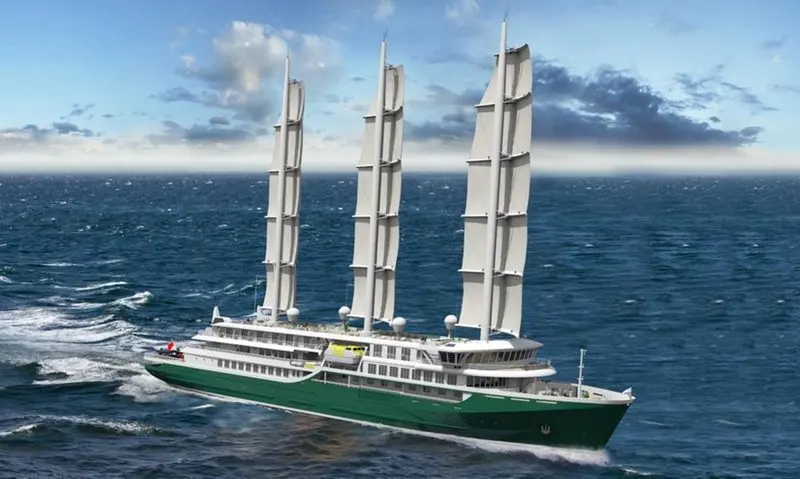
Polar cruise specialist Oceanwide Expeditions has released its first-ever Environmental, Social and Governance report — and buried in the sustainability data is a big piece of fleet news: two next-generation expedition ships are on the way, expected from 2029.
The company signed a letter of intent in March to build the pair, described as eco-sail vessels with hybrid technology and onboard energy storage systems. Oceanwide says it has no intention of upsizing; the plan is to keep the small-ship format and close-to-nature style that has defined its trips to places like Spitsbergen, Greenland and Antarctica. For anyone who has been watching the wider cruise industry chase bigger tonnage, a builder committing to smaller, greener expedition tonnage is worth noting.
The report itself is partly about accountability. CEO Rémi Bouysset frames it as a baseline — a way to actually measure progress rather than make vague claims, while admitting there's work still to do. On the operational side, the existing fleet is being tuned through itinerary planning, engine optimisation, hull maintenance and waste heat recovery. Back on board, hotel teams have been phasing out single-use plastics, cutting food and energy waste, and swapping in greener cleaning products. The company has also shifted toward local suppliers to trim emissions from its supply chain.
There's a land-based story too. In 2023, Oceanwide bought more than 1,600 hectares of degraded rainforest in the Brazilian Amazon and started a long-term restoration programme. The aim is to rebuild native ecosystems, protect endangered species and create opportunities for local communities. Unusually for the cruise sector, the project is entirely self-funded — bankrolled through the company's own expeditions rather than an opt-in charity scheme.
So who should care? If you're eyeing an expedition cruise, this matters in practical ways. Small ships like Oceanwide's are exactly what regulators and sensitive destinations increasingly favour, and hybrid, sail-assisted vessels arriving in 2029 point to quieter, lower-emission trips in the polar regions. It also signals what to look for when comparing operators: published environmental reporting, plastic reduction onboard, local sourcing and credible conservation projects are becoming the benchmark rather than the bonus. Oceanwide isn't claiming perfection — the CEO says as much — but the fact that a mid-size expedition line is putting numbers on paper gives travellers something concrete to hold operators to. Booking a 2029 voyage on the new ships is a while off, but the direction of travel for small-ship polar cruising is now on the record.
Story via Cruise Industry News.