Zagreb has revealed its plan to make the car-light core of the Lower Town permanent. Unveiled during European Mobility Week, the project turns the temporary setup that has been in place on Masarykova Street for the past three years into a fully redesigned pedestrian quarter covering Masarykova and Teslina streets, plus stretches of Preradovićeva and Gajeva up to Berislavićeva.
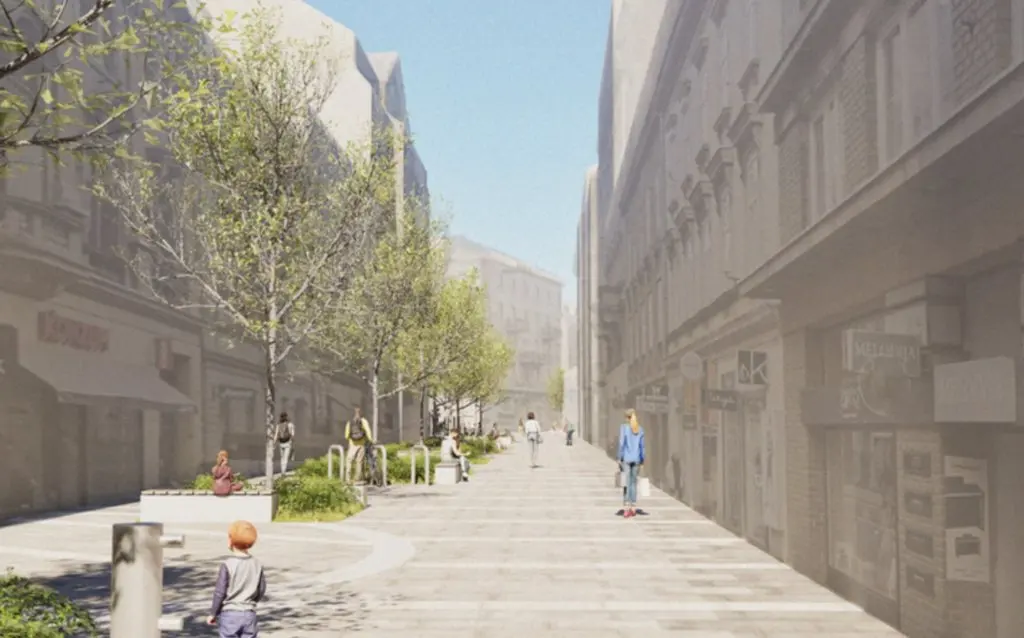
The scheme, drawn up by the city's Institute for Spatial Planning, will unify the whole area with consistent paving, split into a strictly pedestrian zone and a calmed traffic section between Republic of Croatia Square and Gundulićeva. New focal points are planned at key intersections, and greenery is the headline feature: around 50 new trees will form a continuous line linking the two arms of the Green Horseshoe, Zagreb's celebrated chain of parks. Add benches, drinking fountains, urban furniture, bike parking, managed delivery bays and better access for people with disabilities, and the idea is a centre that works for people on foot first.
Crucially for anyone who loves the café culture of the Lower Town, the hospitality terraces aren't going anywhere. The city says they remain part of the area's social life, but they'll get a uniform design and be better woven into the public space rather than improvised ad hoc.
The public seems firmly on board. Of around 3,400 residents who completed a survey, 88.4 percent backed the full overhaul, 76 percent rated the existing temporary arrangement positively, and 72 percent supported extending the zone to Teslina and Gajeva. Citizens' top asks: more greenery, more places to sit and linger, and better organised traffic and deliveries.
Deputy Mayor Luka Korlaet framed the project as stitching existing pedestrian spaces into one continuous walkable whole through the heart of the city, extending the zone along the northern arm of the Green Horseshoe from Republic of Croatia Square to Zrinjevac park.
Why it matters for travellers: Zagreb's Lower Town is where most visitors end up anyway — the museums, cafés and park ring are all here. Once completed, the area becomes far more pleasant to wander, with shade, seating and fountains making summer visits easier, and a safer, quieter route linking Croatian National Theatre country at Republic of Croatia Square with Zrinjevac. If you visited during the temporary setup and liked it, the permanent version promises more of that, done properly. If you haven't been for a few years, this is a good reason to put the Croatian capital back on the list — ideally alongside a spring or autumn trip timed to catch the terraces in full swing.