
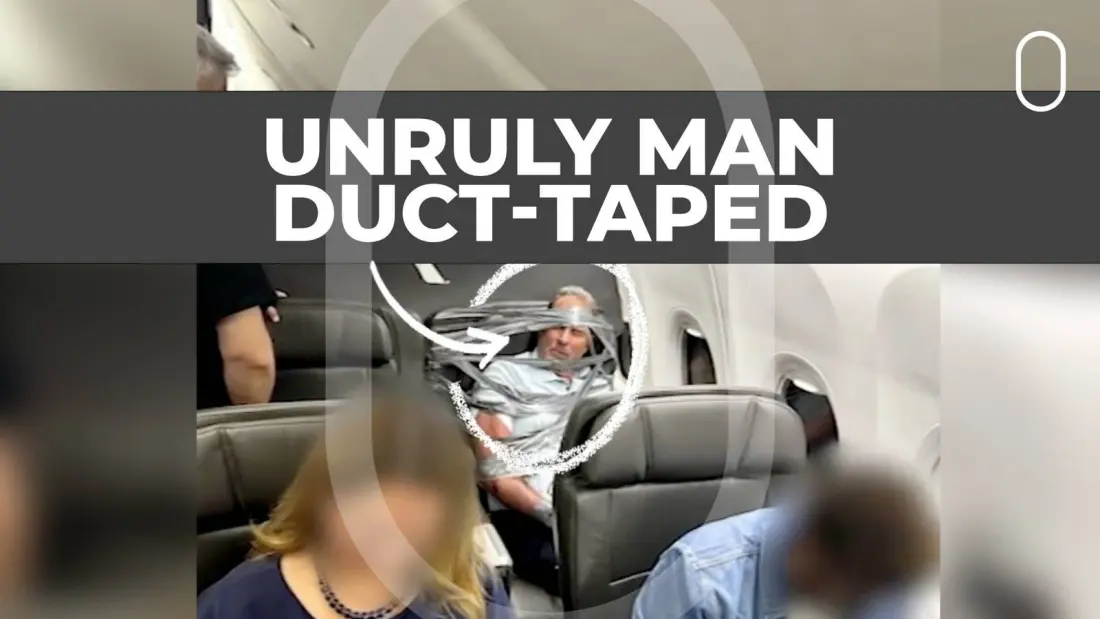
An American Airlines flight from Dallas to Newark ended up needing more than a seatbelt sign to keep the peace. During the trip, a 67-year-old passenger launched into a racist and homophobic tirade in the Domestic First Class cabin, directing slurs at a flight attendant before things turned physical. He assaulted two fellow passengers — and at one point bit one of the men trying to hold him down.
That's when three passengers stepped in. Working together, they restrained the man using zip ties and duct tape, securing him to his seat for the remainder of the flight. The unusual restraint effort made headlines not just for the disturbing behaviour that triggered it, but for the fact that fellow travellers had to take matters into their own hands.
Incidents like this have become a recurring theme in US aviation in recent years, with unruly passenger reports spiking since the pandemic and crews increasingly reliant on passengers to help de-escalate violent situations. Flight attendants are trained to manage disruptions, but when a passenger becomes physically assaultive mid-flight at 30,000 feet, options are limited until the aircraft lands and police can meet it at the gate.
For travellers, the takeaway is practical rather than alarmist: cabin crews are authorised to enlist passenger help when someone poses a danger, and intervening to restrain a violent passenger is legally protected in most jurisdictions. Choosing to sit elsewhere when a conflict starts brewing, reporting escalating behaviour to crew early, and not engaging directly with an aggressive passenger are all sensible moves. The vast majority of flights pass without drama — but this one shows how quickly a first-class cabin can turn into something out of a movie.
If you're flying American Airlines between its Dallas-Fort Worth mega-hub and the New York area, this route remains one of the busiest corridors in the US, with frequent daily departures. The airline has not indicated any change to operations as a result of the incident; it's a one-off passenger case rather than a route or safety issue. Still, it's a reminder that the person in the next seat matters as much as the seat itself — and that a cabin full of willing helpers can be the best safety feature on board.
Story via Simple Flying.