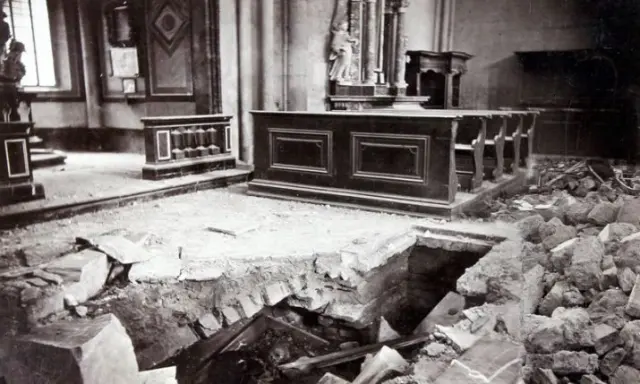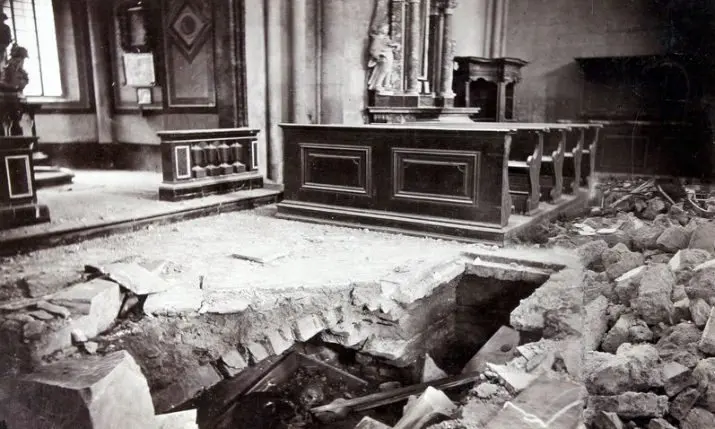
At 7:33 a.m. on 9 November 1880, a magnitude 6.3 earthquake struck Zagreb — still the most powerful the Croatian capital has recorded. One person died, more than 1,700 buildings were damaged or destroyed, and within 24 hours, 3,800 people had bought tickets out of the city at the main railway station. The anniversary was marked this week by Croatia Week, which republished a vivid eyewitness account from Croatian archaeologist Ćiro Truhelka, then a schoolboy in the city.
Truhelka's memoir reads like a disaster diary: a muffled rumble over morning coffee, chimneys collapsing across doorways, the bells of St Mark's Church ringing as walls swayed. Walking to school through Mletačka Street, he found pavements buried under roof tiles and the entire gable of a house on St Mark's Square torn away, with an injured mason beneath the scaffolding. The church of St Katarina on Katarina Square showed deep cracks. In the Upper Town, families fled half-dressed; the worst damage was in the newer lower city. Aftershocks continued until Christmas, and many residents slept outdoors in Tuškanac and Maksimir park during a stretch of unseasonably warm weather.
Oddly, the quake turned out to be a turning point. An international relief effort raised money across Europe, and reconstruction transformed Zagreb: new streets appeared, old ones stretched toward the outskirts, and the population jumped from 30,000 to 40,000. The most famous casualty, Zagreb Cathedral, was rebuilt so thoroughly the work took until 1906 — the neo-Gothic twin spires visitors photograph today are the product of that reconstruction.
For travellers, the story doubles as a walking route. St Mark's Square with its tiled roof, St Katarina's church, Mletačka Street and the Upper Town (Gornji Grad) that survived the quake largely intact are all within a compact, easily walkable district. Zagreb sits in a genuinely seismic zone — the city was shaken again, more seriously, by a 5.5 magnitude quake in March 2020 — which is why many of its older buildings carry visible restoration scars. Knowing that history adds a layer to a stroll through streets that have been knocked down and rebuilt for over a century.
Who's this for? Anyone planning a city break in Zagreb: the earthquake-era landmarks are free to see and cluster within a few minutes of Ban Jelačić Square, and the city's café culture Truhelka described over his pre-school coffee hasn't changed much either.