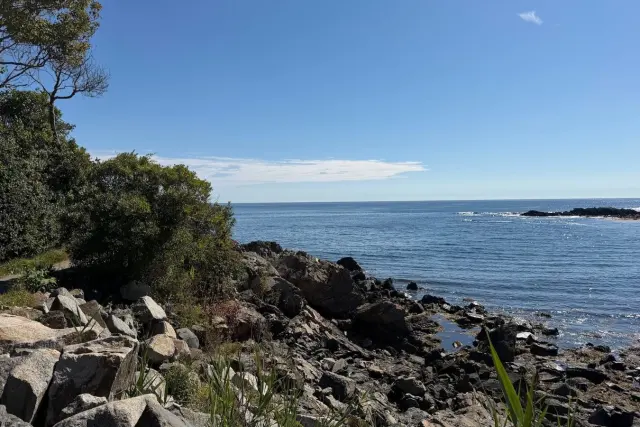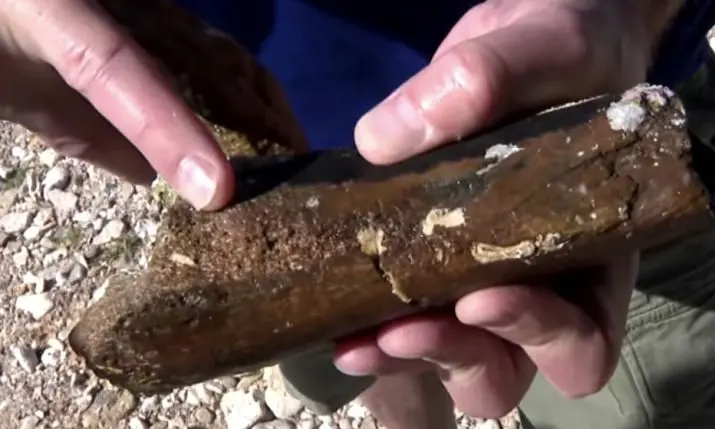
Off the coast near Bale in Istria, scientists are pulling dinosaur bones straight out of the seabed — and they think the animal is a species nobody has seen before. The site, inside the Datule–Barbariga palaeontological reserve, holds remains estimated at roughly 130 million years old, embedded in rock under just 1.5 to six metres of water. That underwater setting is what makes the site genuinely unusual: most dinosaur digs happen on land, but this one requires researchers to work submerged, recovering and preserving bone from the seafloor.
The creature is a large sauropod — the classic long-necked, long-tailed plant-eater with pillar-like legs that browsed high in trees. So far the team has recovered neck vertebrae, lumbar bones and ribs. American palaeontologist Matthew Lamanna says the animal represents a new species, and researchers hope further excavation will reveal more of the skeleton and pin down its classification. Bone is distinguished from ordinary rock by tiny internal structures called trabeculae.
There's a good origin story too. Dinosaur bones were first found in this stretch of coast by accident in 1993, when a man named Boscariolli was collecting date mussels and smashing rocks to get at them — and hit a bone. Italian palaeontologist Fabio Della Vecchia recognised what it meant, and the find eventually led to a dinosaur named Histriosaurus boscariollii, which is literally tied to Istria. The bones now being studied are thought to belong to a related but distinct species. The area was declared a special palaeontological reserve in 1994.
There's also a geographic twist worth knowing: during the age of dinosaurs, the landmass that is now Istria sat far to the south of its current position, so these fossils help reconstruct a very different Adriatic. Palaeontologists Frano Vidaković and Aleksandar Mezga, who have worked the site, describe it as unlike anywhere else they've encountered.
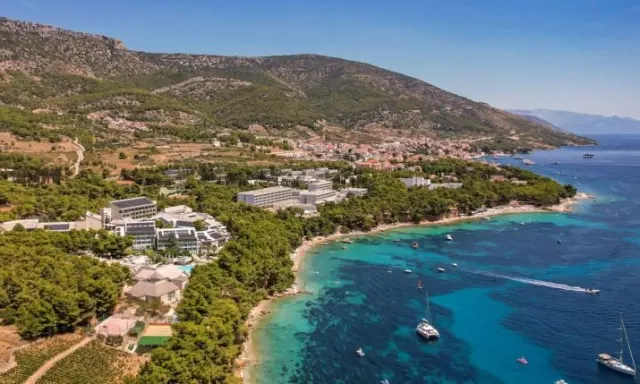
For travellers, this is a neat reason to look past Istria's obvious draws — the hilltop towns, truffle menus and Adriatic beaches — and add a prehistoric layer to a trip. Bale (Valle in Italian) is a small medieval town a short drive from Rovinj and Pula, both easy bases. You won't be diving with the palaeontologists, but the coastline around Barbariga is walkable, the reserve area is part of the local landscape, and Pula's archaeology — including its Roman arena — pairs naturally with a dinosaur-themed day. It's also a rare chance to watch a scientific story unfold in real time: scientists believe more fossil material is still embedded in the seabed, so the site's significance is only likely to grow. If you're heading to Istria this year, it's worth checking whether local talks or exhibits in Bale are showcasing the excavation.