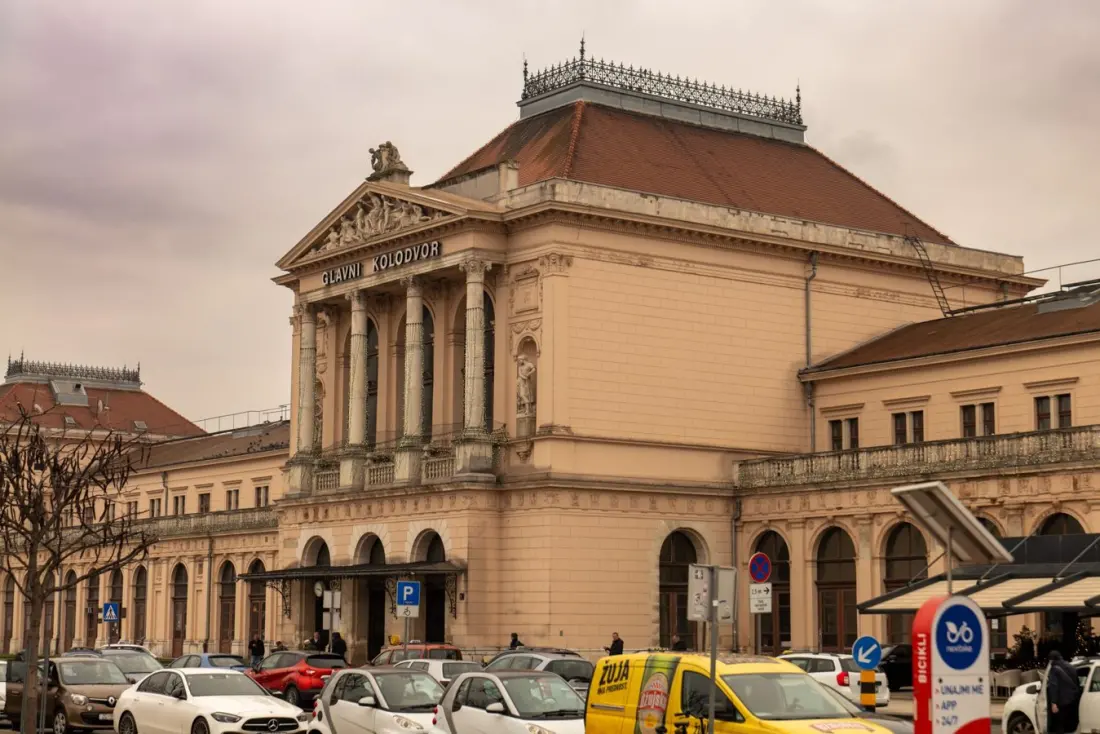
Zagreb Glavni kolodvor, the grand railway station that has greeted arrivals to the Croatian capital since 1892, is finally set for a complete renovation. The building — designed by Hungarian architect Ferenc Pfaff during the city's late 19th-century boom — has long been one of Zagreb's most recognisable landmarks and a favourite backdrop for film crews. Passengers, however, have complained for years about its tired interiors and lack of basic facilities.
That's about to change. HŽ Infrastructure has signed a contract with consortium Intekonzalting and PlanAxis to prepare the technical documentation for a full renovation, with the design and permitting phase due to wrap up by the end of 2027. Construction, once procured, is expected to take around three years, targeting completion in 2031.
Because the station is a protected cultural property, the work will be handled carefully. Structural reinforcement of the load-bearing elements will use minimally invasive techniques to preserve the original materials and design. Façades, the roof and interiors will all be renovated under conservation supervision. There's an energy-efficient side to the project too: windows and doors will be replaced and heat pumps installed, with the option of drawing on renewable sources.
For anyone arriving by train, the practical question is disruption. HŽ says parts of the building — and possibly all of it, depending on the phasing — will be closed during works, with passenger routes and daily operations adapted around the construction. Trains themselves are expected to keep running without interruption.
There's also a potentially bigger change in the pipeline. The project leaves room for a new direct underpass beneath the station's vestibule, linking the building straight to Tomislav Square, the leafy park facing the station. Whether that happens will depend on the City of Zagreb, which holds responsibility for taking it further.
Why should travellers care? Zagreb's station is the front door to the capital for anyone arriving from Vienna, Budapest, Ljubljana or Split, and it sits at the top of the city's main pedestrian axis. A modernised, energy-efficient station with better facilities would make rail travel into Croatia far more comfortable — useful timing too, as Croatia's popularity and its rail connections keep growing. The catch: if you're visiting between roughly 2028 and 2031, expect hoardings, detours and possibly a temporary station setup, so build in a little extra time and check arrangements before you travel.