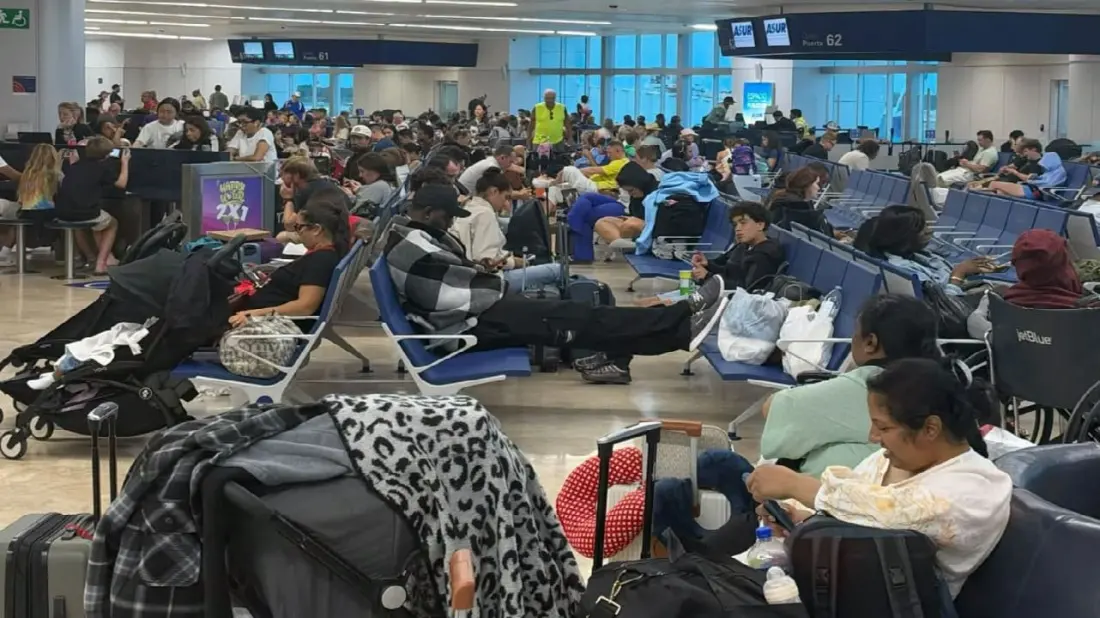
A telecoms failure inside the US air traffic control system triggered a nationwide ground stop on Friday, November 13, and the ripple effects landed hard on Mexico's Caribbean coast. Nearly 60 flights in and out of Cancun were disrupted over roughly four hours, with thousands of travellers stuck at terminals across Quintana Roo.
The Federal Aviation Administration ordered all US airports to hold traffic after communication problems hit multiple Air Route Traffic Control Centers. Transportation Secretary Sean Duffy said the network had become overloaded with data, destabilising communications and degrading radar coverage at high-altitude centres. He pointed to ageing infrastructure — copper lines and legacy switches dating back to the 1980s — as the underlying cause. The FAA later confirmed technicians were investigating and restrictions were lifted, with operations returning to normal gradually. It was the longest US ground stop since September 11, 2001.
Quintana Roo Governor Mara Lezama said 57 departing flights across the state were affected, with the state's Guest Assist teams sent into terminals to help stranded passengers. The state tourism ministry was tracking 17 US-bound flights as of 5:27 PM, including JetBlue and Frontier departures from Cancun International to Boston, Atlanta, New York and Orlando; Delta services to Detroit, Minneapolis and New York; American flights to Chicago; and Southwest services to Denver, Austin and Nashville. Tulum International had an American flight to Dallas/Fort Worth and a delayed United departure to Houston, while Cozumel also had a Houston-bound United flight affected.
The practical takeaway for anyone flying between Mexico and the US: when US air traffic control hiccups, international departures feel it immediately, and the bottleneck can last well beyond the official stop. State officials urged passengers to check directly with airlines before heading to the airport and to expect a slow, staggered recovery rather than an instant return to schedule. Travellers already in the terminals were advised to work with airline staff on rebooking options while authorities coordinated with airport and federal teams.
It's also a reminder to build buffer into any trip that hinges on a tight US connection. A four-hour nationwide hold can wipe out same-day connections, cruise arrivals timed to flights, and hotel check-ins — and while airlines usually rebook affected passengers, seats on the next available flights go fast when dozens of services are delayed at once. Following your airline's app notifications and official airport channels beats queueing blind at the desk.
Story via Riviera Maya News