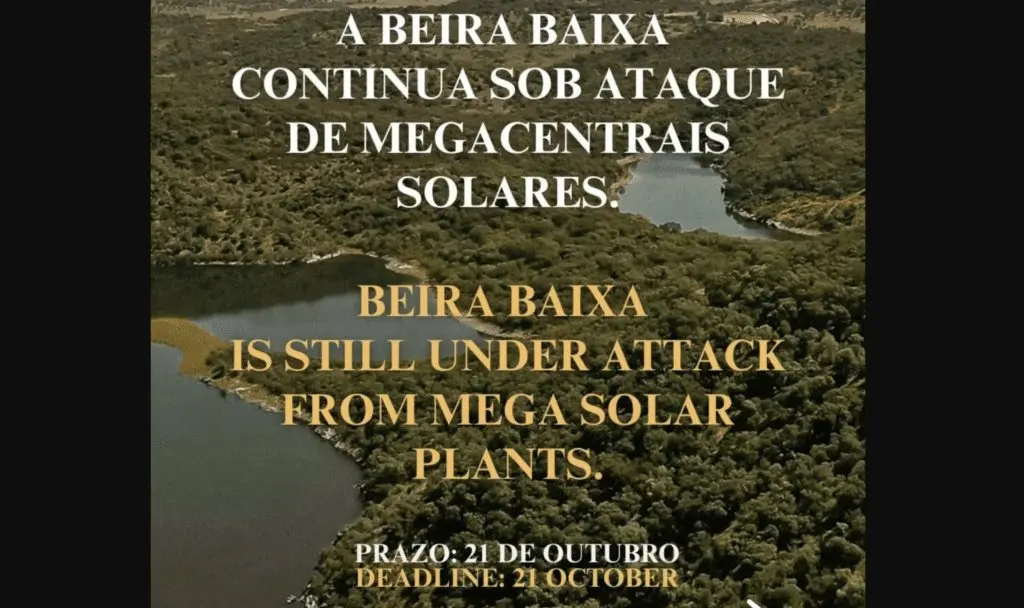
Time is nearly up to weigh in on one of Portugal's most contested renewable energy projects. The public consultation on the revised Sophia photovoltaic solar plant closes on October 21, and campaigners are urging anyone who cares about the region — locals or not — to submit objections via the government's Participa portal.
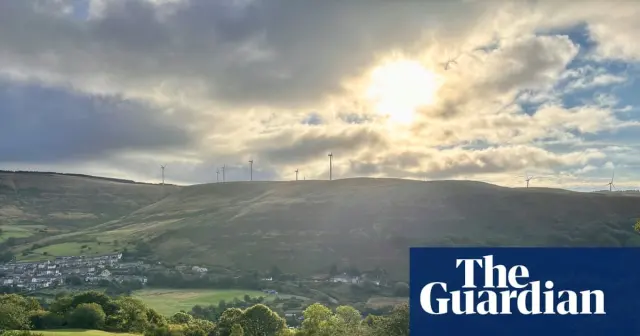
The project, developed by Lightsource BP, spans the municipalities of Fundão, Idanha-a-Nova and Penamacor in the Castelo Branco district, near the Spanish border. The revised proposal is smaller than the original: installed capacity drops from 867 to 573 megawatts-peak, panel coverage falls from 390 to 250 hectares, and the fenced area shrinks from roughly 1,737 to 1,177 hectares. It also now involves one 400-kilovolt power line of about 22 kilometres instead of two, with three installation sectors cut and some distances from villages and sensitive habitats increased.
Rewilding Portugal, which opposes the scheme, accepts these are real improvements but says the project remains far from environmentally acceptable. Its core worry is ecological connectivity: this corner of Beira Interior acts as a corridor between Portuguese and Spanish natural areas, and the plant could fragment habitat for species like the Iberian wolf and Iberian lynx, both of which depend on connected territory to spread. Birdlife is another concern — the southern edge of the site still overlaps an area classed as highly critical for the black stork, and the new high-voltage line adds collision risk. The group is also sceptical of the promised compensation of 40,000 planted trees, arguing that planting trees is not the same as conserving an ecosystem.
There's a wider context, too. Sophia doesn't stand alone: it would stack on top of other planned plants in the region, including Fajarda, Juncal and Fundão-Penamacor, and Rewilding Portugal wants those cumulative effects assessed together. It also points to the economic stakes for local communities, particularly sustainable farming and nature tourism, which depend on an intact landscape.
Campaigners with the Beira Baixa Alerta group put it bluntly: yes to solar, but on rooftops, degraded land or in energy communities — not on living ecosystems. And with a national government seen as firmly behind the developers, public consultation is one of the few levers available. You don't need to live in the region to take part; the process only takes a few minutes.
For travellers, this matters because Beira Baixa is one of Portugal's quietest and wildest corners — stork country, wolf territory, and a gateway to the cross-border natural areas along the Spanish frontier. If the argument about solar siting and biodiversity resonates with you, the October 21 deadline is your window to say so.