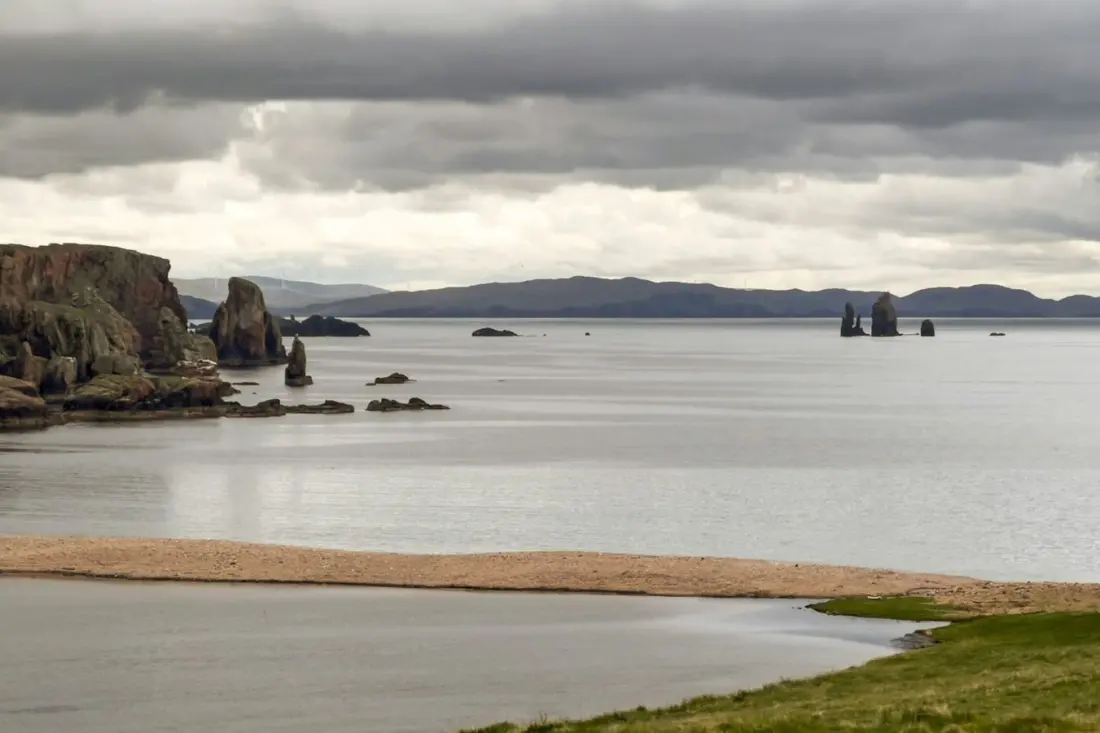
Hildasay, a 108-hectare island off Shetland's west coast, is on the market for £350,000 (about €414,000). That gets you a stone bothy, a small pier, two freshwater lochs and 360-degree sea views — and not much else. No mains electricity, no neighbours, no road access; you arrive by boat from Shetland's mainland or nearby islands.
The accommodation is basic. A solid-fuel stove heats the living area, with an open-plan raised sleeping space and a bathroom with shower, basin and toilet. Previous owners relied on a small wind turbine and a diesel generator, so any buyer will need to sort out their own power. Want to extend or upgrade? Planning permission and other approvals would come first.
What the price really buys is the landscape: a rugged coastline, low rising hills topping out around 32 metres, and shifting birdlife through the seasons, plus the chance of spotting coastal and marine wildlife from the shore. Kelvin Anderson, the estate agents handling the sale, describe it as a genuine sense of escape — which, given the absence of mains services, is putting it mildly.
The island has history, too. In 1891 around 30 people lived here, working a granite quarry and a herring-curing operation. The distinctive red-green granite was carried to the harbour on a purpose-built railway and shipped as far as Australia, reportedly. Abandoned stone blocks and railway traces are still visible across the island.
Hildasay also had a modern brush with fame. Chris Lewis, walking the UK coastline when the pandemic hit, got permission to move into the bothy with his dog Jet and spent roughly three months there during lockdown. He wrote a book about it — Finding Hildasay — which put the island on the map for a new audience.
It's worth comparing with recent Scottish island sales. Pladda went for about €350,000 in 2022, throwing in a five-bedroom house, a helipad and a lighthouse from the 1790s — though the house needed renovation. The year before, Càrn Deas in the Summer Isles was listed from €59,000 with no housing, water or power at all. The lesson across all three: the asking price is only the start of what an island costs you.
For travellers, this is less a property listing than a window into one of Britain's most remote corners. If private island ownership is a stretch, the Shetland mainland has plenty to offer — and Hildasay's story makes a good excuse to go and look at it from the water.