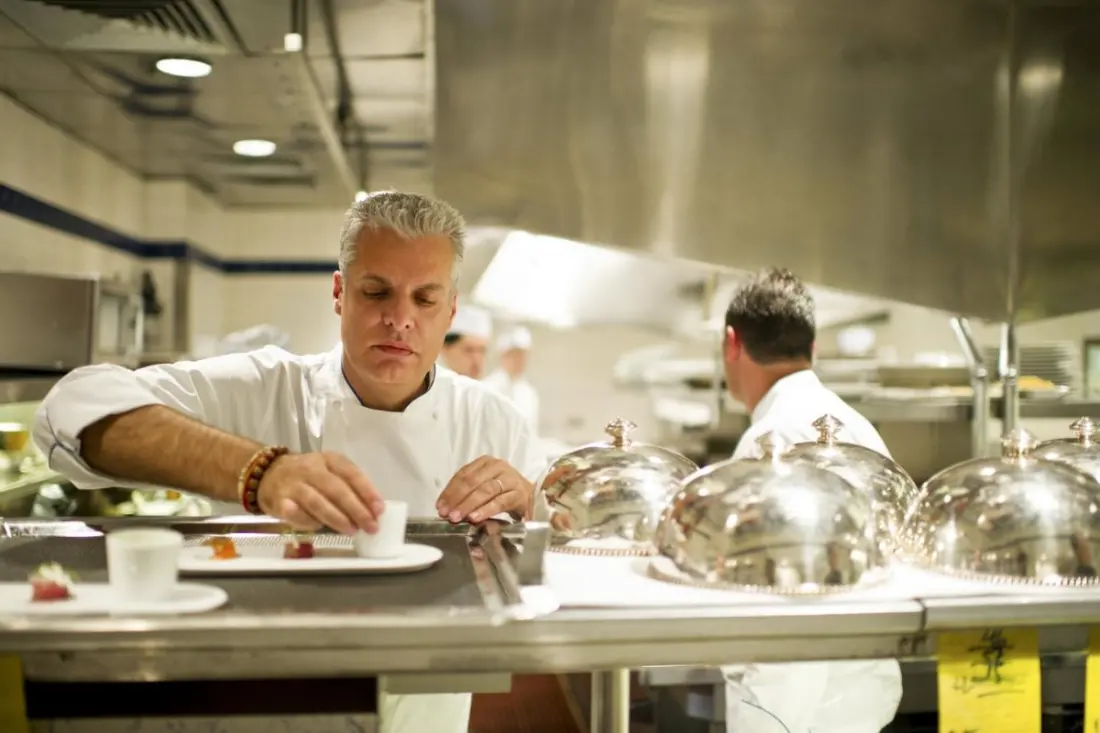
Le Bernardin chef Eric Ripert has built a career on refined seafood, but his latest project is a long way from the Manhattan dining room. His new book, Mindful Cooking: Simple Recipes For Nurturing Your Body And Soul, published 6 October, adapts the cooking philosophy of Korean Buddhist temples for home cooks — and even includes a fried oyster mushroom 'apron' pancake that reads like a wink at his own day job.
The book traces a path that began for Ripert with an airport paperback copy of Zen master Thich Nhat Hanh's Peace Is Every Breath, followed by years of one-on-one study with a Tibetan Buddhist teacher — a commitment he made to his wife alongside the promise that he will not become a monk. He has since made repeated trips to South Korea, most memorably in 2014 to the heritage-listed Baekyangsa temple, where he cooked alongside Jeong Kwan, the Buddhist nun made famous by Netflix's Chef's Table and an Asia's 50 Best Restaurants award. That meeting, arranged while filming an episode of Anthony Bourdain's Parts Unknown, gave Ripert both a lifelong friendship and the epiphany that two of his great passions — food and Buddhism — could merge in the kitchen. He learned a now-signature recipe from the abbess of 1,000-year-old Jogyesa temple in Seoul: tempura-fried lettuce leaves with a soy-sesame dipping sauce, prepared with a sort of reverence he found disarmingly unfamiliar.
Mindful Cooking leans only lightly on religion. There are no meditation schedules or pre-dawn prayer sessions — the recipes, roughly 90 of them, are all animal-free, but the spiritual message is optional. Instead, Ripert offers practical habits: gratitude, mindfulness and joy while cooking, treating time in the kitchen as an opportunity to make something better and more meaningful. The idea, he says, is that when you bring that attitude into your kitchen, you stop stressing and do the best you can for the people eating. The book also includes brief essays on gratitude and other concepts, plus photos and context from temples, so the Buddhist roots stay visible without turning into a sermon.
Why should travellers care? Because temple food is one of Korea's most distinctive culinary traditions, and this book is a rare, accessible window into it from a Western voice. Anyone who has eaten at a Korean temple restaurant, or plans to visit places like Baekyangsa or Jogyesa, will recognise the philosophy: seasonal, plant-based, unhurried cooking done with good intentions. For home cooks, the recipes are genuinely doable — even the pancake, which the nuns themselves found amusing since it involves frying in oil, hardly a temple staple. Only a handful of ingredients are tricky to source outside Korea, like perilla oil, and the book offers substitutes.