Anyone renting out an apartment or holiday home in Croatia — or booking one — should keep an eye on a sweeping new law working its way through Parliament. The government plans to adopt a new Hospitality Activity Act by the end of 2026, and its changes kick in during 2027.
The headline measure: every room, apartment, studio and holiday home advertised on online short-term rental platforms will need a unique registration number. No number, no listing. The number will be issued free of charge and digitally by the Ministry of Tourism and Sport, and landlords will have to display it alongside their listings. The point is to connect state records with the platforms, making it far harder to rent out places that were never licensed in the first place.
Crucially, the obligation does not exist yet. The Ministry has stressed that landlords do not need to apply for a number during 2026; the exact start date will be announced once the law is adopted.
Platforms are on the hook too. Under the draft, booking sites must exchange data with the state system and verify that listings carry a valid number, with hefty fines for those that don't. The system builds on a European regulation on data collection for short-term rentals, which Croatia is implementing through this law.
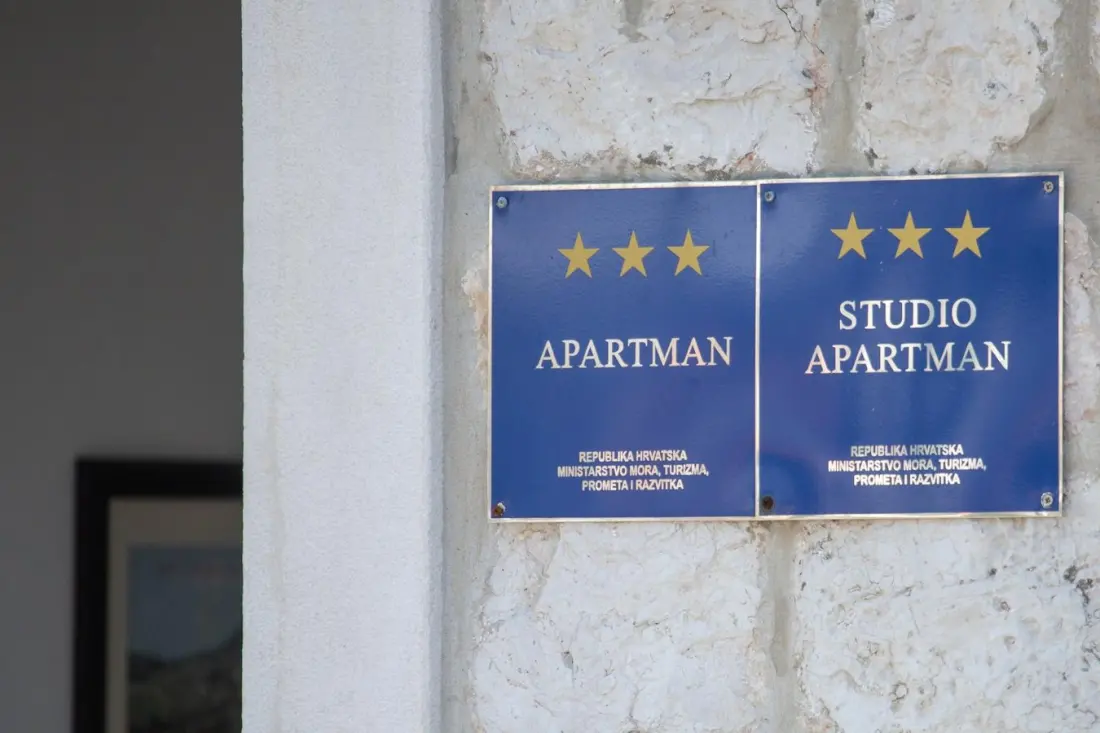
Re-categorisation is another big shift. Private landlords will face mandatory re-inspection every ten years, so a property's star rating finally reflects its current condition rather than how it looked when first classified. Hotels and campsites see their cycle stretched from four to five years, while hostels, mountain lodges and similar properties get a new five-year check.
There's also a housing angle: companies and craftsmen would no longer receive new permits to run rooms, apartments or studios in residential buildings — only holiday homes would remain eligible. The government says this protects long-term housing stock from being swallowed by short-term lets.
Enforcement is getting teeth. Beyond the State Inspectorate, customs officers, municipal wardens and, in some cases, nature wardens could police unregistered rentals, and unpaid tourist tax becomes grounds for losing a permit. Most tourism paperwork moves onto the digital eTurizam system.
Politically, the bill cleared its first reading in Parliament on 3 July with 78 votes in favour, 14 against and 37 abstentions. Prime Minister Andrej Plenković expects adoption by the end of 2026, though details could still change in the final text.
For travellers, the practical effect is subtle but welcome: listings on rental platforms in Croatia should become more trustworthy, since unregistered or illegal rentals get squeezed out of the market. If you're planning a Dalmatian coast or Adriatic island stay from 2027 onwards, expect cleaner listings — and possibly fewer of them in residential areas as housing rules tighten.
For landlords, the message is simple: don't panic in 2026, but be ready to register once the law passes and the start date is announced. Total Croatia