
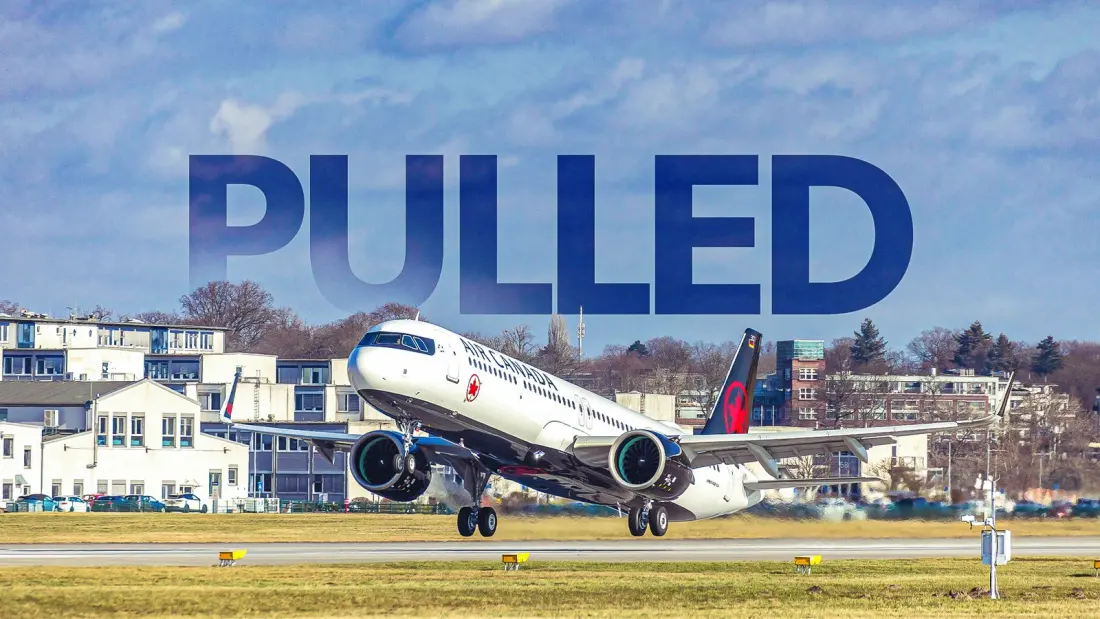
Air Canada spent months preparing its first Airbus A321XLRs for transatlantic service, then quietly scrapped the narrowbody's highest-profile assignment before it ever flew. The type was slated for Toronto Pearson–London Heathrow from August 31 to October 22, 2026 — which would have made Air Canada the first long-haul XLR operator at Heathrow. Instead, the airline swapped in Boeing 777s and 787s, and also pulled the jet from a planned Montreal–Los Angeles route.
The reason comes down to what's under the floor. The A321XLR's headline range of 4,700 nautical miles comes from a permanently integrated Rear Center Tank holding 3,400 gallons of fuel. That tank eats the lower-deck volume widebodies use for palletized belly cargo. On a trunk route like Toronto–London, where freight adds serious revenue on top of a full 300-plus-seat passenger load, the 182-seat XLR simply can't match the economics of a widebody. Air Canada Cargo brought in C$1.033 billion in 2025, and Heathrow is exactly the kind of corridor where that belly-freight money matters. The tank isn't removable either — it's built into the airframe on every XLR, whether the route needs the range or not.
Where the aircraft does shine is thin, point-to-point markets. Its first international route launched June 15, 2026, from Montreal to Toulouse, and nine of the 12 routes planned for the year serve secondary European cities a widebody couldn't fill: Edinburgh, Barcelona, Copenhagen, and Palma de Mallorca — the first route genuinely enabled by the type. With trip costs roughly 45% lower than a widebody, these routes work at load factors that would sink a 787.
For passengers, the onboard product is new and worth knowing about. Air Canada configured the jet with 14 lie-flat Signature Class suites in a 1-1 herringbone layout — direct aisle access, 19-inch 4K OLED screens, no doors (a deliberate trade for wider aisles and longer beds) — plus 168 economy seats with big seatback screens, Bluetooth audio, power at every seat, and free WiFi for Aeroplan members. There's no premium economy, which only matters on high-demand trunk routes anyway.
Who should care? Anyone booking Toronto–London: you'll be on a widebody, which means more seats, premium economy, and full cargo capacity. But flyers headed to Toulouse, Mallorca, or Edinburgh from Canada can expect a newer narrowbody experience with lie-flat seats up front — the same cabin style as the big jets on a smaller aircraft. The episode is also a useful reality check on the A321XLR hype: the jet opens new nonstop routes, but it's not a widebody replacement on trunk corridors.