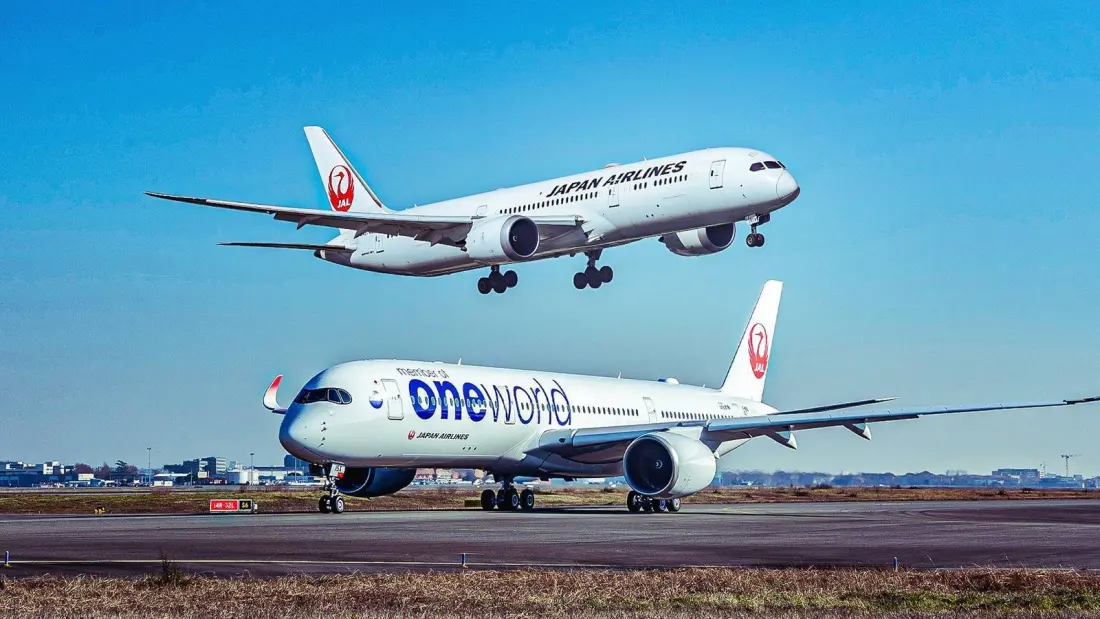
If you're booking a 10-hour flight and can choose your aircraft, cabin noise might be a tiebreaker. Airbus has a bold claim on that front: the A350 can be up to six decibels quieter inside than the Boeing 787. That sounds trivial until you remember decibels are logarithmic — Airbus says a three-decibel drop is roughly a 50% cut in sound energy, so six decibels is a substantial reduction.
But the key phrase is "up to." Cabin noise shifts constantly depending on the flight phase, your seat and even the airline's interior fittings. Take-off and climb are dominated by engine noise, while cruise brings airflow and cabin systems to the fore, and seats near the rear sit closer to the engines than those up front. Airbus's own material shows different noise levels in different parts of the cabin, so the six-decibel figure is a best-case measurement, not a guarantee for every seat on every flight.
The 787 is hardly a loud plane, either. Boeing engineered it as a complete acoustic package: aerodynamic refinements, serrated engine nacelle chevrons that scatter noise, and a structure that's about 50% composite by weight. Add the 787's lower cabin altitude and higher humidity, and Boeing clearly designed the aircraft around reducing fatigue — quietness was central, not an afterthought.
The comparison gets messier still when you factor in engines. Every A350 flies with Rolls-Royce Trent XWB engines, but 787s have been delivered with different engine options over the years, and each combination produces a different sound signature in the cabin. Then there's the airline itself: seats, carpets, galleys and partitions all absorb or reflect sound, so the same airframe can feel different between carriers. A packed economy cabin full of chatter and service trolleys can easily drown out any background-noise advantage, while in a quiet premium cabin the aircraft's true acoustics become more noticeable.
On published claims, the A350 takes the title — Airbus continues to market it as having the quietest twin-aisle cabin, and there's no independent data overturning that. In reality, though, anyone stepping up from an older aluminium widebody to either aircraft will notice a big improvement, while frequent flyers comparing the two may struggle to tell them apart. For most travellers, seat selection and a good pair of noise-cancelling headphones will matter more than the badge on the tail. Both are among the most comfortable ways to cross an ocean today.
If you want to fly the A350, Singapore Airlines operates the largest fleet (65 aircraft including the ultra-long-range variant), followed by Qatar Airways and Cathay Pacific. On the 787 side, ANA leads with 90, just ahead of United and American.