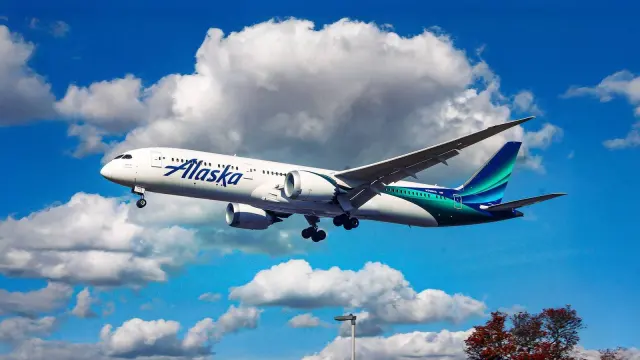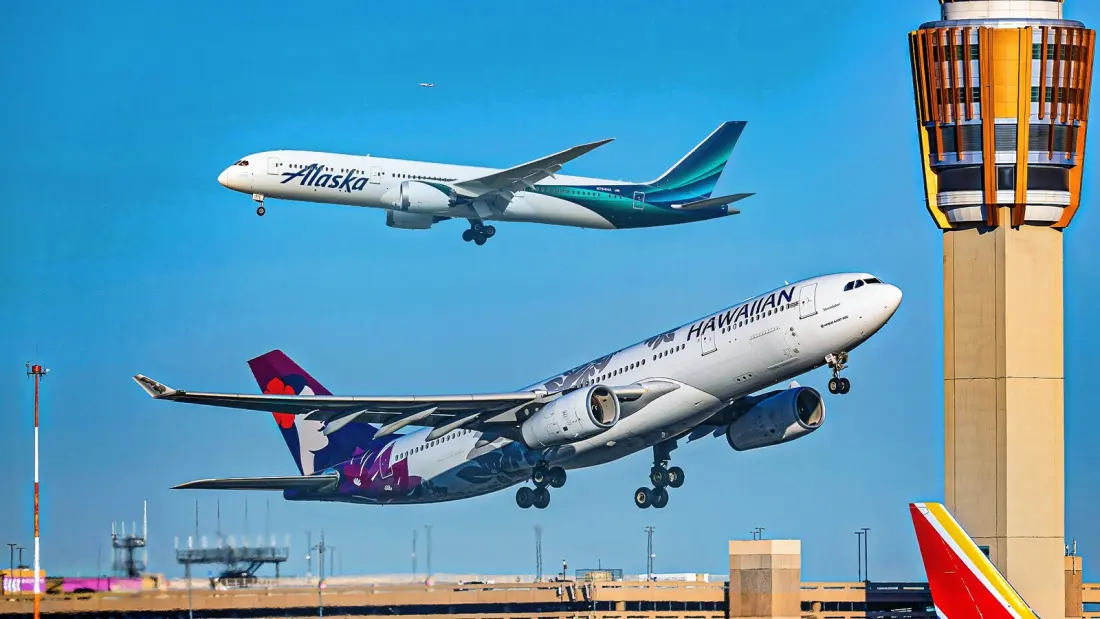
Alaska Airlines has started flying the Boeing 787-9 Dreamliner in its own livery for the first time, and the planes it is using came from an unexpected place: Hawaiian Airlines. Since the two carriers merged, Alaska's Seattle-based leadership has been quietly redirecting Hawaiian's widebody fleet to fuel its own global expansion, leaving Honolulu's flagship jets with a very different future.
The milestone came on January 7, when a 787-9 replaced a Hawaiian A330-200 on the Seattle–Tokyo Narita route. It was the first widebody ever to wear Alaska's brand. The A330 that previously flew the route had itself made history in May 2025, operating Alaska's inaugural long-haul flight from Seattle-Tacoma to Tokyo — the carrier's first widebody service after decades as an all-narrowbody airline.
The expansion since then has been rapid. Alaska added nonstop Seattle–Seoul Incheon service in September 2025, then launched its first-ever transatlantic route to London Heathrow in May 2026 on brand-new 787-9s. Seasonal routes to Rome and Reykjavik followed the same month. The airline aims to serve a dozen major global destinations from Seattle by 2030, with Dreamliners as the backbone.
So what happens to the A330s? They're heading back to Honolulu, where they remain essential. Hawaiian is buying three of the leased airframes and embarking on a five-year, $600 million cabin overhaul starting in 2028 — which will bring the airline's first true premium economy product. Four leased A330s will retire that same year, leaving a fleet of about 20 refreshed aircraft averaging 13 years old. The big replacement decision — Airbus A330neo versus more 787s — won't land until the late 2020s or the mid-2030s in practice.
The trade-off is clear. An A330neo order would let Hawaiian's Honolulu crews, hangars and spare parts carry over with minimal retraining. Going all-Boeing would match Alaska's single-fleet philosophy — it already phased out Virgin America's A321neos and has ordered 105 737-10s — but means retraining the entire Honolulu operation and accepting the 787's payload and range penalties on Hawaii's shorter Pacific routes. Delivery slots matter too: Airbus can offer earlier A330neo positions, but Alaska's status as a major Boeing customer gives it leverage on Dreamliners. A key signal will come in 2028, when Alaska decides the fate of Hawaiian's small A321neo sub-fleet. If the Airbuses go, keeping Airbus widebuses looks unlikely.
For travellers, the practical picture is encouraging on both ends. Seattle passengers get modern 787 cabins with 300 seats including 34 enclosed business suites on transpacific and transatlantic routes, while Hawaiian flyers should see upgraded A330 interiors from 2028. Watch this space if you're booking long-haul from either Seattle or Honolulu later in the decade — the aircraft on your ticket may change.