There are no roads into Glacier Bay National Park & Preserve. That single fact shapes everything about visiting it. Unlike Yellowstone or Yosemite, this 5,130-square-mile chunk of southeast Alaska — roughly the size of Connecticut, and nearly as large as those two parks combined — can only be entered by ship, boat or small aircraft. Unsurprisingly, most of its 650,000 to 750,000 annual visitors arrive on a cruise ship.
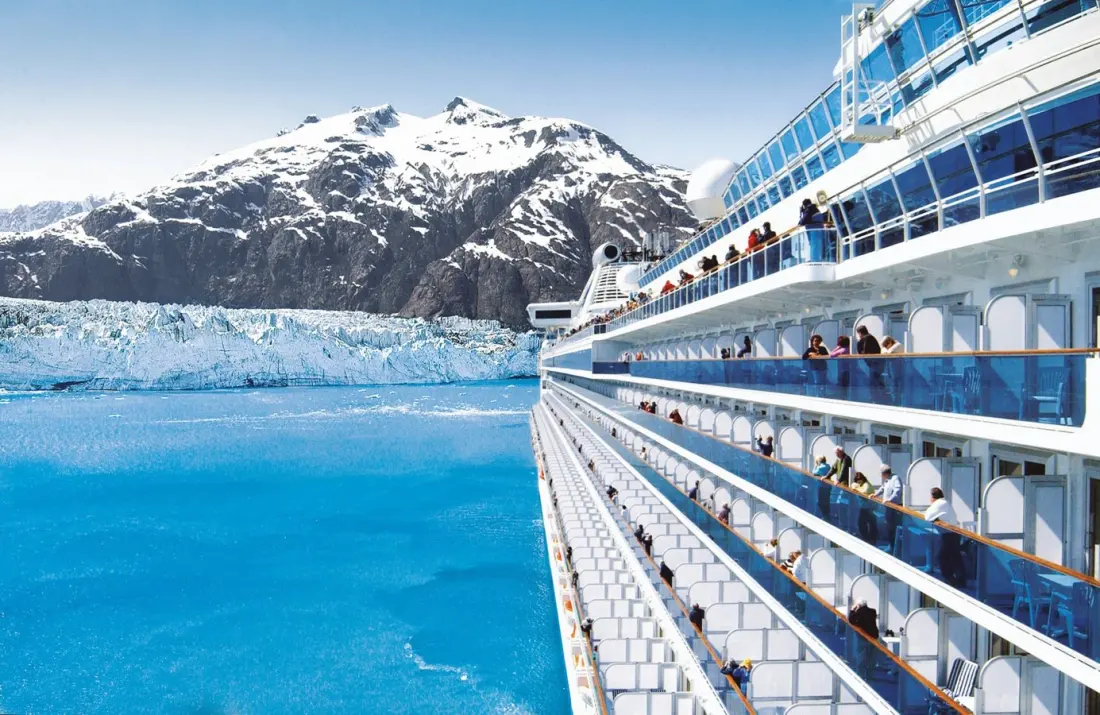
The classic route is a seven-night Alaska sailing from Vancouver or Seattle that also calls at Juneau, Skagway and Ketchikan, with Glacier Bay filling one day of the itinerary. Ships travel 65 miles up a glacier-carved fjord to the face of a tidewater glacier, where chunks of ice — some of it around 200 years old — crash into the sea. The National Park Service caps entries at two cruise ships a day, with permits favouring lines with historic ties to the park. Princess Cruises and Holland America run the most Glacier Bay itineraries, but Norwegian, Cunard, Viking, Seabourn and small-ship operators like UnCruise and Lindblad also call. Rangers and a Huna Tlingit cultural guide typically board for the day to narrate what you're seeing.
Big ships never dock — everyone views from the deck. If you want to set foot in the park, fly Alaska Airlines or a seaplane from Juneau to tiny Gustavus (population 601), or take the Alaska Marine Highway ferry. From Bartlett Cove, the park tour boat runs daily in summer (about $274 per adult), stopping at the Margerie and Grand Pacific glaciers, each nearly 250 feet tall above the waterline.
Land-based visitors get more than a boat ride. There are hikes from an easy 1-mile forest loop to a rugged 8-mile trek, kayak rentals for day or multiday trips, and flightseeing tours out of Gustavus for roughly $200 to $350. The tribal house Xunaa Shuka Hit at Bartlett Cove hosts daily Huna Tlingit cultural activities, dance and food — a meaningful stop given the original villages here were destroyed by a glacier over 250 years ago.
One quirk worth knowing: entry is free. No park pass, no entrance fee, no camping charges — rare for a US national park. The trade-off is weather and price. Summer days hover around 50-60°F with frequent rain (the area gets about 70 inches a year), so pack rain gear, layers and waterproof boots. Lodging isn't cheap either: the park's only lodge starts around $390 a night, and Gustavus inns often run $300 to $500+ per person daily with meals included. Many tidewater glaciers are also retreating — rangers now count 'no more than seven', down from nine a few years ago — which makes a visit feel increasingly precious.
Glacier Bay suits two kinds of travellers: cruise passengers wanting a spectacular day of glaciers and wildlife (puffins, seals, sea lions, humpback whales, even brown bears) from the deck, and independent travellers happy to trade convenience for hiking, kayaking and a slower look at one of North America's wildest parks.