Day 21 of a pilgrimage along the Camino de Santiago delivers a lesson in slowing down — and Castrojeriz, the small hill-crowned town in northern Spain's flat Meseta, turns out to be the perfect classroom.
The day begins at an albergue kitchen with spilled coffee and unexpected kindness: two French pilgrims help clean up, then hand over a purple keychain and a bracelet before heading out. Small gestures, but on the Camino they set the tone. The walker behind this diary, a holistic-medicine practitioner travelling full-time, spends the open-road morning thinking about birthday intentions and lands on a new theme for the year ahead — service and surrender — after a year of receiving generosity from strangers.
Castrojeriz, reached by late morning, is where most pilgrims stop, and it rewards those who do. San Esteban Pilgrims Hostel offers bunks, laundry and a first wave of homesickness — not for a place, but for people. Above the town, a hilltop castle serves up 360-degree views over the Meseta and ferocious wind; pilgrims shelter in alcoves of ruins with pre-Roman roots, where excavations reportedly date a settlement back to the fourth century BC. It's the kind of spot where two people who met on the trail end up having the most honest conversation of their walk.
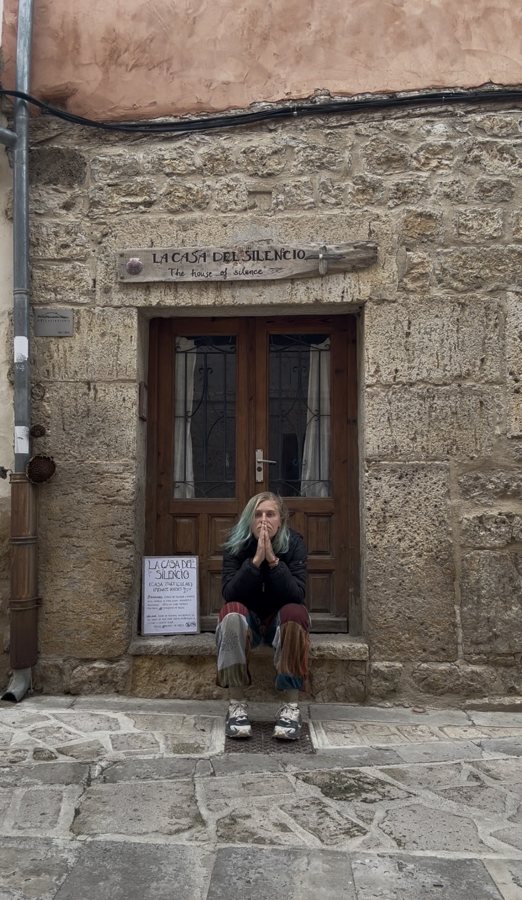
The standout find, though, is La Casa del Silencio — the House of Silence. Recommended by a friend despite a language barrier between them, it's a two-storey house plus courtyard decorated with sticks, flowers, candles, artwork and quotes, all meant for contemplation. Visitors are invited to create as well as reflect: the writer paints a blue lauburu (the Basque spiral symbol) onto a plaster wall in a dark corner. Phones stay pocketed; the journal comes out instead. One quote on the wall — about dreaming life was joy, discovering it was service, then finding joy through service — lands hard enough to require some breathwork. For a pilgrim who calls it the richest form of the word 'church', that's high praise.
The evening rounds out Castrojeriz's charms: a 500-year-old albergue built into the hillside, its underground rooms held up by stone arches and wooden beams, then a communal hostel dinner with a fresh bag of groceries and a table of new pilgrims. Some friends take a rest day and fall behind; new ones step in. On the Camino, the faces rotate but the community holds.
Why care if you're not walking 500 miles? Because Castrojeriz makes a strong case as a slow-travel stop in Castilla y León in its own right — medieval streets, a castle ruin, hill-carved architecture, and an odd little silence house you won't find in any guidebook's front pages. Even a single night here delivers the Camino's essence: walking, wind, conversation and quiet.