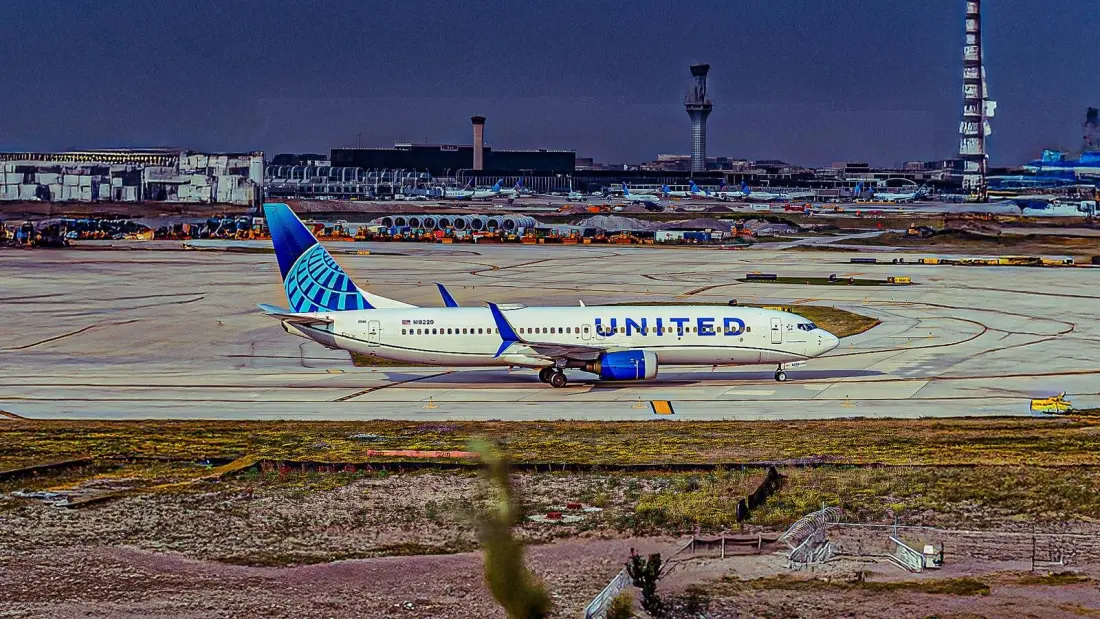
Eight hours on a plane that never takes off sounds like a nightmare, but that's what some United Airlines passengers experienced at Chicago O'Hare during the recent nationwide FAA ground stop — the longest in the US since the aftermath of 9/11 in 2001.
Two cases stand out. Abdul Sankoh was booked on a 2:21 PM flight from O'Hare to Washington Dulles on the Friday of the stop. The flight never departed, and he wasn't allowed off until after 9 PM — nearly seven hours. His ordeal didn't end there: returning the next day to rebook meant another four hours in a queue. A second traveller, Bryson Moser, flying to Charleston, South Carolina, spent around eight hours on the tarmac before his flight was cancelled outright. He told CNN the pilot kept passengers informed as best he could, but that his own calls to United went unanswered.
So how is this legal? US Department of Transportation rules require airlines to let passengers disembark after three hours for domestic flights and four hours for international ones. But there are carve-outs: if returning to the gate poses a safety or security risk, or would disrupt airport operations, carriers can hold passengers longer — which is precisely what happened when the entire national airspace was frozen.
The rules do come with obligations. Airlines must update passengers on the delay's status within 30 minutes, keep lavatories working, provide medical attention where needed, and supply food and drinking water once the delay hits two hours (realistically a snack, not a meal). United has its own published Tarmac Delay Contingency Plan, developed with the TSA and CBP around its 'core4' standards — safe, caring, dependable, efficient. Whether passengers like Moser felt 'cared for' is another matter.
The misery didn't stop on Friday. Knock-on cancellations spilled into the weekend, and on Monday evening United suffered its own system outage that briefly grounded all of its departing flights — though aircraft already airborne and United Express regional flights were unaffected. The issue was fixed within roughly an hour, but it capped a rough few days for the carrier and its customers.
If you're flying domestically in the US, this story is a reminder to build slack into any same-day connections or time-sensitive plans. Ground stops are rare, but when they happen, compensation and recovery are slow — as the four-hour rebooking queue shows. Keep essentials (chargers, medication, snacks, water) in your carry-on, and know that the three-hour tarmac rule isn't a guarantee during system-wide disruptions. Flying earlier in the day gives you more reroute options if things unravel.
Simple Flying