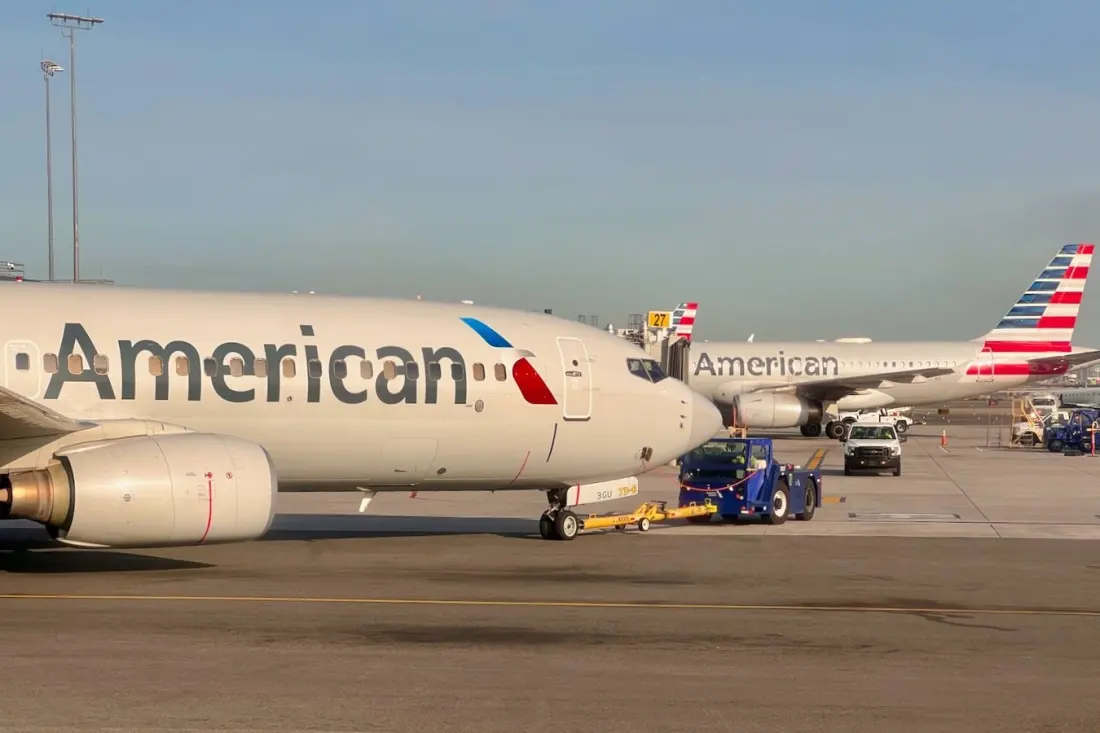
American Airlines charges checked bag fees on most flights, but the amount you pay swings wildly depending on your route, fare type, status and credit card. Knowing the rules before you get to the airport can save you a surprising amount of money.
The good news first: every passenger, including basic economy travellers, gets a full-size carry-on plus a personal item. Your carry-on can be up to 22 x 14 x 9 inches, and personal items up to 18 x 14 x 8 inches.
On domestic routes (and flights to Canada, Mexico, the Caribbean and Central America), the first checked bag costs $45 online or $50 at the airport in main cabin — $5 more for basic economy. A second bag runs $55 to $65, and bags three and four cost $200 each. Buying at the airport always costs a bit more, so pay online in advance. Long-haul routes are friendlier: transatlantic main cabin tickets include a free first bag ($85 for basic economy), transpacific flights give everyone a free first bag, and South America flights include one in main cabin. Second bags on international routes cost $100, with $200 per bag after that.
Watch the weight and size limits. Bags over 50 pounds or 62 linear inches trigger extra charges, from $30 for a mild overage up to $450 for something seriously heavy. Anything over 100 pounds or 115 linear inches is not accepted at all. Sports gear generally counts as a regular checked bag — skis and golf clubs just pay the standard fee — but scuba tanks and windsurfing equipment cost $150 regardless of your allowance. And no, you cannot check a hang glider.
The easiest ways to skip the fees: hold a co-branded Citi / AAdvantage credit card (the Platinum Select covers the cardholder plus four companions on the same reservation; the Executive and Globe cards cover up to eight), hold AAdvantage elite status (Gold gets one free bag, Platinum two, Platinum Pro and Executive Platinum three — companions on the same booking get the perk too), or book a premium cabin. Domestic first class, business and premium economy fares include two free bags, and Flagship First and Flagship Business Plus include three. Premium travel credit cards help too: the Amex Platinum offers up to $200 a year in airline fee credits, and the Chase Sapphire Reserve's $300 annual travel credit can absorb bag fees.
Note that credit card and status benefits don't stack — an elite with a co-branded card gets the higher allowance, not both combined.
If you're flying American with anything more than a carry-on, it's worth five minutes of homework. Check your fare class, your route and any cards in your wallet, then prepay bags online rather than at the counter. Basic economy travellers should be especially careful, since they pay the highest fees of anyone — and on some long-haul routes, upgrading to main cabin can cost less than the bag fees it saves.