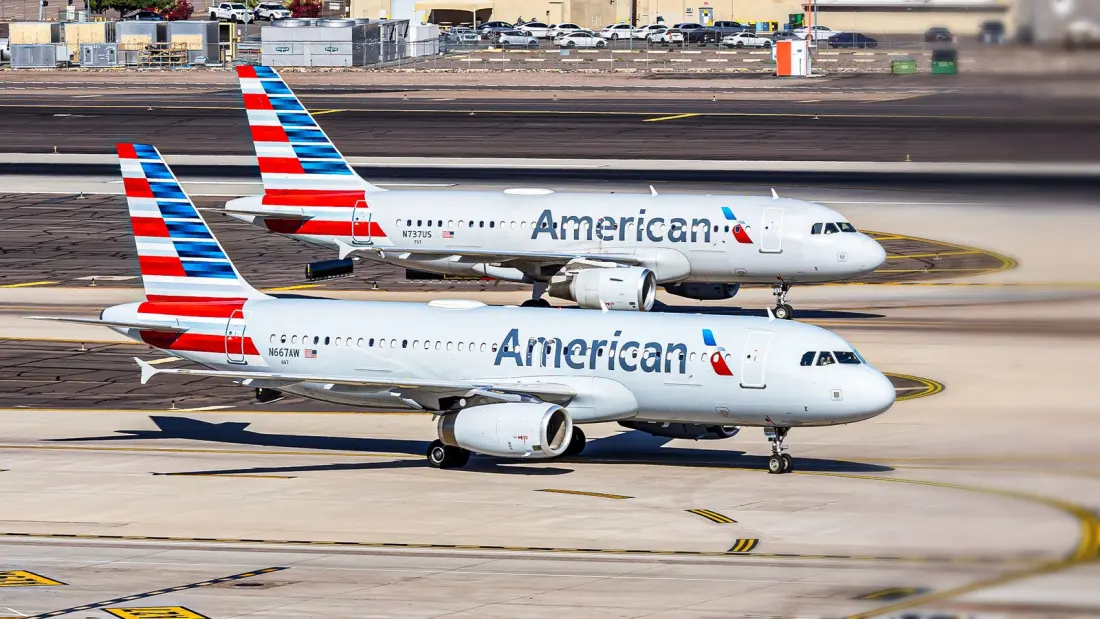
American Airlines likes to brag about running one of the youngest fleets among US network carriers, with an average aircraft age of 14.7 years. Yet dozens of quarter-century-old Airbus A320-200s are still flying daily routes out of Dallas/Fort Worth, Phoenix, Charlotte and Philadelphia. All 48 of them are expected to stay in service through 2026, and possibly beyond.
The reason these vintage jets survived so long is pure merger history. Twenty-six of them came from America West Airlines, whose founder Edward Beauvais began snapping up airframes abandoned by bankrupt Braniff back in 1990. The other 22 joined via US Airways, which ordered its own A320 batch in 1996 as part of a survival-driven Airbus order. When America West absorbed US Airways and the combined carrier merged into American in 2015, two separate Airbus subfleets landed on the same flight schedule. Because each airline chose a different engine maker, American still stocks separate spare parts and runs two maintenance playbooks for what is essentially one aircraft type.
There's a silver lining for passengers willing to look past worn trim. The A320 cabin is seven inches wider than a Boeing 737's, so even in a 3-3 layout you get more shoulder and aisle room. American is now refreshing these cabins, with the first retrofitted jet, 27-year-old N107US, returning from a three-month overhaul in June. The update brings 16 first class seats (up from 12) with privacy wings, larger Airbus XL overhead bins that cut down on gate-checked bags, and in-seat power. The catch: row spacing tightens to 36 inches up front and 30 inches in economy, and seatback screens won't appear on these jets — or any American narrowbody — until 2028 at the earliest.
Why keep them at all? Delivery delays at Boeing and Airbus left American short of replacements, so these midsize workhorses keep flying up to eight short hops a day on routes like Dallas–San Antonio, Boston–Philadelphia and Phoenix–Cabo San Lucas. They fill the awkward gap between small regional jets and larger narrowbodies. The downside is mounting repair bills: mainline maintenance spending is up 7.8% this year, 36 of the 48 jets are leased, and recent airworthiness directives — including a November 2025 software patch across 209 A320-family jets after intense solar radiation was linked to a flight-control glitch — have added work. American even bought one A320 off its lease last year rather than retire it, signalling these old-timers aren't going anywhere fast.
For travellers, the practical takeaway is simple. If you're booked on an American A320-200, expect a roomier cabin than a 737 but dated finishes unless you land a refurbished airframe, and no seatback entertainment or Starlink Wi-Fi on these jets. They're a flying museum of two defunct airlines — and they'll be bridging American's fleet gap toward 2030.