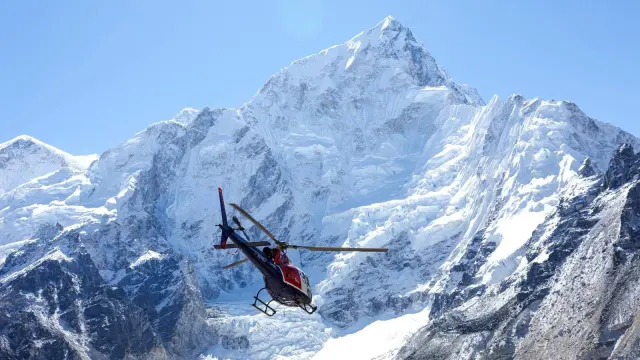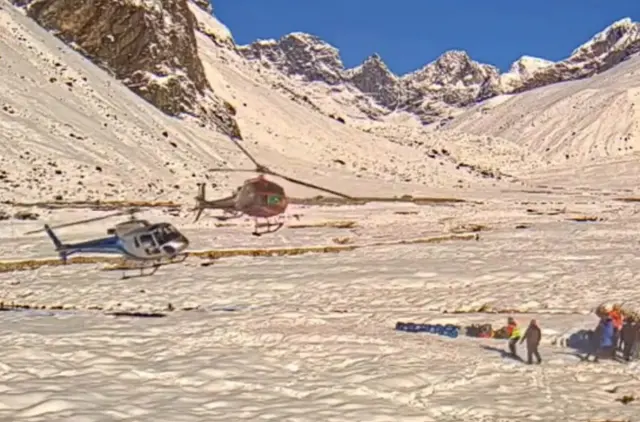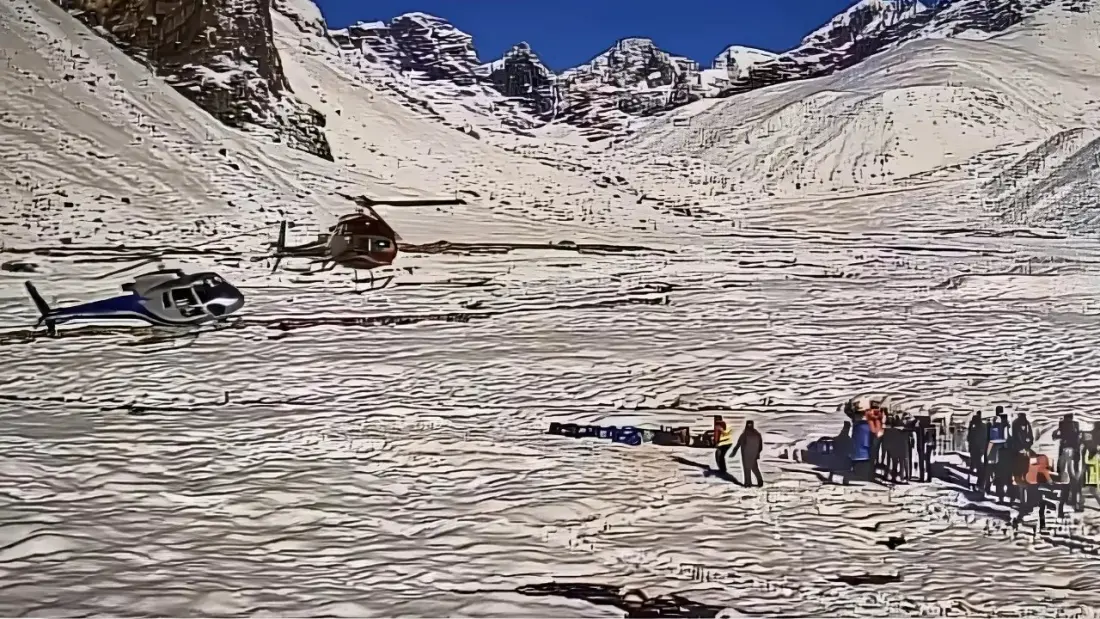
Two helicopters clipped each other while preparing to land at Pheriche, in Nepal's Solukhumbu district, early on Tuesday 3 November, killing an Indian tourist and injuring at least two other people.
The aircraft — one operated by Fishtail Air, the other by Air Dynasty — made rotor-blade contact at roughly 08:11 local time as they neared the helipad. The Civil Aviation Authority of Nepal identified them by their registrations, 9N-AJR and 9N-AOD. The dead man was named as Vasanth Kumar Balaramudu, from Chennai in India. A New Zealand citizen, Shailesh Krishna Patel, and at least one pilot were hurt, though casualty counts have varied between reports, with some outlets listing three injured and others two.
India's Embassy in Kathmandu issued condolences and confirmed it is working with Nepali authorities to repatriate the deceased's remains quickly.
So what went wrong? Early indications point to a communication failure between the two flight crews on approach. The regulator's director-general, Mukesh Dangol, told The Kathmandu Post that the landing zone at Pheriche sits outside the coverage of Lukla Airport's air traffic control tower — meaning pilots there coordinate directly with each other, with no tower overseeing arrivals.
For anyone who has trekked in the Everest region, the location is familiar. Pheriche sits at around 4,200 metres and is a standard stopping point on the trail to Everest Base Camp. With no roads serving much of the route, helicopters are the region's workhorses — ferrying trekkers, supplies, and crucially flying out anyone suffering from altitude sickness or injury. That makes heliports like Pheriche busy, uncontrolled spots where several aircraft can converge in a short window, often in marginal weather and thin air.
The incident is a sobering note for travellers considering Everest-region treks. Flying in the Khumbu carries real operational risks, and the sector has seen a string of accidents over the years. If you're booking a helicopter transfer or a scenic Everest flight, it's worth choosing established operators with strong safety records, checking your insurer covers high-altitude helicopter evacuation, and remembering that acclimatisation — not just flying — is what keeps trekkers safe above 4,000 metres.