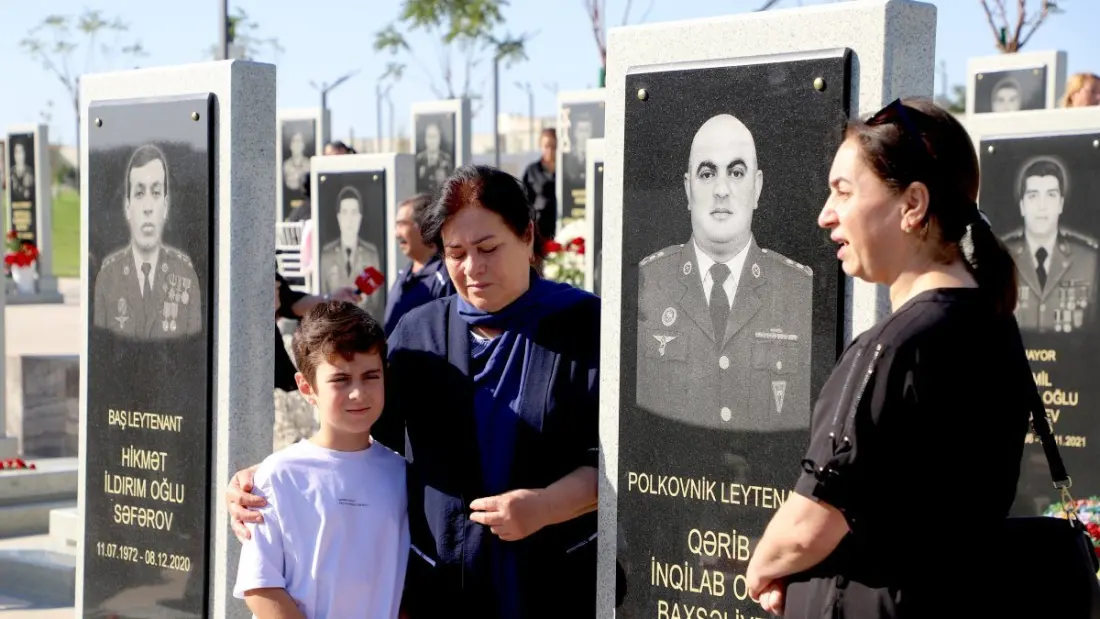
Baku marked a solemn anniversary on Sunday, with President Ilham Aliyev laying flowers at a monument and Turkey's President Recep Tayyip Erdogan issuing a tribute to commemorate the sixth year since the Second Karabakh War began on Sept. 27, 2020.
The 44-day conflict ended three decades of Armenian control over Karabakh and surrounding Azerbaijani territory. Azerbaijan's counteroffensive, launched after Armenian forces attacked that morning, reclaimed hundreds of towns and villages before a November 2020 agreement halted the fighting. Azerbaijan lost 2,908 people in the war, and Sept. 27 is now observed as Remembrance Day for fallen soldiers.
The anniversary comes at a genuinely new moment for the South Caucasus. A peace treaty text was agreed between Baku and Yerevan and initialed at a Washington summit hosted by Donald Trump on Aug. 8, 2025, opening the door to normalized ties between the two neighbours. Azerbaijan's Ombudsman Sabina Aliyeva used the occasion to flag the unfinished humanitarian business: mine clearance across contaminated land, accounting for missing persons, and the safe return of displaced residents.
For travellers, this matters because Karabakh itself is gradually reappearing on the map. Cities like Shusha, a hilltop cultural centre of Azerbaijani music and architecture, and the regional capital Khankendi were closed or contested for a generation. Reconstruction is well underway, though the region remains sensitive and some areas are still off-limits due to unexploded ordnance — stick to official routes and check current access rules before planning a visit.
This is a story of commemoration rather than tourism for now, but it signals why the South Caucasus is worth watching. Azerbaijan is stable, oil-rich and investing heavily in its recaptured territories, while a formal peace with Armenia would eventually make cross-border travel between Baku and Yerevan conceivable again. Anyone eyeing a Caucasus trip — Baku's flame-shaped skyline, the mud volcanoes of Gobustan, or the mountain villages of the Greater Caucasus — should keep an eye on how the peace process unfolds.
Note that this article sits in political coverage, so treat it as background context for the region rather than a travel guide. But the trajectory is clear: a corner of the map that was off-limits for 30 years is reopening, slowly and with caveats.
Story reported by Daily Sabah.