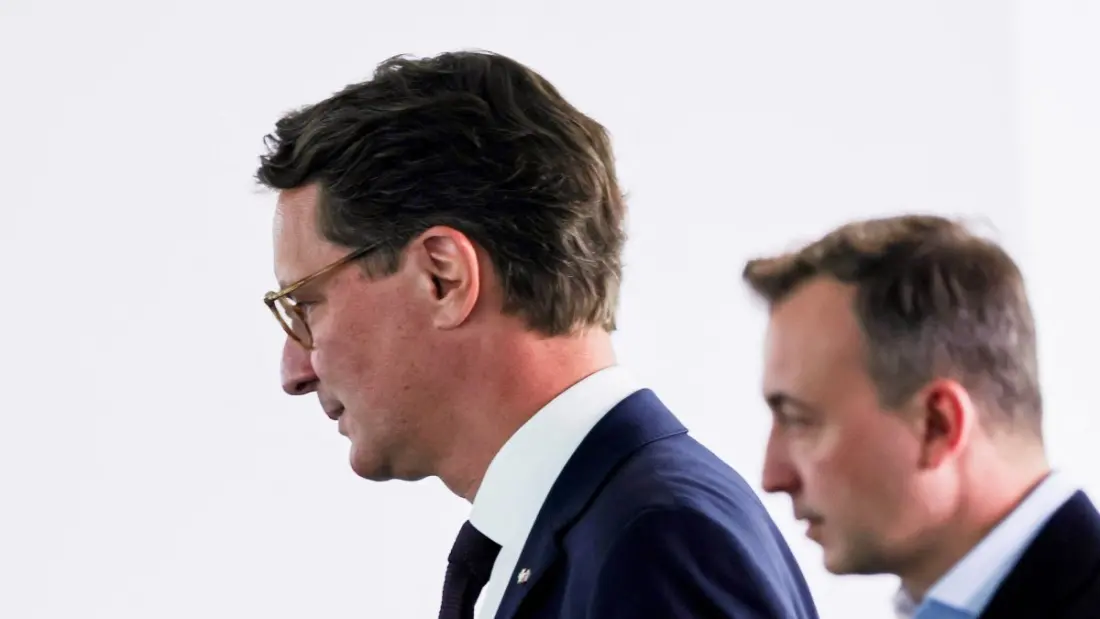
Hendrik Wüst, the premier of North Rhine-Westphalia, Germany's most populous state, lands in Türkiye on Monday for a three-day visit timed to a meaningful anniversary: 65 years since the recruitment agreement that brought hundreds of thousands of Turkish "guest workers" to Germany and reshaped both countries.
It is a first. No head of government from North Rhine-Westphalia has ever made an official trip to Türkiye before. Wüst starts in Ankara, where political talks are scheduled, before moving on to Istanbul on Tuesday for an economic conference. While in Istanbul he will also present a prize for tolerance and reconciliation between cultures to Ilkay Gündoğan, the former captain of the German national football team and one of the most prominent German-Turkish figures in public life.
The numbers explain why North Rhine-Westphalia cares so much. Roughly one in three people with Turkish roots in Germany lives in the state, a legacy of that 1960s recruitment deal. Trade is equally weighty: annual commerce between the state and Türkiye runs to about 10 to 12 billion euros ($11.4–13.7 billion), which works out at around a fifth of all German-Turkish trade. For a single federal state, that is serious economic heft.
Why should a traveller care? Because these ties shape the Türkiye many visitors experience. The deep German-Turkish connection shows up in direct flight routes from German cities, bilingual signage and menus in Istanbul and the coastal resorts, and a huge diaspora that travels back and forth constantly. Anniversaries like this one tend to bring cultural programming, conferences and civic events in Istanbul that can be interesting to stumble upon if you are in town. And the underlying relationship — half a million-plus people with roots in both countries, tens of billions in trade — is part of why Türkiye feels so familiar and easy for German-speaking visitors compared with many other destinations.
Practically speaking, anyone combining Istanbul with the capital can follow Wüst's own route: Ankara for government monuments, museums and the mausoleum of Atatürk, then a fast intercity train or short flight west to Istanbul for the historic peninsula, Bosphorus ferries and the food scene. The trip is a reminder that Türkiye sits at the intersection of European and Middle Eastern travel — a couple of hours from Germany by plane, with a culture that has been intertwined with it for decades.
For now, the visit is diplomacy and economics rather than tourism news, but the goodwill it signals tends to trickle down: smoother ties, more flights, more events, and a warmer welcome on both ends of one of Europe's busiest travel corridors.
Original reporting: Daily Sabah Travel.