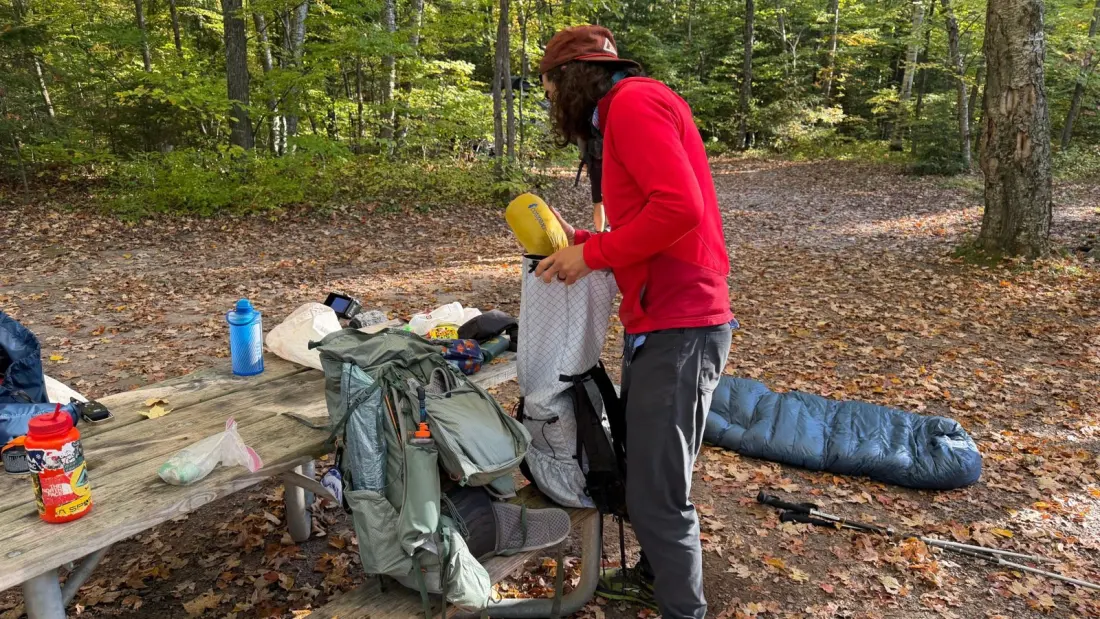
A badly packed backpack announces itself fast: swaying weight, mystery items buried at the bottom, and the familiar sight of someone dumping everything onto the trail to find a headlamp. Backpacker magazine's editors have spent decades refining how they load a pack, and their collective advice adds up to a simple system worth stealing before your next multi-day hike.
The core idea is that packing should be repeatable, balanced, and free of dead space. The editors start with stuff sacks as a sorting tool. One keeps every nighttime essential — power bank, headlamp, e-reader, hairbrush — in the same coloured sack so it can be tossed straight into the tent. Another bags sleep gear together: ear plugs, eye mask, pillow, sleep clothes. A third packs an empty sack just for dirty laundry. Compression sacks with one-way valves can shrink-wrap bulky insulated layers, but the editors warn against overdoing it: rigid blocks of gear leave awkward gaps, so soft items like a puffy or rain jacket are best left loose to fill them.
Snack strategy gets its own section. One editor splits the day's food between hipbelt pockets, chest pockets, trouser pockets and the toplid each morning, so eating never requires taking the pack off. If your hipbelt pockets are too small, the magazine's editor-in-chief suggests simply wearing a small fanny pack instead. The same logic applies to weather gear — a rain jacket lives in an external mesh pocket when clouds threaten, and midday insulating layers get packed with one sleeve poking out the top so the whole layer can be yanked free without unpacking anything.
Air pockets are the enemy. A Pacific Crest Trail alumnus on staff skips stuff sacks entirely for his sleeping bag and pad: the pad goes folded against the frame, and the bag is stuffed in loose so it fills every last corner. Hard-sided items can be co-opted too — as food runs low, one editor fills his bear canister with clothes and accessories, which stops things rattling and frees pack space. Other space-savers include a bar of soap tucked inside a toilet paper roll, choosing the smallest cook pot that holds your stove, gas and lighter (a 750 mL pot does the job), and wrapping leukotape around a sunscreen stick or lighter instead of hauling a full roll.
The editors also encourage ignoring factory packaging. Freeze-dried meals often come in needlessly bulky pouches — repack them at home and rehydrate in your pot or a freezer bag in camp. Tents need not go back in their sack at all; packing poles and the tent body separately lets you distribute weight and volume however you like. And a closing philosophy worth adopting: there is always room for one luxury item, whether that's a beer or something else — you just have to find the cranny.
Why it matters: anyone booking a trekking holiday, whether it's a hut-to-hut walk in the Alps or a first thru-hike, will carry every gram they bring. A tested packing system means less fumbling at camp, a steadier load on your hips and shoulders, and honestly, less gear you didn't need. The editors' final point is the most reassuring of all — getting your pack job right is trial and error, and playing pack Tetris is part of the fun.
Reported by Backpacker.