Some stones have been standing since before farming, writing or the wheel in most of the world. A new round-up of ancient monuments highlights six places where you can still walk among structures built thousands of years ago — and each one tells a different story about human ingenuity.
The oldest is also the most surprising. Göbekli Tepe in southeastern Türkiye dates to around 9600 BCE, making it roughly 11,500 years old. Its T-shaped limestone pillars, some 5.5 metres tall, are carved with snakes, foxes and birds. The kicker: it was built by hunter-gatherers, which upends the assumption that monumental architecture only came after people settled down to farm.
Malta's megalithic temples claim another record — the oldest free-standing stone structures on Earth. The Ġgantija complex on Gozo began around 3600 BCE, its enormous limestone blocks arranged into chambers and courtyards with no cranes, no concrete and no machinery. Local legend credited giants; the reality of human builders is arguably more impressive.
Stonehenge needs little introduction, but the wider landscape is the real story. It evolved over some 2,000 years, from about 3700 to 1600 BCE, and the stones visible today are only a fraction of what once stood there. Nobody has settled the question of why it was built, which is part of the appeal.
Giza's pyramids put human timescales into perspective. Built over 4,500 years ago as part of the vast Memphis necropolis, the Great Pyramid of Khufu is the only one of the ancient Seven Wonders still standing. Its smooth outer casing is long gone, but the stone core still dominates the plateau.
Petra in southern Jordan trades sheer age for drama. The Nabataeans carved their city into sandstone cliffs from the fourth century BCE onwards, and engineered an elaborate system of channels, dams and cisterns that let a major trading hub thrive in the desert. Erosion and flash floods still threaten the site, so conservation work is now part of its story.
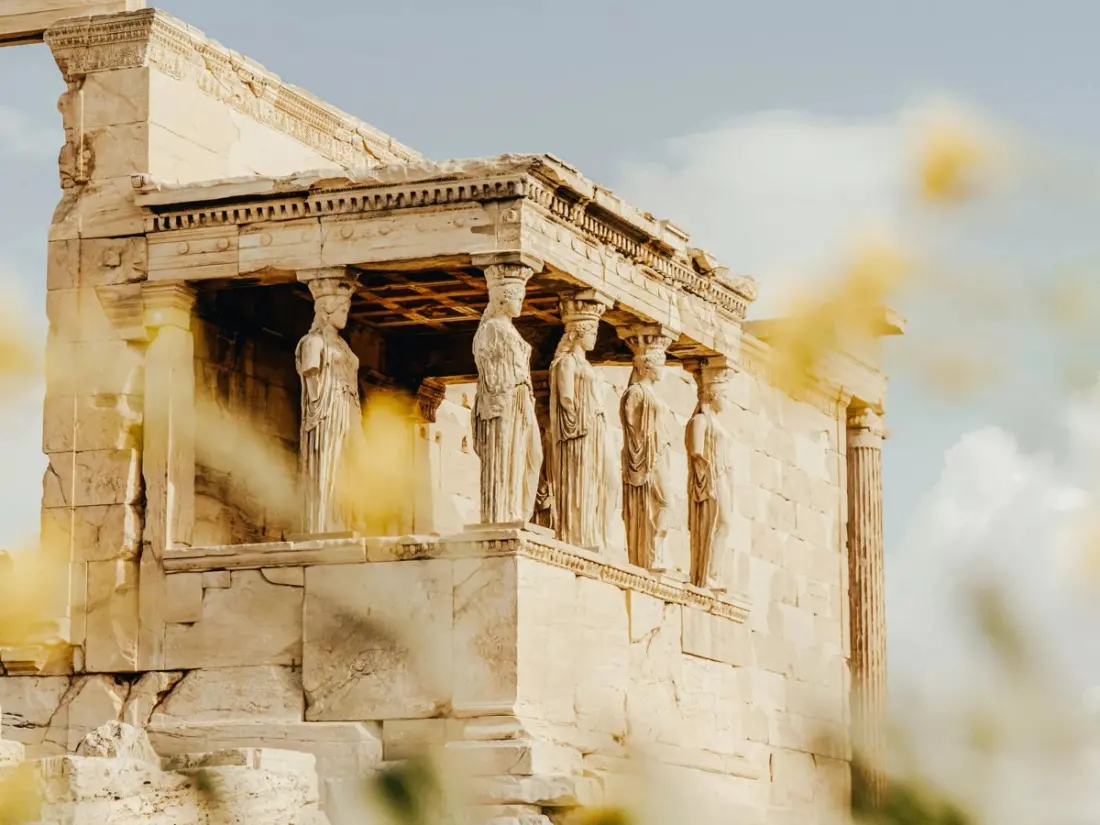
Finally, Athens' Acropolis has been fortified since the 13th century BCE, with its headline monuments — the Parthenon, Erechtheion, Propylaia and Temple of Athena Nike — largely built in the fifth century BCE. It hasn't had an easy run: the Parthenon was wrecked in the 17th century when gunpowder stored inside exploded during a Venetian siege.
What all six share is that none are frozen in time. They've been abandoned, damaged, rebuilt and excavated, and their survival owes as much to conservation today as to ancient craftsmanship. That's exactly why they reward a visit — history you can stand inside, not just read about.