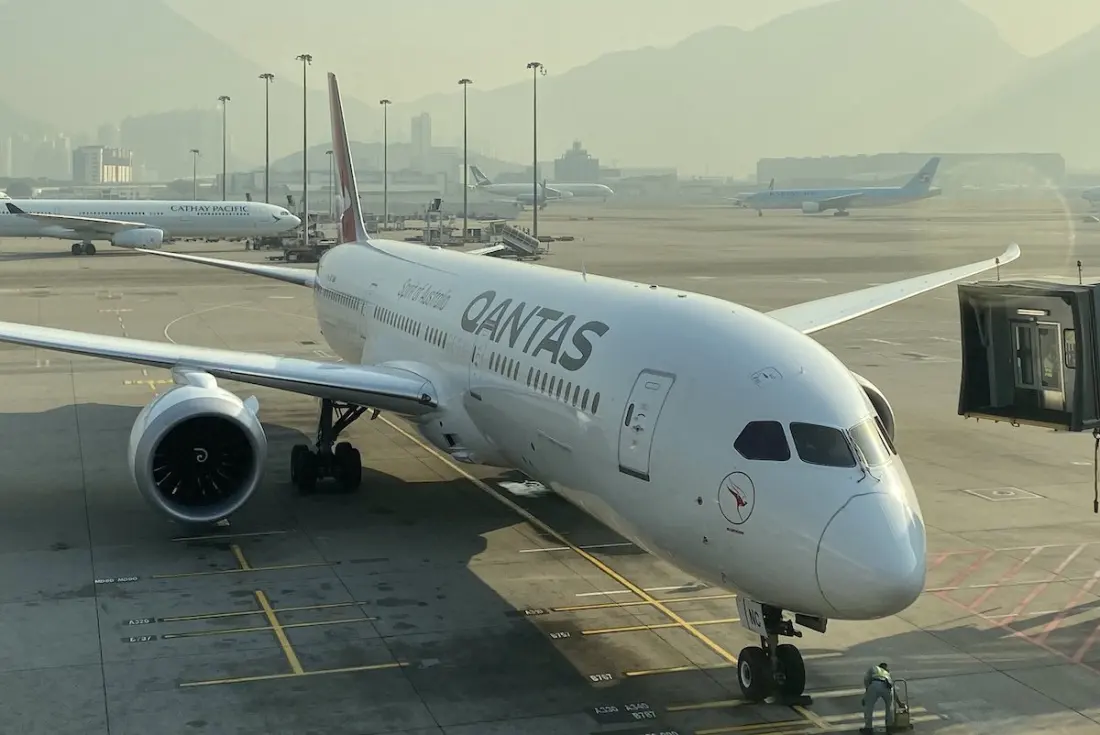
A Qantas Boeing 787-9 flying one of the world's longest routes has been pulled from service after passengers reported bed bug bites mid-flight — and the fallout could run to six figures.
The incident unfolded on QF5, Qantas' Perth-to-Rome service, a monster route of roughly 8,300 miles. Several travellers seated in the forward part of the economy cabin complained of being bitten during the flight. Cabin crew handed out antihistamines to ease the itching, but the supply ran out before everyone was seen to.
The aircraft landed in Rome at 7:33AM on Saturday, October 10, 2026, and was promptly taken out of circulation for a deep clean. That meant the return leg, QF6, scheduled to depart at 10:45AM, was cancelled outright. Qantas says affected passengers were put up in hotels and rebooked onto alternative flights within 48 hours of their original departure.
Why not just fumigate the plane? Aircraft cabins are laced with electrical wiring, so the fumigation methods used in homes and hotels aren't an option — hence the more labour-intensive deep clean of the affected seats.
The financial hit is where this gets interesting for travellers. Because the cancelled flight was departing the European Union, passengers fall under EC261 rules. Anyone who arrived at their final destination at least four hours late can claim €600 in cash compensation on top of the duty-of-care costs Qantas already covered. With 236 seats on a Qantas Dreamliner, the theoretical maximum payout is around €141,600 — before counting hotels, meals and rebooking costs. Planes only make money in the air, so grounding a widebody is expensive however you slice it.
Curiously, the aircraft did leave Rome later that same day, departing at 2:02PM under ferry flight numbers QF7006 and QF6007, routing via Perth before reaching Sydney at 10:34PM — over six hours behind the original schedule. It's unclear whether the deep clean happened on the tarmac in Rome or back in Australia, and Qantas hasn't said whether the plane flew home empty.
To its credit, Qantas appears to have handled this properly: grounding the aircraft, accommodating passengers, rebooking them quickly and staying transparent about the cause. Airlines have been known to downplay exactly this kind of problem, so a proactive cancellation — annoying as it was for those on QF6 — is arguably the right call.
If you're flying long-haul and wake up with itchy red welts, report it to crew immediately and document everything. In the EU, that documentation can turn a miserable night's sleep into a €600 compensation claim.