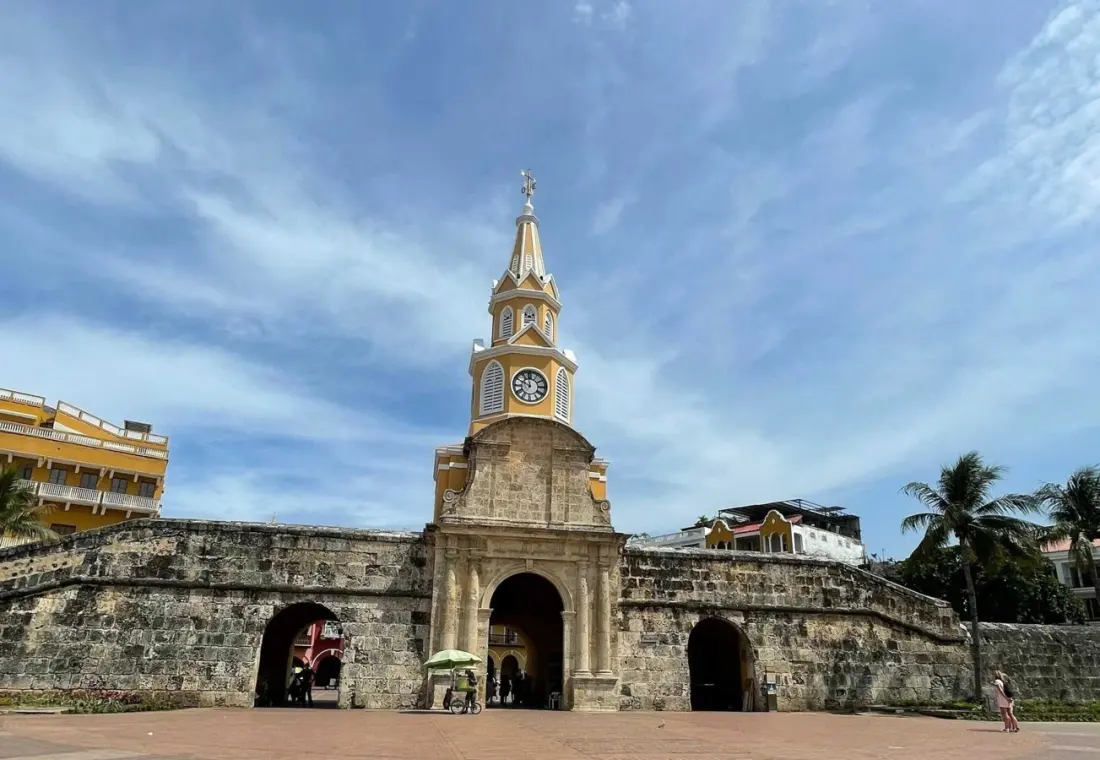
Cartagena de Indias sells itself on its walled old town, and fair enough. But the city's actual identity lives just as much in the barrios outside the postcard frame — and a recent rundown of its cultural neighbourhoods makes a strong case for venturing further.
The headline news is Getsemani. Once home to the artisans, merchants and working-class families who grew the city in the 16th and 17th centuries, it developed a character all its own — street gatherings, music, squares like Plaza de la Trinidad, even street names that locals treat as shared memory. In July 2026, Colombia's Ministry of Culture, Arts and Knowledge formally added Getsemani's "Vida de Barrio" — neighbourhood life itself — to the National Representative List of Intangible Cultural Heritage. In plain terms: the way people live there is now officially protected heritage, not just the buildings.
Inside the walls, San Diego deserves more than a photo stop. Its narrow lanes, plazas and old family homes layer centuries of history, and the city government now says preservation has to cover the traditions and everyday street life too, not only the architecture.
Cross one of the bridges to Manga, an island neighbourhood of early 20th-century Republican mansions that shows Cartagena's shift from colonial port town to modern city. Landmarks include Puente Román and the San Sebastián del Pastelillo Fort, and the bay's shipping activity is part of the scenery.
For a taste of local faith traditions, Pie de la Popa sits between San Felipe Castle and La Popa Hill, long tied to celebrations of the Virgin of La Candelaria — one of the deepest-rooted festivals in the city's calendar.
Then there's the Cartagena tourists rarely see. Olaya Herrera, one of the city's biggest barrios, took shape in the 1940s beside the Ciénaga de la Virgen and runs on commerce, neighbourly ties, street food and music. Nearby Barrio Chino and the sprawling Bazurto Market are where Caribbean Colombia lands on your plate: fresh fish, fried snacks, tropical fruit, and the banter between vendors and shoppers that makes the market a cultural institution in its own right.
Finally, La Boquilla — technically a corregimiento at the city's edge — is a fishing community with Afro-Caribbean roots, honouring its patron saint San Juan Bautista each year and living off artisanal fishing on the lagoon. It's also where you'll find some of the area's best beaches.
Why bother with any of this? Because Cartagena's old town, lovely as it is, can feel like a stage set by midday cruise hours. These neighbourhoods show the city as its residents live it — and several, like Getsemani and Bazurto, are an easy taxi or walk from the centre. La Boquilla adds mangroves and coastline to the mix.
Story via Colombia One.