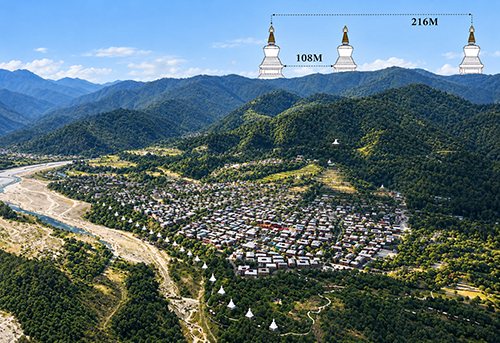
Bhutan is gearing up for one of its biggest spiritual gatherings in memory. On 1 November, 108 Jangchub Chortens — each 15 metres tall — will be raised at Gelephu Mindfulness City in the country's south, and the crowds heading there are enormous. More than 123,000 people had registered by late October, well past the original planning figure of 100,000, and the real turnout is expected to be higher since children aren't counted and many will simply show up.
Despite speculation that the government would declare extra national holidays around the event (1 November is already one), a senior official says there are no plans to do so. The worry is simple: more holidays would mean even bigger crowds in a city straining to host them.
Organisers have put serious logistics in place. Registration assigns each visitor to a specific area and helps track who has accommodation — those without it can stay in large tent settlements, one of which holds 25,000 to 30,000 people and will have around 1,000 pit latrines built for it alone. Private providers offer upgraded packages, some with meals included. There's no mass catering; instead, food courts sit outside the prayer grounds with prices capped at Nu 210 for non-veg meals and Nu 190 for veg, partly to discourage open-fire cooking. Forest rangers are patrolling and mapping elephant hotspots, a real concern in this forested border region.
The programme itself spans four days. The chortens go up starting at 3 am on 1 November, followed by a Royal inauguration of the Yoeja alms-offering practice around 9:30 am and the Tashi Drub ritual that evening. Day two opens at 6:30 am with the Tashi Rabney consecration ceremony and mani recitations. Days three and four bring spiritual empowerments (Wang and Lung) from senior figures including the Je Khenpo and visiting Rinpoches. The full site stretches 13 kilometres, and the chortens will be open for kora — circumambulation — once complete.
For travellers, this is a rare chance to witness a mass Buddhist consecration attended by the King and the country's highest clergy, in a purpose-built mindfulness city that's still taking shape. But go prepared: this is tent-camp territory, not hotel territory, and food, toilets and walking distances are all scaled for pilgrims rather than tourists. Independent travellers should expect basic conditions, early starts and very large crowds — and should sort registration and a place to sleep well in advance.