A six-month-old baby in Bishkek has successfully undergone surgery for a rare form of diaphragmatic hernia, in a case that says something interesting about the state of paediatric medicine in Kyrgyzstan.
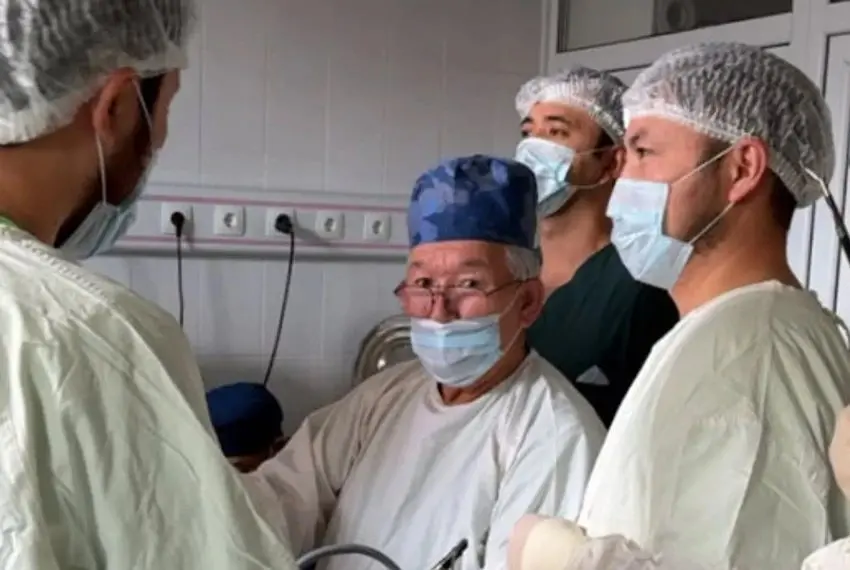
The operation took place at the Emergency Surgery Department of the National Center for Maternal and Child Welfare, the country's leading facility for children's and maternal care. Rather than the open surgery that such repairs once required, the team used a laparoscopic technique — small keyhole incisions instead of a large cut — which typically means less pain, a shorter recovery and a lower risk of complications for a patient this small.
The outcome was strikingly good. The baby was well enough to leave hospital just five days after the operation, and a follow-up check a month later found everything normal, with the child's development tracking age-appropriate milestones. The procedure was carried out under the supervision of Asylbek Kadyrkulov, who heads the Emergency Surgery Department.
Why does this matter if you're a traveller rather than a parent in Bishkek? Mainly as a reassurance about healthcare standards in a country that more and more visitors are putting on their maps. Kyrgyzstan has become one of Central Asia's most popular destinations for independent trekkers — think alpine lakes like Issyk-Kul and Song-Kul, horseback journeys through the Tian Shan, and some of the most accessible multi-day hiking in the region. It's the kind of place where people ask, fairly, what would happen if something went wrong medically.
This case suggests the answer is better than many assume. Keyhole paediatric surgery of this kind is a technique marker — it requires trained surgeons, appropriate equipment and the post-operative capacity to discharge an infant safely within days. A national referral centre performing it successfully on a rare condition is a decent signal of capability for more routine emergencies too.
That said, no one should mistake one successful operation for a comprehensive healthcare system. Serious illness or injury in Kyrgyzstan still often means evacuation to Kazakhstan or beyond for complex care, so comprehensive travel insurance with medical evacuation cover remains essential — particularly for anyone heading into remote mountain areas where road access is slow and passes can be blocked by weather.
For families travelling with young children, Bishkek itself is the most comfortable base in the country: modern clinics, pharmacies stocked with common medicines, and the National Center for Maternal and Child Welfare acting as the reference hospital for paediatric emergencies. For everyone else, the takeaway is simple — the practical barriers to visiting this strikingly beautiful, affordable country keep getting lower, and the medical ones are less daunting than the guidebooks once implied.
A word on the hospital's actual patient, for whom the prognosis looks genuinely encouraging: home five days after surgery, developing normally a month later. Not a travel story exactly, but a good-news note from a country more travellers should know.