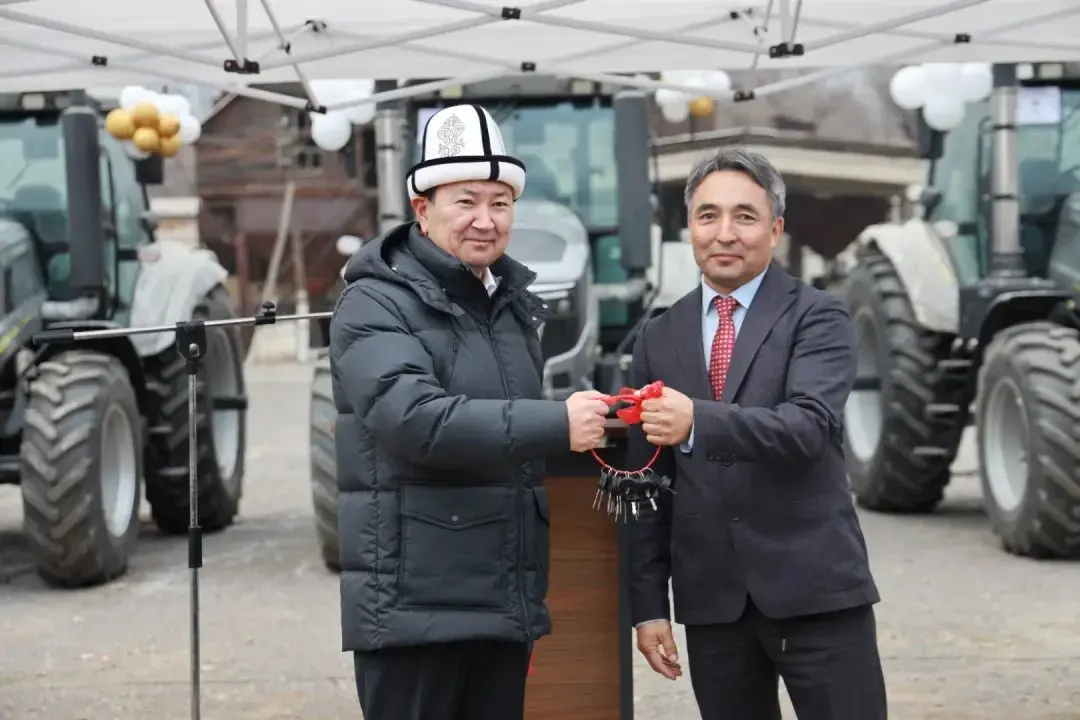
Kyrgyzstan's government has delivered a large batch of new agricultural machinery to the country's main crop research bodies, in a push funded by the World Bank. The handover, led by Deputy Chairman of the Cabinet of Ministers Erlist Akunbekov, covered 70 units of equipment valued at roughly 178.8 million soms (somewhere in the region of $2 million at typical exchange rates).
Two institutions benefited: the Department of Agricultural Crop and Horticultural Expertise received 21 units, while the Kyrgyz Research Institute of Agriculture took the bulk with 49, with regional branches included in the distribution. The kit is a working research fleet rather than office gear — tractors, combine harvesters and plant-breeding combines, seed drills, seed-cleaning equipment, and potato planters and harvesters.
The money comes from the World Bank's Resilient Agri-food Clusters Development Project, and the stated aim is specific: fix and modernise the seed production system so farmers can get better-quality seeds and seedlings. Officials framed the investment as a way to strengthen domestic agricultural science, raise the quality of research, and bring modern technology into a sector that still employs a large share of Kyrgyzstan's workforce.
Why does this matter to travellers? Kyrgyzstan is increasingly on the map for independent hikers and horse-trekkers, and much of the country's appeal is rural — walnut forests, high-summer pastures, roadside fruit stalls and family-run guesthouses in farming villages. A better-funded research and seed sector points to gradual upgrades in what those villages can grow and sell, from improved potato yields in Naryn province to better orchard stock around Osh. It's a slow-burn story rather than a headline attraction, but it signals investment in exactly the rural communities most visitors pass through.
Anyone travelling in Kyrgyzstan today will still find the country as it has long been: dramatic, affordable and lightly touristed. The machinery story is best read as context — a sign that agriculture, not mass tourism, remains the development priority, which is precisely why the countryside feels so authentically untouched.