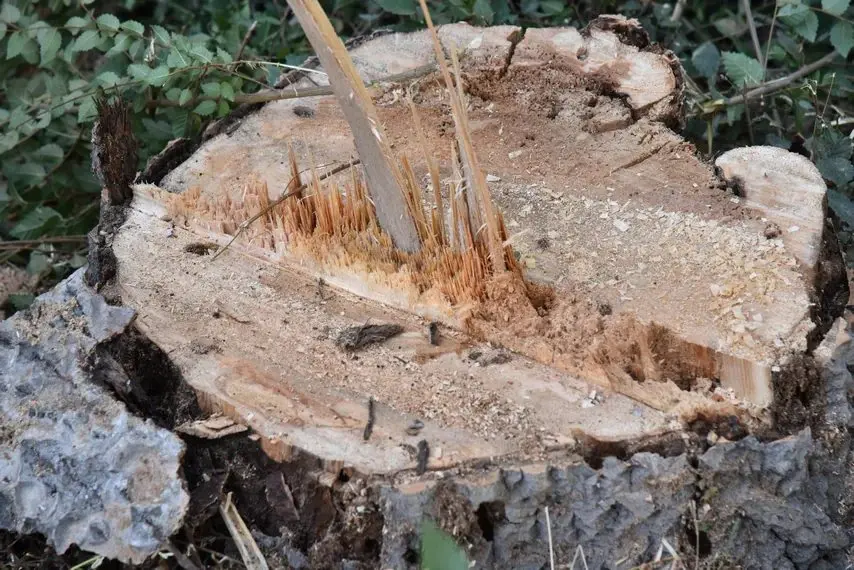
Bishkek's leafy streets are in flux. City Hall confirms that 2,163 trees have been felled in the Kyrgyz capital since the start of 2026, a number that has raised eyebrows in a city known for its green boulevards and shaded courtyards. But there's a second half to the tally: 31,445 saplings have gone into the ground over the same period. What the municipality couldn't say is how many of those young trees will actually survive.
The felling isn't indiscriminate, at least on paper. The city's green-maintenance arm, Bishkekzelenkhoz, laid out plans earlier this year to remove between 800 and 1,000 ageing trees in 2026 — mostly old poplars and elms, the tall, fast-growing species that line so many Central Asian streets. Poplars in particular become brittle with age, and dropping branches during spring winds are a regular hazard, which is why removals usually spike ahead of the windy season. The removals span 50 streets.
The replanting ambitions are bigger than the cuttings: 17,000 new trees are planned for this year, and the city is buying 50,000 saplings in total. Those will spend time acclimatising in local nurseries before being planted out in 2027 — a sensible approach in a climate where harsh winters and dry summers kill off a lot of well-meaning urban planting. It also explains why the survival rate for this year's 31,445 saplings isn't yet known; the real test comes over the next couple of seasons.
For visitors, the practical impact is modest but real. Some of Bishkek's grandest avenues — parts of Chüy Avenue and the streets around Oak Park and the Philharmonia — owe much of their summer charm to mature trees, so a few familiar stretches may look barer than the postcards suggest, especially if you're travelling before the replacements fill in. If anything, it's a reason to walk neighbourhoods like the leafy blocks south of the centre, where older planting still dominates. The greening push is worth remembering if you visit in 2027 or later, when tens of thousands of new trees should be reshaping the city's streetscape.
Whether the replanting matches the removals in the long run is the question locals are asking. A capital that loses its mature canopy faster than it gains a new one loses more than shade — it loses much of what makes summer walking in Bishkek pleasant. Travellers heading there this year will see a city mid-transition.
Story based on reporting by 24.kg.