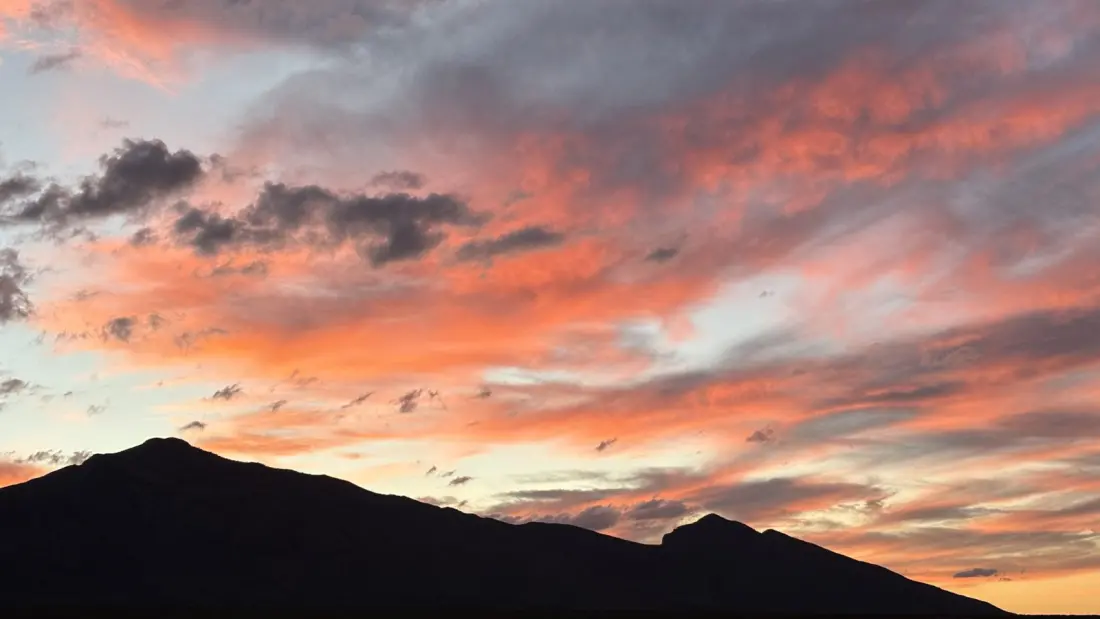
The last leg of the Continental Divide Trail through New Mexico's Bootheel is nothing like the mountain walking that comes before it. A thru-hiker's latest dispatch describes the trail flattening out into the Chihuahuan desert, where dry washes barely dip a foot deep and running water simply doesn't exist. What the landscape lacks in water it makes up for in life: fragrant creosote, blooming barrel cactus and globemallow, rattling yucca, and ocotillo reaching up like dried tentacles. Jackrabbits the size of small children, coyotes, red ant colonies and the occasional snake track all make appearances.
The human side of the story is just as vivid. By this point on a long trail, hiking groups have merged into a rolling community of a dozen-plus people who spread out during the day and reconvene at the essentials: water, shade, camp, or a car. One hiker's family member drove out with a rental full of cold beer and fresh fruit, an impromptu trail angel moment. Evening gatherings around a circle of red headlamps involve trading stories, tracking friends' locations, and swapping food — the informal economy of a long-distance trail.
Not everything is idyllic. The trail crosses roads busy with semi trucks hauling steel and cement for the border wall construction, oversized mining equipment and water sprayers, a reminder that this remote corner of New Mexico sits squarely in a working industrial corridor. The hikers also pass through a ghost town, complete with a caved-in double-walled storehouse, ruined machine shop arches, and mining pits so deep you can count the seconds before a dropped stone lands.
The natural spectacles carry the emotional weight of an ending: sandhill cranes migrating in a 'V' overhead, blue Mexican mountains visible on the southern horizon, and a sunset over the Big Hatchet Mountains that the writer calls the grandest of the entire trail — possibly because it was the last. The entry closes on the eve of the final day, with the group discussing favorite and least favorite stretches and what comes after the trail. It's a fitting picture of the thru-hike experience: harsh, beautiful, communal, and ending far too soon.