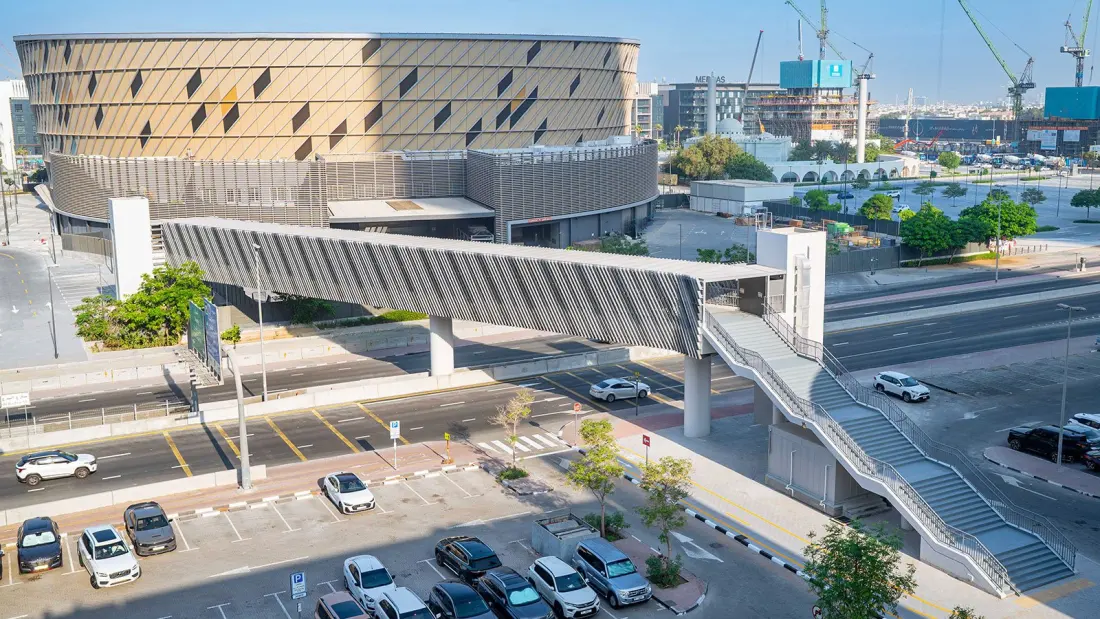
Getting to a gig at Coca-Cola Arena used to mean one of two things: crawling through City Walk traffic or gambling on parking near a venue that fills up fast. That's changed. Developer Meraas, working with the arena, has opened a 110-metre covered pedestrian bridge at City Walk linking the Burj Khalifa/Dubai Mall Metro Station area directly toward the venue's doorstep.
The numbers behind it are worth knowing if you're heading to a concert. The bridge can move roughly 10,000 people per hour — about 59% of a full-house arena crowd — so even on big event nights it's designed to absorb the surge. The whole point is to pull eventgoers out of cars and onto the Red Line metro, easing the gridlock that builds around City Walk and the arena before and after shows.
One small navigational note: it's not a direct indoor connection from the metro platform itself. You'll come out of the station and head for the Seaside exit, from where the bridge is only a short walk away. In Dubai's summer heat, even that few minutes matters, so the covered link is a genuine upgrade over the old surface route.
The bridge is also part of something bigger. Dubai's Roads and Transport Authority is midway through a five-year programme to build 31 pedestrian bridges and tunnels across the emirate, with locations chosen based on population density, foot traffic and closeness to metro stops and tourist attractions. For visitors, that means walking between key spots in areas like City Walk and Downtown is getting steadily easier — and cheaper than a ride-hail surcharge.
If you've got tickets for a show at Coca-Cola Arena, the practical takeaway is simple: take the Red Line to Burj Khalifa/Dubai Mall station, follow signs to the Seaside exit, and use the bridge. You'll skip event-night traffic entirely and can pad out the evening with dinner or a stroll through City Walk, which sits right on the route. With the arena hosting international acts year-round, this makes a car-free concert night genuinely workable for the first time.
Thanks to What's On Dubai for the original report.